Clear Sky Science · en
Intention to reduce meat consumption in relation to perceived economic benefits and meat purchase expenditure among Japanese adults
Why the cost of dinner matters
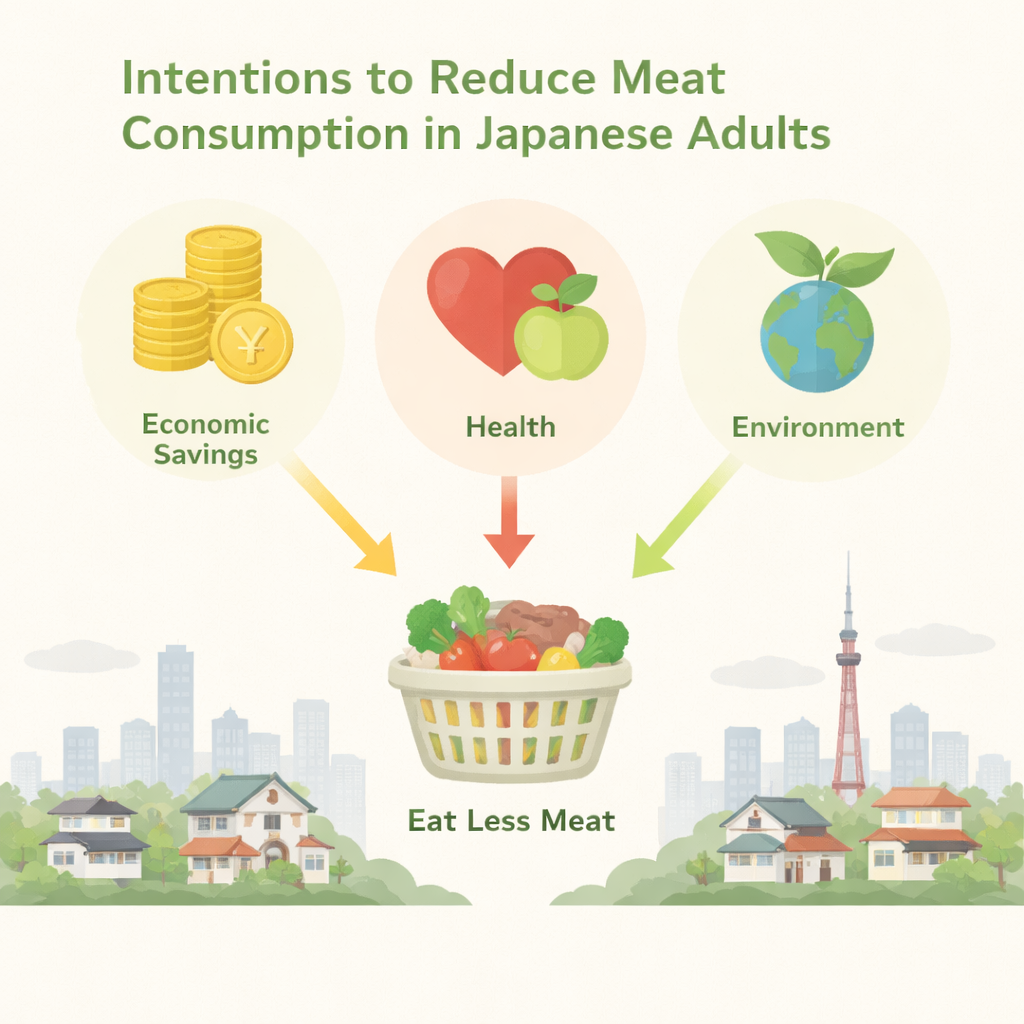
For many families, deciding what to cook is as much about the grocery bill as it is about taste or health. This study looks at whether Japanese adults are motivated to buy less meat because it saves money—and how that compares with concerns about health and the environment. As meat consumption rises worldwide and strains both planetary and human health, understanding what really drives people to change their eating habits can help shape practical advice and policy.
The problem with more meat on the table
Meat-heavy diets come with hidden environmental and health costs. Raising animals for food produces powerful greenhouse gases, uses large areas of land, and contributes to water pollution. High intake of red and processed meat has also been linked to illnesses such as heart disease. While some governments and experts now recommend “flexitarian” eating—mostly plant-based with modest amounts of meat—it is not yet clear how to encourage people to shift their habits in daily life. Traditional approaches that simply provide information about climate change or nutrition have had limited success, so researchers are looking more closely at what actually shapes people’s intentions.
A close look at Japanese shoppers
Japan offers an interesting case. People there eat less meat than in many Western countries, but consumption has climbed sharply over the past several decades as prices have fallen and diets have become more Westernized. In this study, 411 Japanese adults aged 20 to 59 who were mainly responsible for household shopping filled out an online questionnaire. They reported how they felt about cutting back on meat, how strongly they believed this would help their household budget, their health, and the environment, and whether they intended to buy less meat in the future. Unusually, the researchers could also link these answers to a year of detailed shopping records, which showed what share of each person’s food spending went to meat.
What people think they gain by eating less meat
The survey revealed an important pattern: far more people noticed the economic upside than the environmental or health benefits of cutting meat. About two in five respondents agreed that buying less meat would help keep household spending down, while only about one in five saw clear environmental or health gains. Yet only a small minority—around 18%—said they intended to reduce their meat purchases. People who spent a larger share of their food budget on meat were more likely to see a money-saving benefit in cutting back, suggesting that past spending shapes how much financial room for improvement they think they have.
Money versus health and values
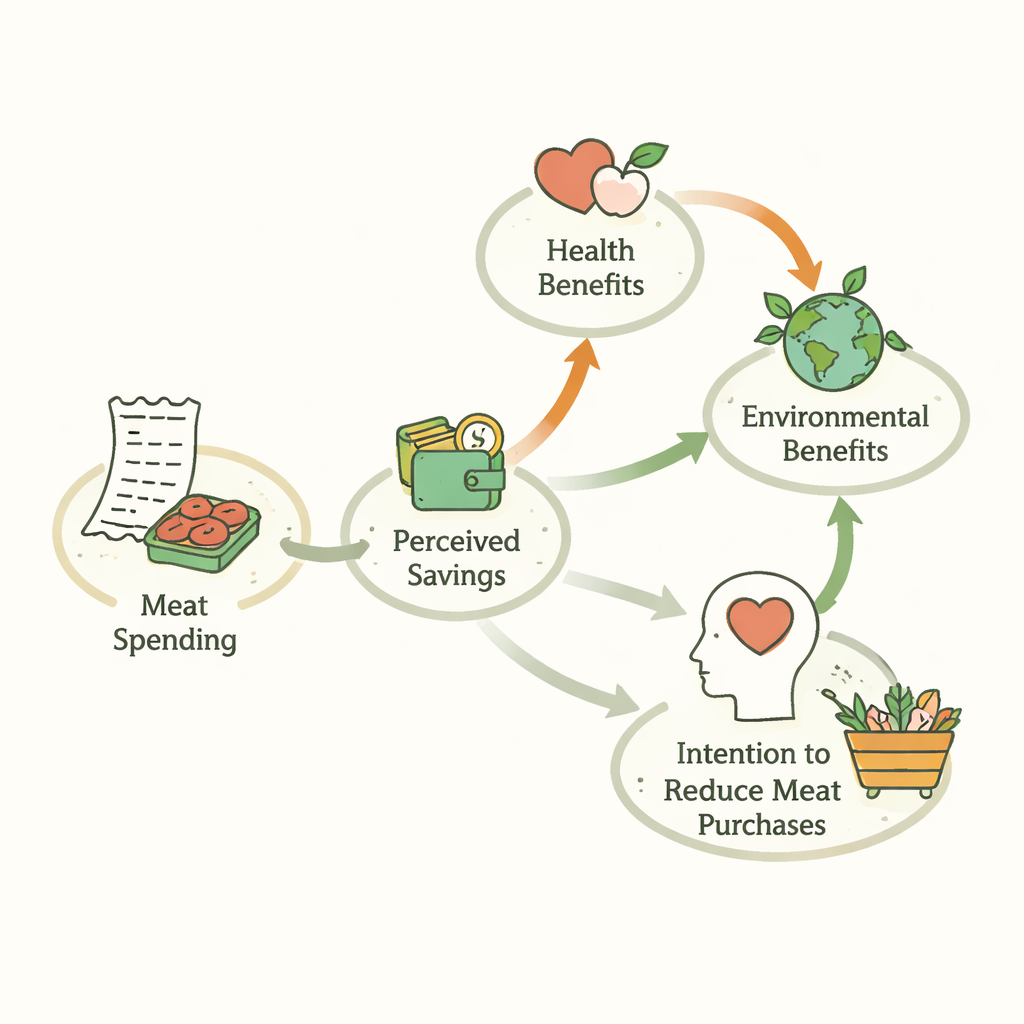
To untangle how these different beliefs fit together, the authors used a statistical approach that maps links between variables. In a simpler model that focused on money-related factors, people who believed they would save money by buying less meat were more likely to have a positive attitude toward cutting back and to say they intended to do so. However, when the researchers added perceived health and environmental benefits into the picture, the money effect faded. What remained most important for intention was a person’s overall attitude toward eating less meat, which in turn was strongly shaped by whether they believed cutting meat would be good for their health. Environmental benefits mattered for shaping attitudes, but they did not clearly translate into a stronger stated intention to reduce meat purchases.
What this means for everyday choices
In plain terms, the study suggests that while many Japanese shoppers notice the potential savings from buying less meat, these economic considerations alone do not strongly push them toward change once health and broader beliefs are taken into account. Health arguments, in contrast, appear to be a more powerful lever for shifting intentions, even though relatively few people currently recognize how meat reduction might benefit their well-being. The authors argue that efforts to promote more sustainable and healthy diets should combine cost-conscious strategies—such as making plant-based options affordable—with clear, accessible information about health and environmental gains. Together, these approaches may better support households in making changes that are good for both their wallets and the planet.
Citation: Tsuchiya, K., Sekiyama, M. Intention to reduce meat consumption in relation to perceived economic benefits and meat purchase expenditure among Japanese adults. Sci Rep 16, 5834 (2026). https://doi.org/10.1038/s41598-026-36675-z
Keywords: meat consumption, diet and health, food costs, sustainable eating, Japanese consumers