Clear Sky Science · en
Cannabidiol mitigates high-fat-diet-induced early-stage inflammation in two adipose tissue fat depots of Wistar rats
Why this study matters for everyday health
Many people worry about the hidden effects of a high-fat, calorie-rich diet, especially how extra body fat can quietly fuel inflammation and future disease. This study explores whether cannabidiol (CBD) – a non-intoxicating compound from the cannabis plant – can calm early, diet-induced inflammation in body fat, at a stage when damage might still be reversible. By focusing on two key types of fat in rats, the work hints at how CBD could one day help protect metabolism, independent of weight loss.
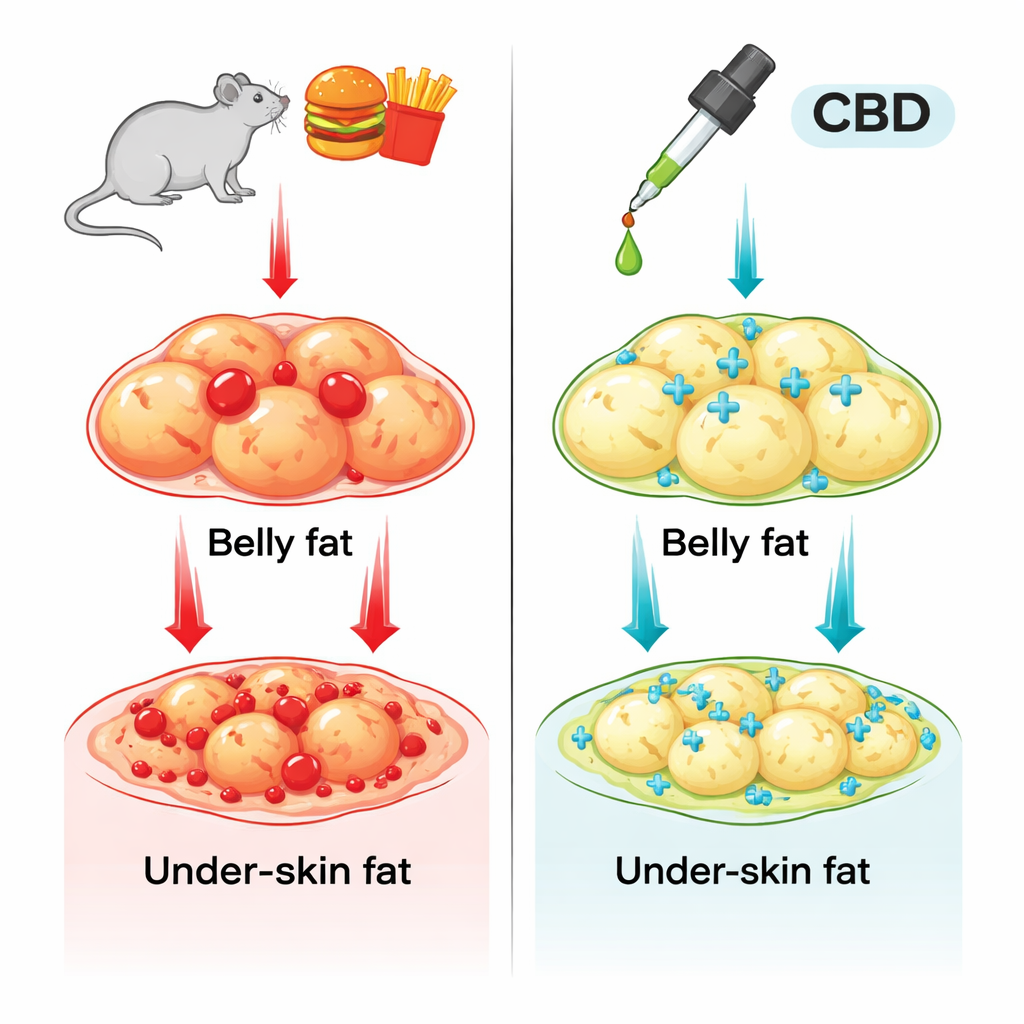
Two kinds of body fat under the microscope
Not all fat is the same. The researchers looked at subcutaneous fat, which sits under the skin and often acts as a relatively safe storage site, and visceral fat, which surrounds organs deep in the belly and is strongly linked with diabetes and heart disease. Male Wistar rats were fed either a standard diet or a high‑fat diet for seven weeks to mimic overnutrition. During the final two weeks, some animals received daily CBD injections, while others received only the solvent. This design allowed the team to see how CBD changed the chemistry and behavior of both under‑skin and belly fat early in the course of obesity.
How a rich diet turns fat into an inflammatory factory
The high‑fat diet made fat cells larger and pushed them to store more of several key lipid types: free fatty acids, diacylglycerols, triacylglycerols and phospholipids. Among these, a special fatty molecule called arachidonic acid stood out. It serves as raw material for many powerful inflammatory substances and was found in much higher amounts in both fat depots of high‑fat‑fed rats. Enzymes that convert arachidonic acid into inflammatory messengers – notably cyclooxygenases and lipoxygenases – were also more active, particularly in belly fat. At the same time, levels of several pro‑inflammatory cytokines, the signaling proteins that help coordinate immune responses, rose in the fat tissue, signaling the onset of a low‑grade, smoldering inflammation.
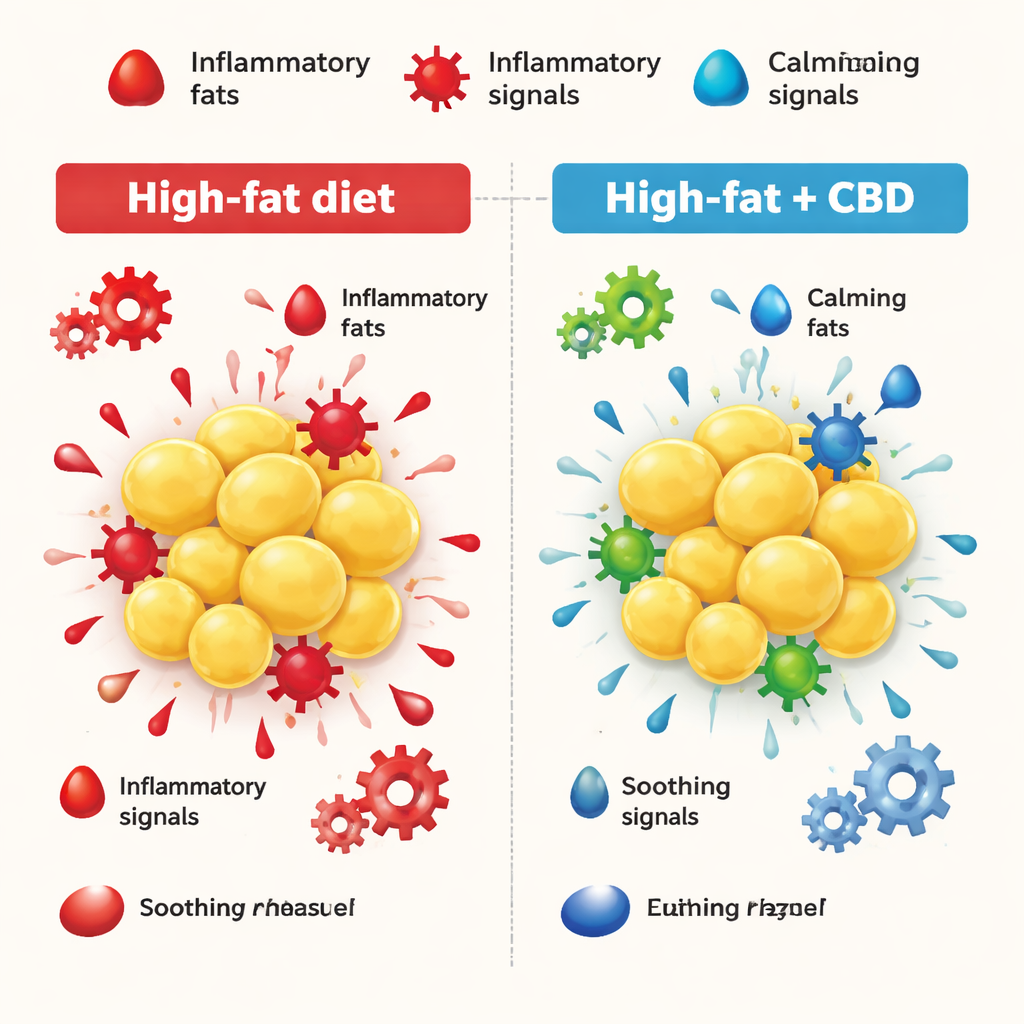
What CBD changed inside fat tissue
CBD treatment did not cause weight loss over the short two‑week period, but it did reshape the chemistry of fat. In visceral fat, CBD significantly reduced the buildup of all major lipid fractions, including the phospholipids that are a main source of arachidonic acid. In subcutaneous fat, CBD lowered free fatty acids and diacylglycerols. Across both depots, CBD markedly reduced arachidonic acid content in several lipid pools and dampened the expression of enzymes that make inflammatory products from this fatty acid. CBD also shifted the balance between two families of polyunsaturated fats: n‑6 fats, which tend to drive inflammation, and n‑3 fats, which support its resolution. In disease‑prone belly fat, CBD decreased activity in n‑6‑driven pathways within storage lipids while enhancing more favorable patterns in circulating‑like fat pools.
Fine-tuning inflammatory signals, not just fat storage
Beyond fat chemistry, CBD altered the broader communication network inside fat tissue. In both under‑skin and belly fat, CBD adjusted levels of multiple cytokines and growth factors. It tended to lower classic pro‑inflammatory signals such as tumor necrosis factor‑alpha and certain other mediators associated with metabolic stress, while boosting factors that promote a more calming, tissue‑repairing immune profile. These shifts were complex and depot‑specific, but overall they pointed toward a less aggressive, more balanced inflammatory environment, especially in visceral fat, which is most strongly linked to long‑term metabolic disease.
What this could mean for people in simple terms
This study suggests that CBD may help “cool down” fat tissue that has been stirred up by a rich diet, even before obvious disease or major weight changes appear. In rats, CBD reduced the buildup of inflammatory fatty building blocks, dialed down the activity of enzymes that turn them into harmful messengers, and nudged immune signals in fat toward a less damaging pattern, with stronger effects in deep belly fat than under‑skin fat. While these findings do not prove that CBD can prevent obesity‑related diseases in humans, they highlight CBD as a potential helper in protecting metabolism by targeting early inflammation inside fat, rather than simply focusing on the bathroom scale.
Citation: Konstantynowicz-Nowicka, K., Berk, K., Hodun, K. et al. Cannabidiol mitigates high-fat-diet-induced early-stage inflammation in two adipose tissue fat depots of Wistar rats. Sci Rep 16, 5975 (2026). https://doi.org/10.1038/s41598-026-36666-0
Keywords: cannabidiol, visceral fat, obesity, inflammation, high-fat diet