Clear Sky Science · en
European forestry systems mirror social-ecological diversity but closer-to-nature forest management and landscape planning are also required
Why Europe’s Forests Matter to Everyday Life
Across Europe, forests provide far more than timber. They store carbon, shelter wildlife, supply clean water, and offer places for work and recreation. Yet governments, industries, conservationists and rural communities often want different things from the same forest. This article explores how current logging methods shape Europe’s forest landscapes, why they are not enough to meet modern expectations, and how “closer-to-nature” approaches and smarter landscape planning could help forests remain productive, diverse and resilient in a changing climate.
Two Main Ways of Cutting Trees
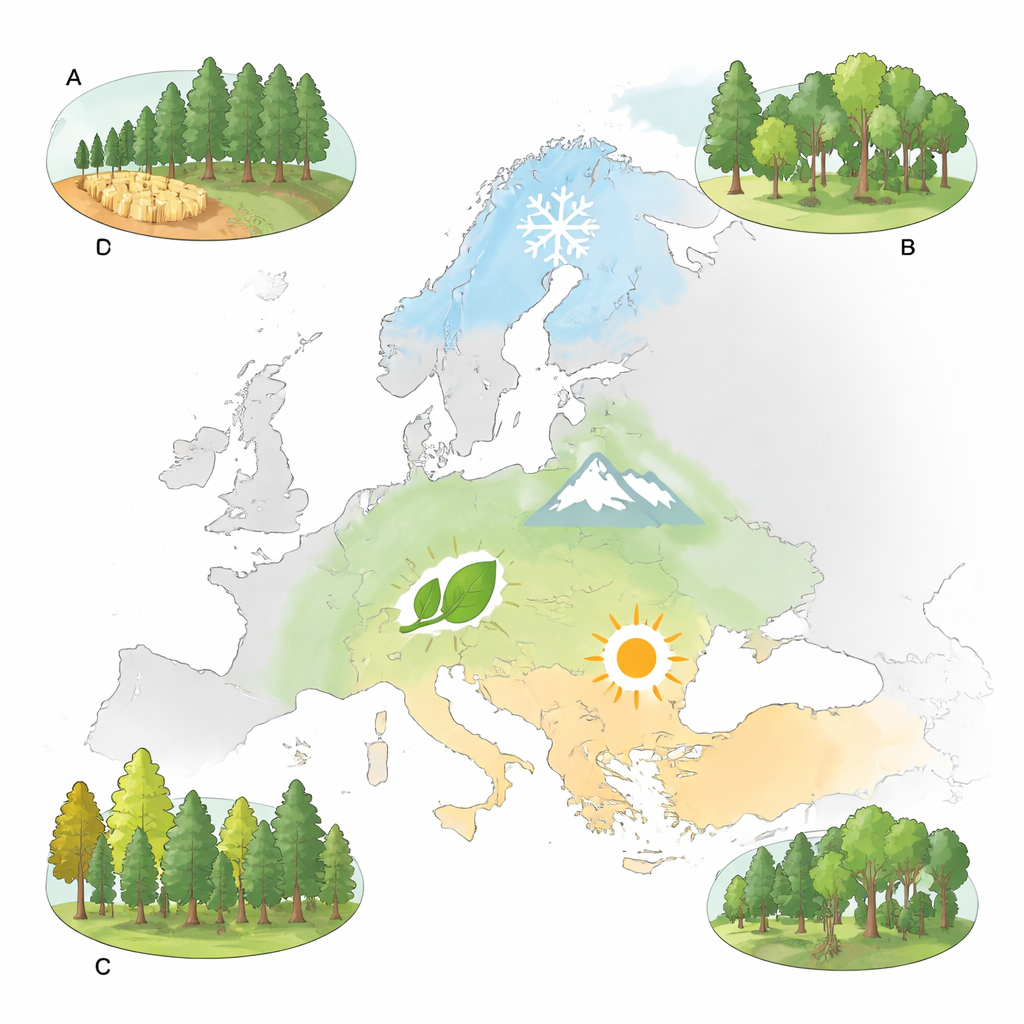
Most European production forests are managed using two broad styles. Clearcutting focuses harvest into patches: nearly all trees on an area are removed at once, and a new, even-aged forest is planted or regenerated. Continuous cover forestry, by contrast, always keeps a canopy of trees. Smaller groups or single trees are felled at intervals, creating uneven-aged stands with a mix of sizes and ages. Both systems were originally designed to maximise long-term wood yield and secure a steady timber supply. While they can be efficient for producing fibre and lumber, they simplify forest structure compared with natural, disturbance-driven forests that contain old trees, dead wood, shaded groves and sunny openings all side by side.
How Nature, People and Policy Shape Forest Use
The authors analysed 26 European countries to see how much each relies on clearcutting or continuous cover, and whether this pattern could be explained by three types of factors: biophysical (such as slope and growing season length), human-made (such as how much wood is harvested and how strongly conifers have been favoured over broadleaves), and social (such as forest ownership, harvest rules and forest-based jobs). Using statistical tools that group related variables, they found that two main combinations of factors explained over half of the differences in how widely continuous cover forestry is used. Four broad regional clusters emerged: production-focused Nordic–Baltic countries with intensive even-aged forestry; mountain countries with more balanced, multifunctional management; western and central lowland countries with stronger regulation and mixed objectives; and Mediterranean and southeastern countries where pressures like land-use intensification and fire risk complicate long-term planning.
Gaps in Today’s Forestry
Even where continuous cover forestry is common, the study highlights big shortcomings when it comes to biodiversity and resilience. Both clearcutting and continuous cover methods tend to shorten the age of forests, reduce the share of old stands, favour a few fast-growing tree species, and remove much of the dead wood and large habitat trees that many plants, fungi, insects and birds depend on. Key details such as how long stands are left to grow, how large harvested patches are, how intense the cuts are, and how tree species are mixed all strongly influence whether forests can host viable populations of native species and withstand stresses such as pests, storms and climate change. Many current practices fall short, especially in boreal regions, where intensive forestry coincides with the poorest conservation status of forest habitats and relatively few forest-based jobs per hectare.
Working Closer to Nature
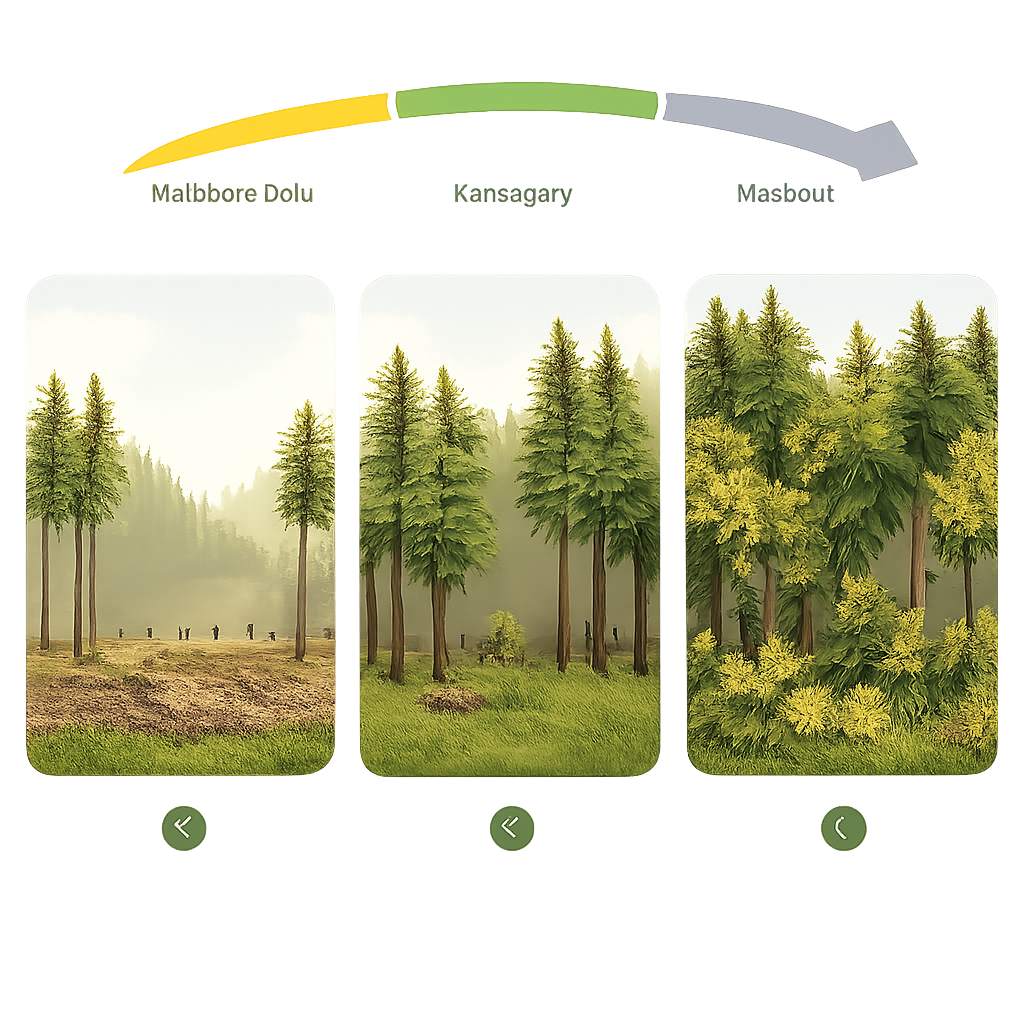
The article argues that Europe needs to move beyond the traditional either–or choice between clearcutting and continuous cover. “Closer-to-nature” forest management is proposed as a direction rather than a single recipe. It means using harvests and regeneration patterns that mimic natural disturbances—like small and medium-sized windthrows or insect outbreaks—and drawing on the lessons of long-lived cultural woodlands such as grazed oak pastures. In practice, this involves longer rotations in some areas, more varied stand ages at both stand and landscape level, richer mixtures of tree species, and much higher retention of old trees, tree-related microhabitats and dead wood. Evidence suggests that such approaches can maintain many ecosystem services and biodiversity while still producing useful amounts of timber.
Planning the Whole Landscape
Because no single management style can deliver everything everywhere, the authors advocate landscape-level zoning, often called the “triad” approach. In this model, forest regions are divided into three interlinked zones: strictly protected areas where natural processes dominate; multifunctional areas managed with closer-to-nature methods; and high-yield production zones where wood output remains the main goal but is balanced against wider impacts. The exact mix and placement of these zones would depend on local ecology, ownership and social priorities. Implementing such mosaics demands better information on forests, collaboration among many stakeholders and policies that reward long-term ecological health, not just short-term timber volumes.
What This Means for Europe’s Forest Future
For non-specialists, the article’s message is straightforward: the way Europe has long managed its forests—through clearcutting or conventional continuous cover systems—has been good at producing wood but not good enough at safeguarding wildlife, climate resilience and cultural values. By combining closer-to-nature practices with thoughtful landscape planning, it is possible to design forests that still support rural economies while also protecting biodiversity, storing carbon and offering attractive places to live and play. The challenge now is political and social: aligning laws, markets and landowner choices so that Europe’s diverse forest regions can shift from timber fields to truly multifunctional landscapes.
Citation: Angelstam, P., Manton, M., Nagel, T.A. et al. European forestry systems mirror social-ecological diversity but closer-to-nature forest management and landscape planning are also required. Sci Rep 16, 6370 (2026). https://doi.org/10.1038/s41598-026-36659-z
Keywords: forest management, biodiversity, continuous cover forestry, clearcutting, multifunctional landscapes