Clear Sky Science · en
Exploring the link between ruminal methane production and physiological changes in Japanese Black cattle during fattening
Why cow burps matter for the climate
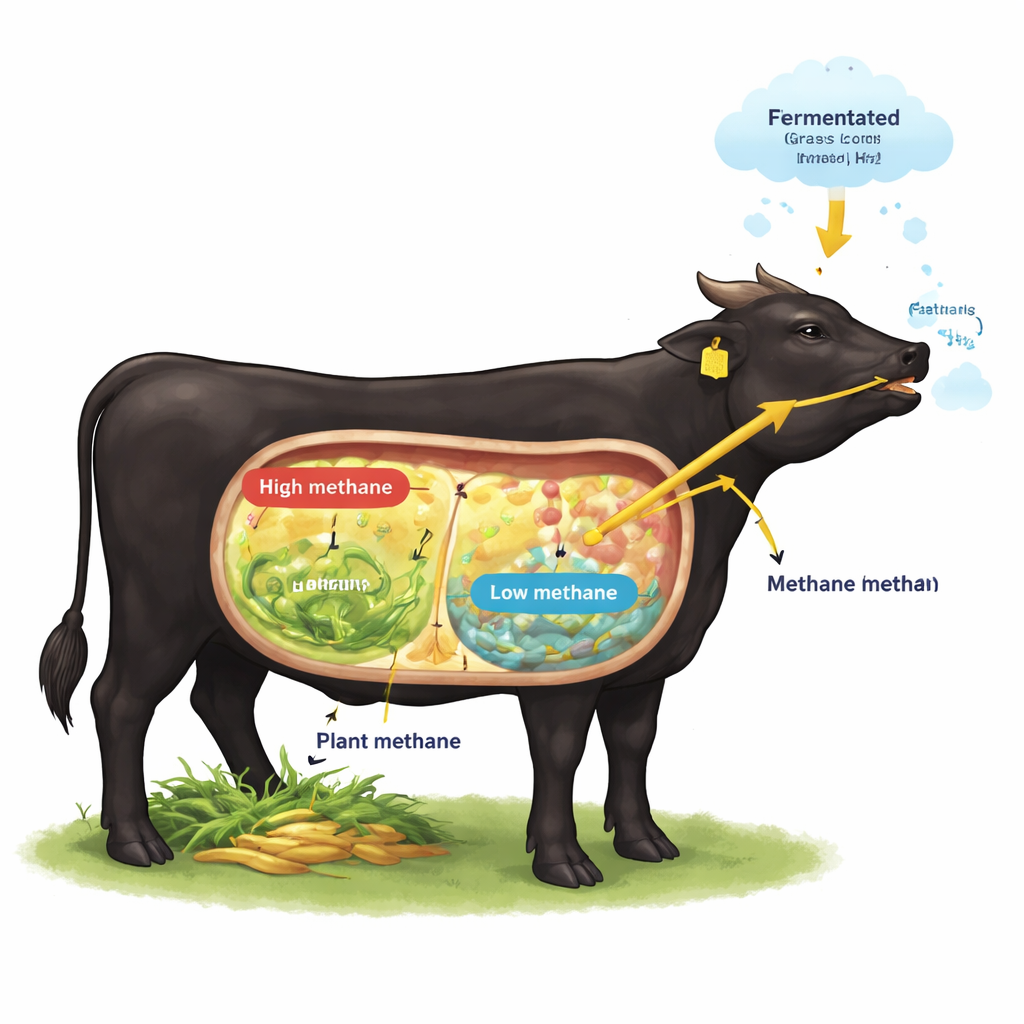
As the world looks for ways to slow climate change, an unexpected culprit keeps bubbling to the surface: the stomachs of cows. When cattle digest their feed, microbes in their first stomach, the rumen, produce methane, a greenhouse gas far more warming than carbon dioxide. This study follows Japanese Black cattle—famous for highly marbled beef—to understand why some animals emit more methane than others, and how tiny changes in their gut microbes and body chemistry might help farmers raise beef with a smaller climate footprint.
The special cattle behind premium beef
Japanese Black cattle are raised on energy-dense, high‑grain diets to produce richly marbled meat. This feeding style creates a rumen environment quite different from that of typical beef or dairy cows, meaning results from other breeds do not always apply. The researchers monitored 21 steers from just before puberty to market weight, measuring their methane three times during fattening—early, middle, and late. Using a statistical approach that accounted for feed intake and growth, they grouped animals into high‑methane and low‑methane emitters that otherwise had similar performance. This set the stage to ask a simple question with complex biology behind it: what is different inside low‑methane cattle?
Microbial tug‑of‑war over hydrogen
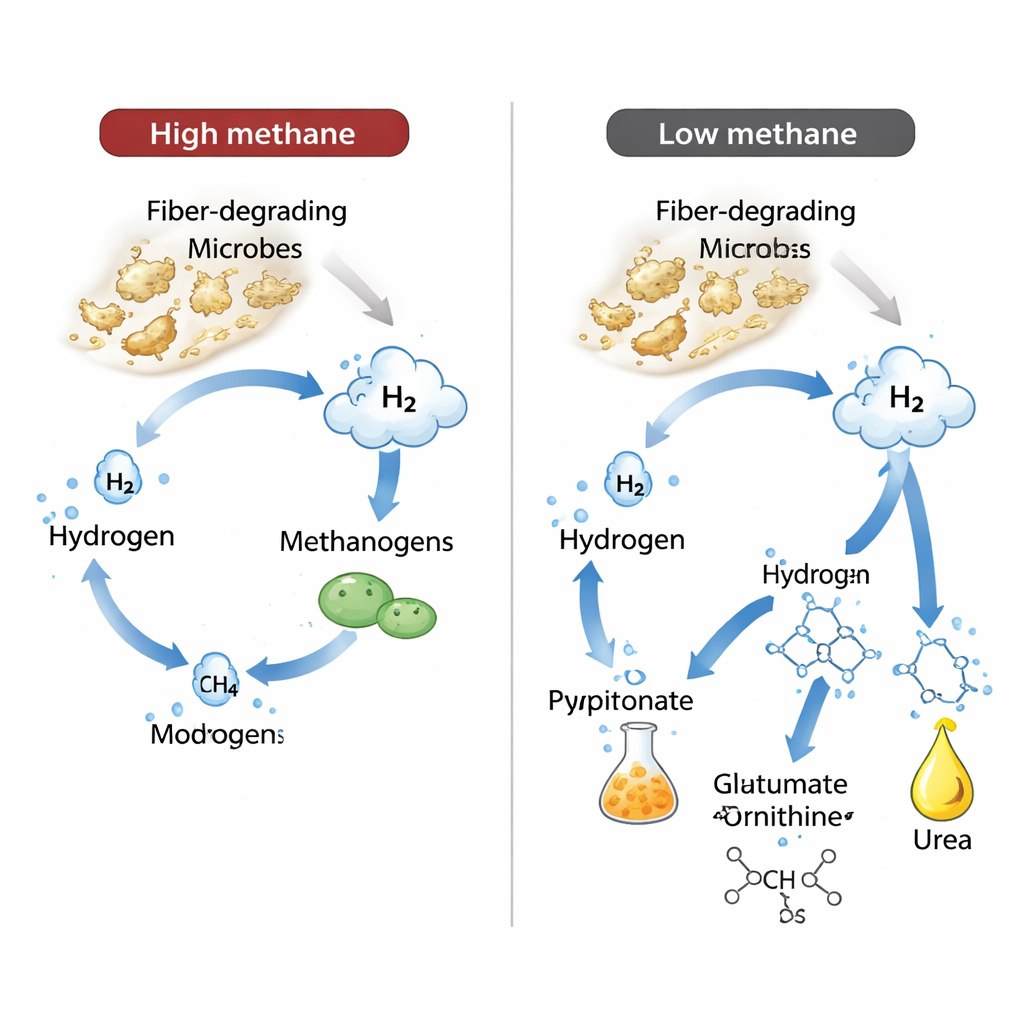
In the rumen, plant fibers are broken down into useful fatty acids plus hydrogen gas. Methane is essentially a way for microbes to get rid of that hydrogen. The team found that high‑methane cattle hosted more microbes that produce hydrogen, including bacterial families like Christensenellaceae and genera such as Clostridium methylpentosum and Mogibacterium. They also carried more of the classic methane‑forming archaea, especially Methanobrevibacter. In contrast, low‑methane cattle had more “hydrogen‑sinking” microbes such as Succinivibrionaceae, Succinivibrio, and Anaerovorax, which divert hydrogen into other products like propionate or into “hardening” dietary fats. In effect, the rumen community in low emitters channels hydrogen away from methane and into more useful energy forms.
A nutrient crossroads inside the cow
Looking beyond which microbes are present, the scientists predicted what these microbes are doing by reconstructing their metabolic pathways. One key route stood out in low‑methane cattle: the conversion of a compound called oxoglutarate into the amino acid glutamate, and then into ornithine. This pathway acts as an extra hydrogen sink, helping to use up hydrogen that might otherwise be turned into methane. In low emitters, this microbial activity lined up with lower ammonia levels in the rumen and higher ornithine in the blood. The liver of these animals also showed more activity of ornithine transcarbamylase, an enzyme that turns ornithine and ammonia into urea, safely removing excess nitrogen from the body.
Signals from the liver and blood
The body’s response to different rumen conditions extended into the liver’s gene activity. In high‑methane cattle, a glutamate transporter gene called SLC1A1 was more active, likely supporting production of glutathione, a major antioxidant that helps protect liver cells from stress. These same animals tended to have more butyrate in the rumen and more of its breakdown product, beta‑hydroxybutyrate (BHBA), in the blood—molecules that can be useful fuels but, in excess, may trigger oxidative and inflammatory stress. In low‑methane cattle, meanwhile, stronger urea‑cycle activity helped detoxify ammonia more efficiently, hinting that animals with lower methane may also enjoy healthier nitrogen metabolism.
What this means for greener beef
Put simply, the study shows that methane output in Japanese Black cattle is not just about how much they eat, but how their rumen microbes handle hydrogen and how their bodies process nitrogen and energy. High‑methane animals harbor microbe communities and liver responses that favor turning hydrogen into methane, while low‑methane animals reroute that hydrogen into useful nutrients such as propionate, glutamate, and urea, with less waste gas. These microbial and physiological fingerprints could become practical biomarkers to select or manage cattle that naturally emit less methane—offering a path toward climate‑friendlier beef without sacrificing animal health or meat quality.
Citation: Lee, H., Kim, M., Masaki, T. et al. Exploring the link between ruminal methane production and physiological changes in Japanese Black cattle during fattening. Sci Rep 16, 5915 (2026). https://doi.org/10.1038/s41598-026-36644-6
Keywords: rumen methane, cattle microbiome, greenhouse gases, Japanese Black cattle, hydrogen metabolism