Clear Sky Science · en
Impact of therapeutic play and music therapy on dental anxiety and pain perception in pediatric patients: a clinical study
Helping Kids Feel Calm in the Dentist’s Chair
For many children, a trip to the dentist—especially when a tooth must be pulled—can be frightening. Fear and pain can make kids avoid care, which in turn leads to worse dental problems later on. This study explores two simple, drug-free ways to help: letting children listen to their favorite music and giving them time to play out the procedure with toys before it happens. Both are easy to add to an ordinary clinic visit and could make tooth extractions less stressful for kids and their parents.
Why Fear at the Dentist Matters
Dental anxiety in children is more than just a case of nerves. When fear is strong, kids may cry, resist treatment, or refuse to come back at all. That avoidance can turn small cavities into major infections that require more complex and frightening procedures. Traditional behavior methods such as the “Tell-Show-Do” approach—where the dentist explains and gently demonstrates each step—are helpful, but not always enough. Newer techniques that focus on the child’s emotions and sense of control, such as music therapy and therapeutic play, promise to add another layer of comfort without using medications.
How the Study Was Set Up
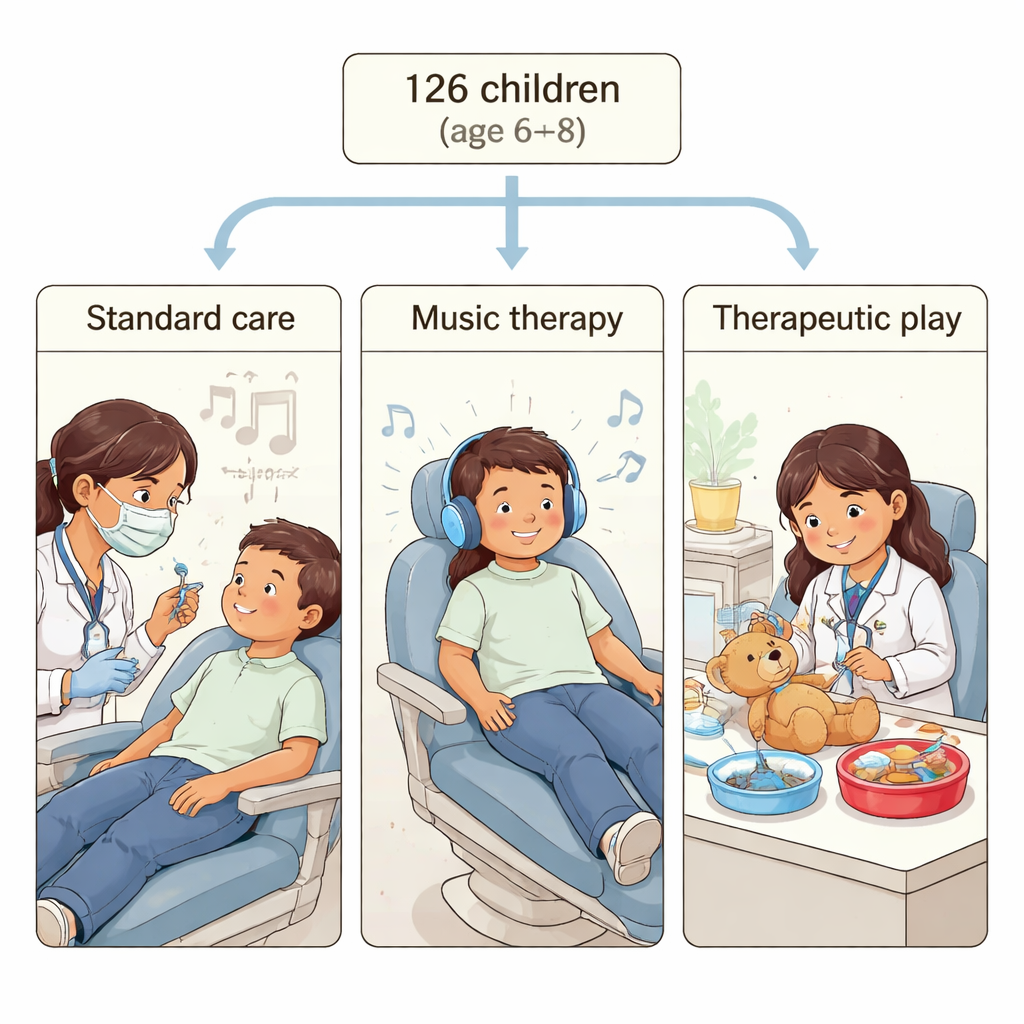
The researchers worked with 126 healthy children between 6 and 8 years old who needed a baby molar removed in the upper jaw. None had previous dental treatment, so their reactions were not shaped by earlier good or bad experiences. The children were randomly placed into three equal groups. One group received standard care using the Tell-Show-Do method. A second group had the same explanations plus music therapy: each child chose a favorite song, which played for about ten minutes and continued during the extraction. The third group experienced therapeutic play: using a plush toy and a toy dental set, a trained researcher acted out the tooth removal and then let the child play dentist for ten minutes before the real procedure.
What the Team Measured
To understand how anxious or relaxed the children felt, the team used simple picture-based scales that show faces ranging from very happy to very upset. The kids pointed to the face that best matched their feelings before and after the extraction. The researchers also watched for changes in heart rate, blood pressure, oxygen levels, and body temperature—physical signals that rise when we are stressed. Right after the tooth was pulled, children used another faces scale to show how much pain they felt. This mix of emotional and physical measures gave a fuller picture of how each approach affected both fear and discomfort.
Play and Music Ease Fear and Pain
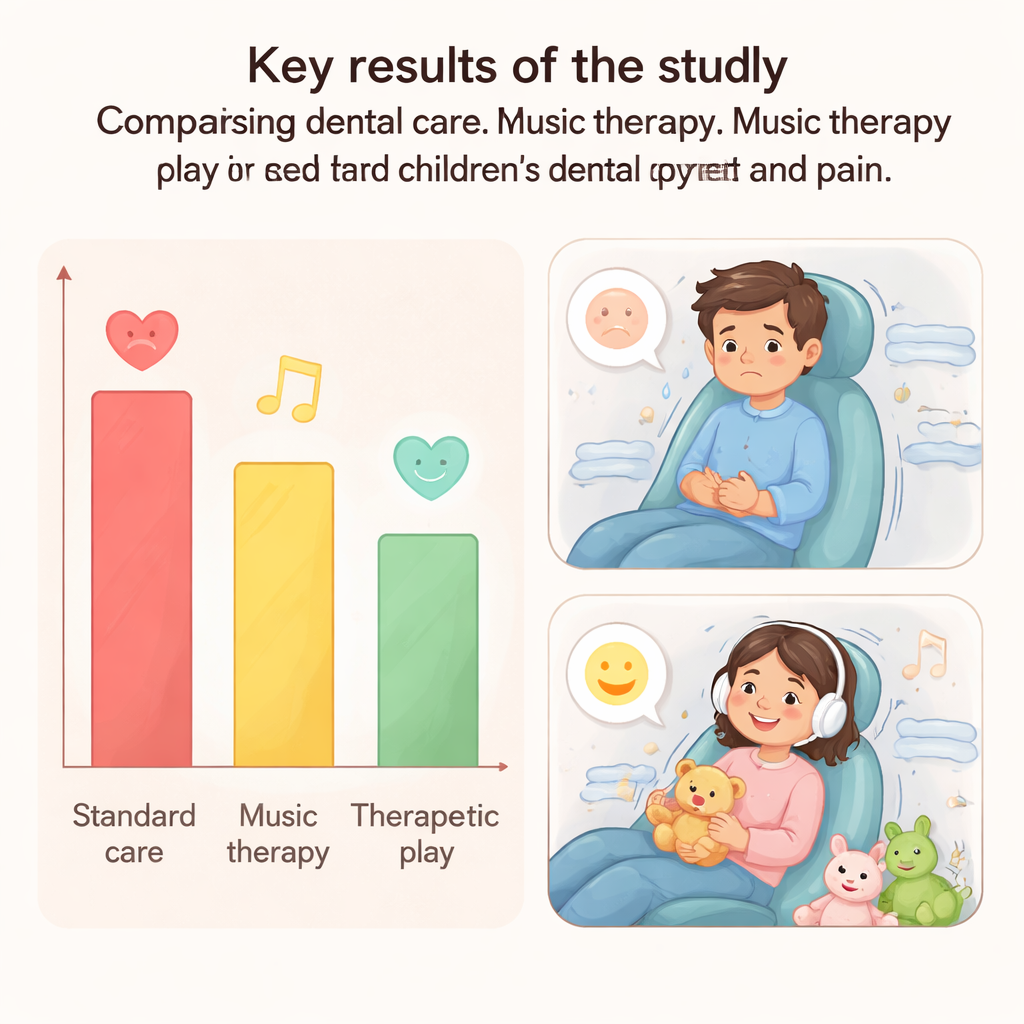
All three groups showed some drop in anxiety scores after the procedure, suggesting that simply going through the visit and realizing it was manageable brought some relief. But the biggest improvements came from therapeutic play. Children who had rehearsed the procedure with toys showed the largest decrease in fear on both picture scales and reported the lowest pain after extraction. Music therapy also clearly helped: these children were less anxious and reported less pain than those who received standard Tell-Show-Do alone, though not as much as the play group. Physical measures like heart rate and blood pressure rose somewhat during treatment in every group—likely a normal reaction to both the procedure and mild pain—so differences there were small.
What This Means for Families
To a layperson, the message is straightforward: giving children a chance to "practice" a dental visit with toys or to sink into familiar music can make real procedures feel less scary and less painful. In this study, play worked best, with music still offering clear benefits over standard care. These techniques require no drugs, are inexpensive, and can be done in an ordinary dental office. While the research looked only at short-term effects during a single visit, it suggests that child-centered approaches like therapeutic play and music could help build more positive, cooperative experiences at the dentist—and healthier smiles over time.
Citation: Kabasakal, H.N., Aydınoğlu, S. & Günaçar, D.N. Impact of therapeutic play and music therapy on dental anxiety and pain perception in pediatric patients: a clinical study. Sci Rep 16, 5697 (2026). https://doi.org/10.1038/s41598-026-36631-x
Keywords: pediatric dental anxiety, music therapy, therapeutic play, tooth extraction pain, behavior management in children