Clear Sky Science · en
Attitudes of healthcare students in Syria toward organ donation and their association with healthcare system distrust in the context of a prolonged war
Why this topic matters to everyday people
Across the world, thousands of people die each year while waiting for a transplant that could have saved their lives. In Syria, years of war have damaged hospitals, pushed doctors to leave, and deepened public suspicion of the health system. This study looks at how future doctors, dentists, and pharmacists in Syria feel about donating organs, and how much they trust the system that would handle those organs. Their views matter because they will soon be the ones explaining donation to families and helping shape public opinion.
Young health workers on the front line of donation
The researchers surveyed 615 students at one of Syria’s largest universities, asking about their background, where they learned about organ donation, how they feel about giving organs after death, and how much they trust the health system. Almost all the students had heard of organ donation, and social media was the main source of information, followed by university courses. On average, students showed moderately positive attitudes toward donating organs, especially when they thought about the lives that could be saved. Medical students, those from higher-income families, and final-year students tended to be the most supportive of donation, suggesting that more knowledge and experience can build acceptance.
Trust in hospitals is a fragile link
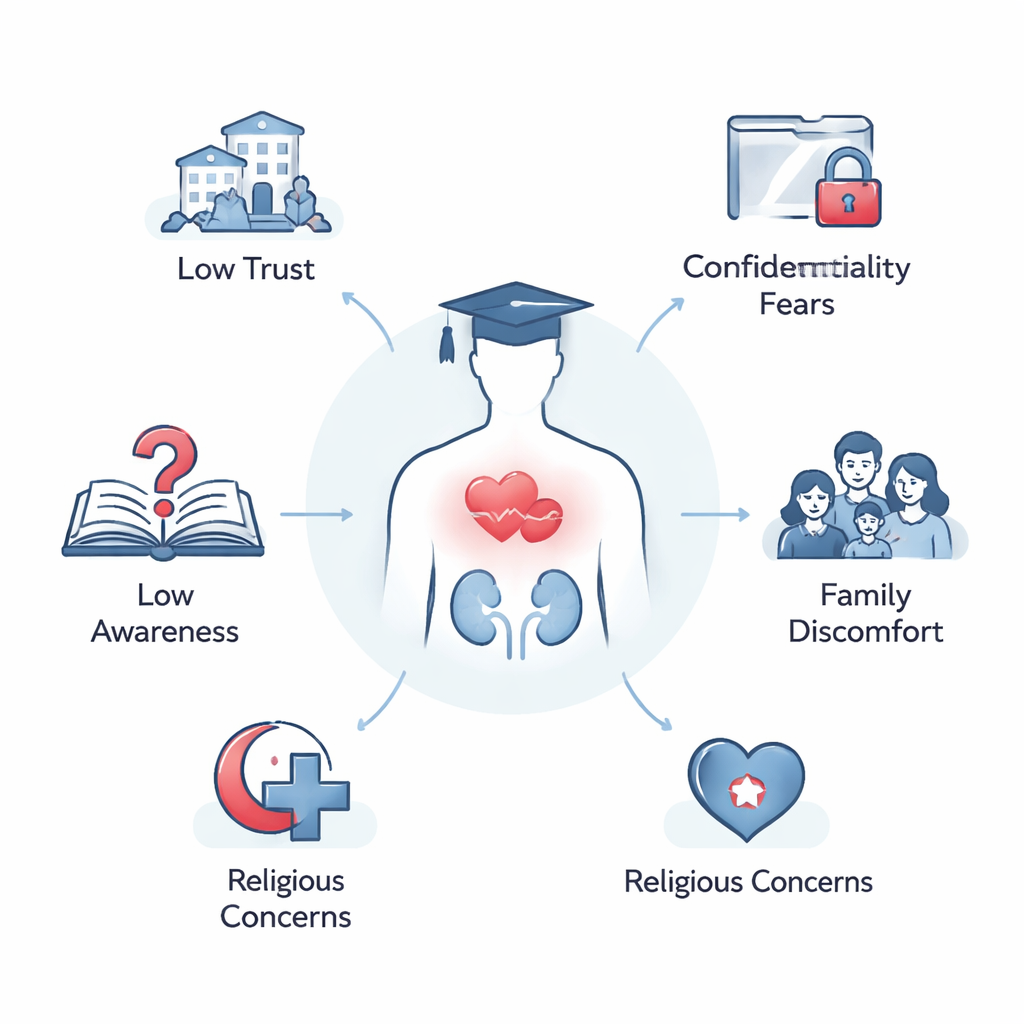
Despite their overall support for organ donation, many students expressed clear doubts about how organs and donor information are handled. A large share believed that organs might be used for purposes not fully explained to the public, or that donor data could reach people who should not have it. More than half did not trust that donor privacy was truly protected, and many felt that the wishes and rights of donors after death were not the top priority. These responses point to a deep worry about honesty, confidentiality, and fairness inside the health system—concerns that have been sharpened by reports of organ trafficking and human rights abuses during the war.
Feelings when talking to grieving families
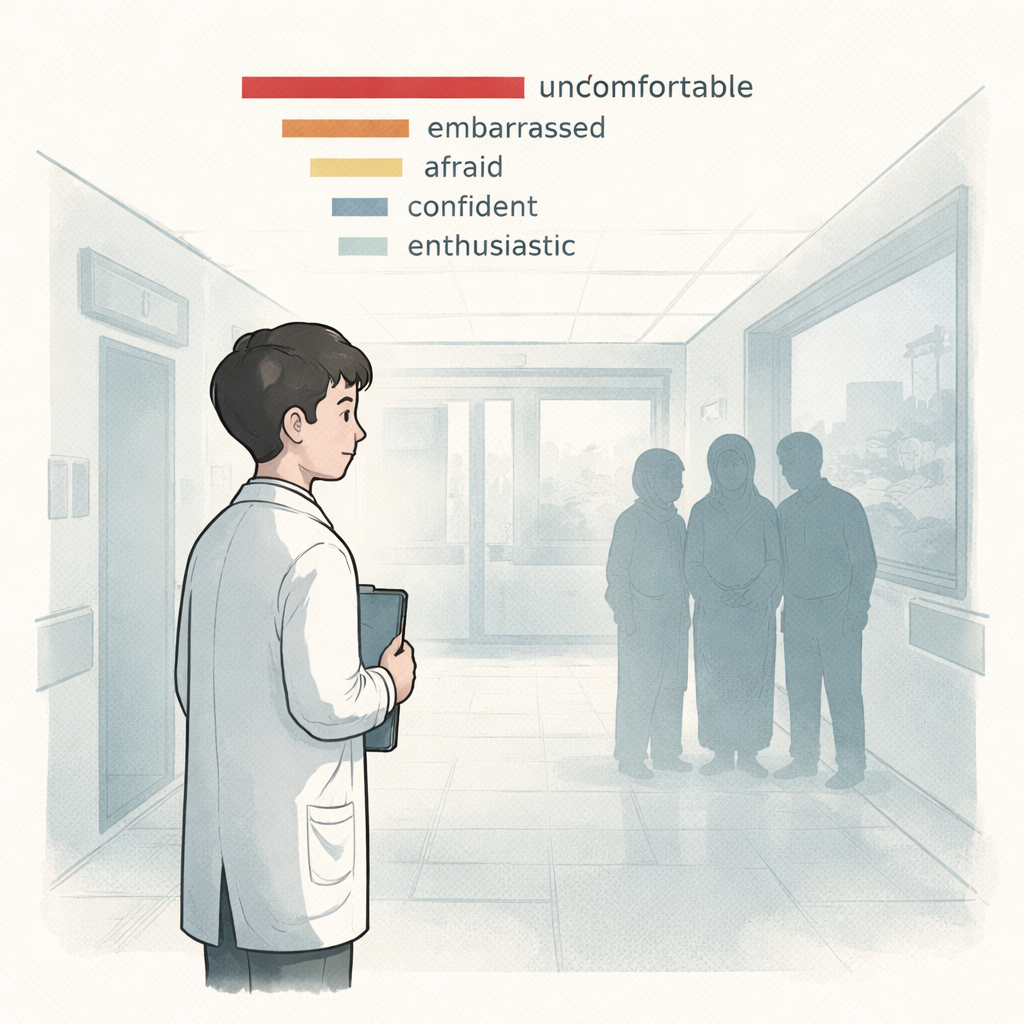
The survey also asked students to imagine themselves in one of the hardest situations a health worker can face: asking the family of a deceased patient to consider organ donation. The most common expected feeling was simply “uncomfortable,” followed by embarrassment and fear. Far fewer students imagined feeling confident or enthusiastic in that moment. This emotional unease is important, because in real life, a tense or uncertain conversation can easily close the door on donation. Many students also believed that religious concerns, fear of organ trafficking, and family resistance were major obstacles to building a stronger culture of donation in Syria.
Religion, money, and the wish to help
When students were asked whether they would personally donate their organs if encouraged by law or religion, around seven in ten said yes. For most of them, the main reason was a simple one: the desire to save other people’s lives. Smaller groups mentioned financial rewards or religious motives. At the same time, two-thirds of students did not know the details of Syrian laws governing organ donation and transplantation. This mix—strong humanitarian motives but patchy knowledge of the rules—suggests that better information, clearer laws, and respected religious guidance could all increase willingness to donate.
What this means for patients and the future
In plain terms, this study shows that many Syrian healthcare students like the idea of organ donation, but do not fully trust the system that would carry it out, and do not yet feel ready to discuss it with grieving families. The authors argue that improving medical education, running honest public campaigns (especially on social media), and passing clear, enforceable laws could help rebuild trust. If hospitals can show that organs are handled ethically, that donors’ wishes are respected, and that families are treated with care, today’s students may become tomorrow’s strongest advocates for donation—turning more tragic deaths into second chances for patients in desperate need.
Citation: Hanifa, H., Al-Refaai, M.M., Ganama, N.M. et al. Attitudes of healthcare students in Syria toward organ donation and their association with healthcare system distrust in the context of a prolonged war. Sci Rep 16, 6168 (2026). https://doi.org/10.1038/s41598-026-36630-y
Keywords: organ donation, healthcare students, Syria, medical trust, transplant attitudes