Clear Sky Science · en
Knowledge, attitudes, and practices of resident physicians and intern physicians on narrative medicine
Why Stories Matter in the Doctor’s Office
When we visit a doctor, we bring more than lab results and symptoms—we bring our life stories, fears, and hopes. Narrative medicine is an approach that asks doctors to truly listen to those stories and use them in care. This study from three hospitals in Yunnan Province, China, looked at how well young doctors and medical trainees understand, value, and actually use narrative medicine. Its findings shed light on how future physicians can become better listeners and partners for their patients.
Listening as a Medical Skill
Narrative medicine is built on the idea that a patient’s story is as important as their test results. It trains doctors to recognize, understand, and respond to what patients say about their illness and their lives. Around the world, medical schools are weaving this approach into their teaching because it strengthens empathy, emotional awareness, and communication—qualities that help doctors treat people, not just diseases. For example, in cancer care, asking patients to write or talk about their experiences can ease anxiety and improve how closely they follow treatment. In family clinics and palliative care, careful listening helps uncover hidden worries and social pressures that shape health.
What the Researchers Wanted to Know
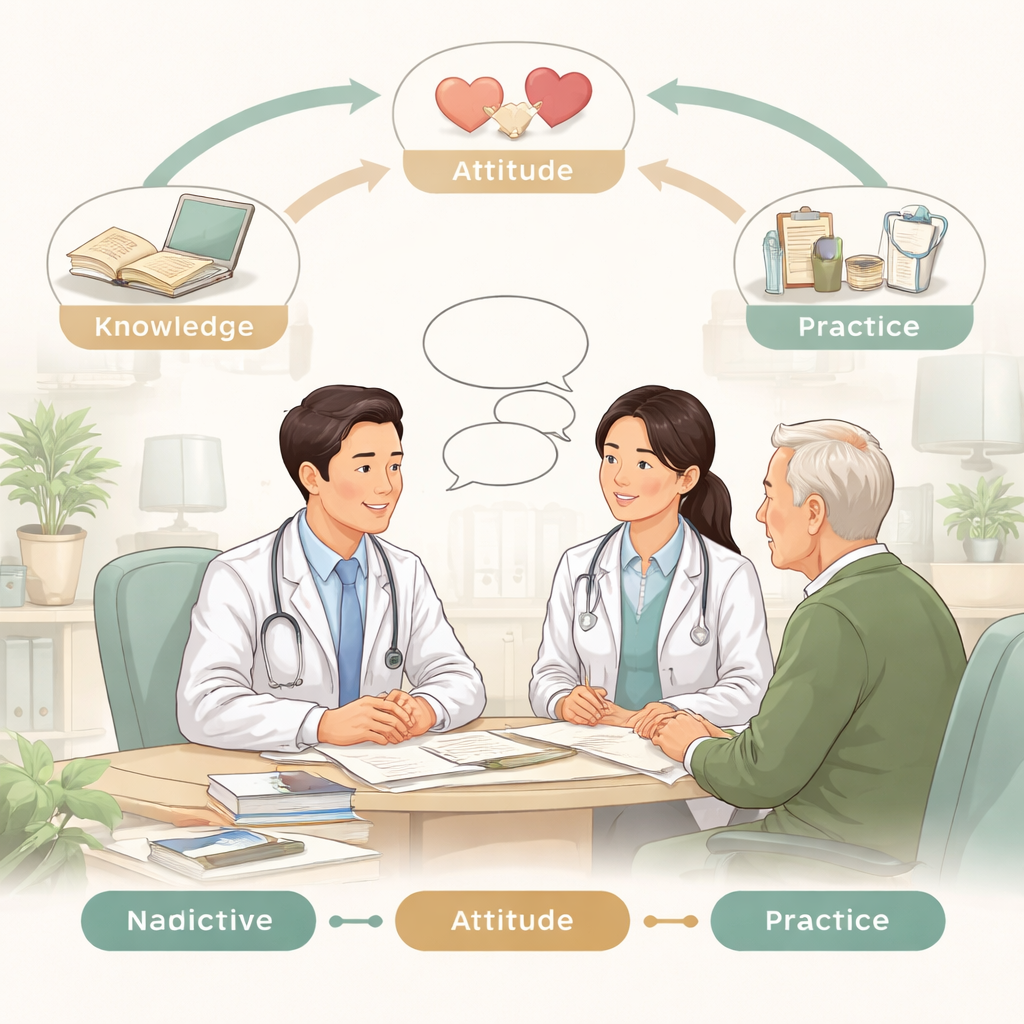
Despite growing interest in narrative medicine, no one had yet examined how Chinese resident physicians and interns think about it or use it in daily work. To fill this gap, researchers conducted a survey in August 2024 among 482 young doctors and trainees at three large hospitals. They used a detailed questionnaire to measure three areas: what participants knew about narrative medicine, how they felt about it, and how often they put its ideas into practice with patients. Practice was scored with a special scale that looks at skills like active listening, empathy, and the ability to organize a patient’s story into a clear picture that can guide care.
What Young Doctors Know and Do
The study found that overall knowledge and attitudes were only moderate, and actual use of narrative skills was relatively low. Many participants only partly understood basic ideas—for instance, that narrative medicine can be studied scientifically or that there are tools to measure a doctor’s ability to work with stories. A substantial share did not recognize key concepts such as narrative nursing, a related approach in bedside care. While most respondents agreed that narrative medicine is important and that hospitals and schools should teach it, many doubted whether it could be fully carried out in busy clinics. Some admitted that they struggled to find the right topics to build rapport or that they sometimes cut patients off or steered conversations in a rigid way.
How Knowledge Shapes Care
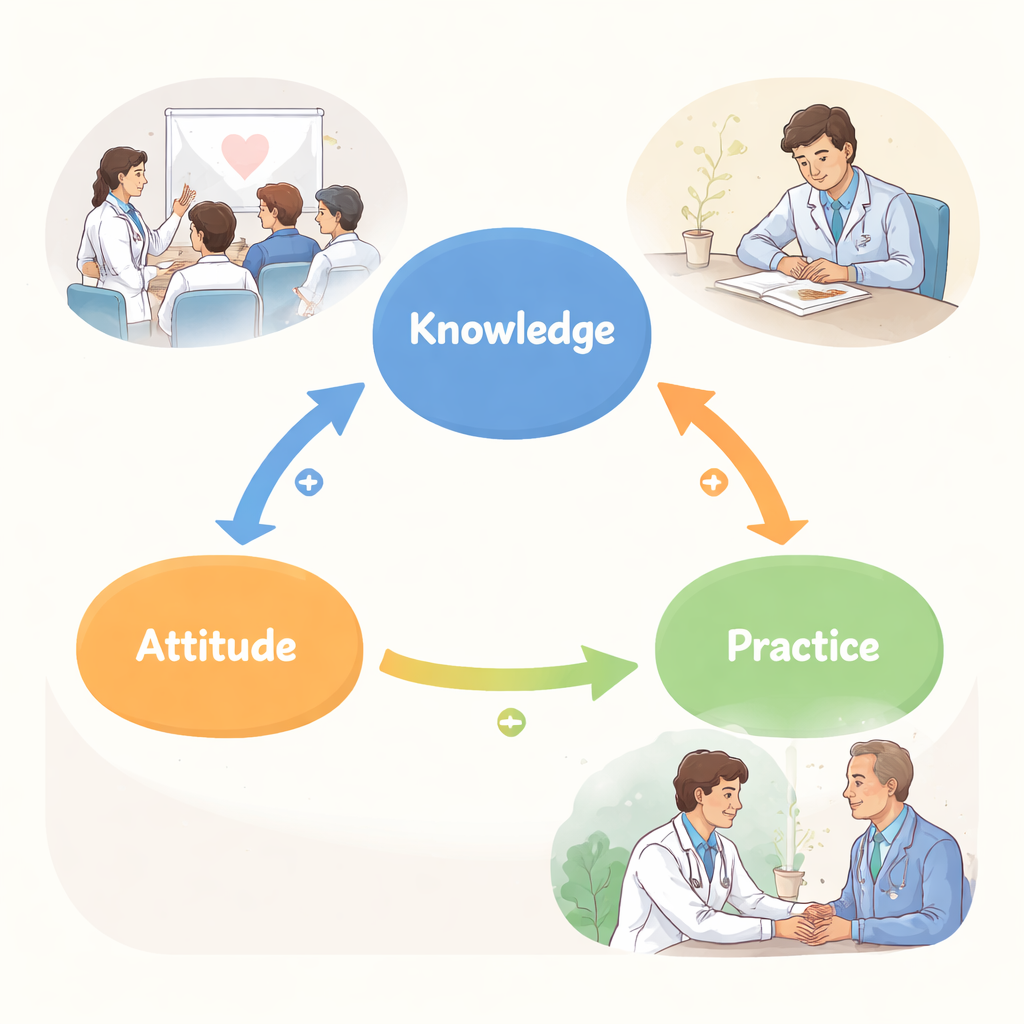
By using statistical models, the researchers showed that these three parts—knowledge, attitude, and practice—are tightly linked. Doctors who knew more about narrative medicine tended to have more positive attitudes toward it. Greater knowledge also went along with better narrative skills in the clinic, such as picking up on changes in a patient’s tone of voice or organizing a scattered story into something that can guide decisions. On top of that, doctors with more favorable attitudes were more likely to use these skills with patients. In other words, knowing the concepts made trainees more open to narrative medicine, and that openness encouraged them to put it into action.
Training the Next Generation of Listeners
The study also highlighted what seems to help. Participants who had already taken narrative medicine training scored higher in knowledge, attitudes, and practice than those who had not. Those who preferred structured courses or workshops did better than those who relied on ad hoc or unspecified learning. The authors suggest that weaving narrative medicine into regular medical and residency education—through courses, case discussions, role-playing, reflective writing, and online modules—could steadily build these skills. They also propose pairing trainees with mentors or professionals experienced in counseling or narrative work to give them real-world practice and feedback.
What This Means for Patients
For everyday patients, the message is hopeful but clear: many young doctors are open to listening more deeply, but they need better preparation and support to do so consistently. The researchers conclude that resident physicians and interns currently have limited knowledge and use of narrative medicine, even though they generally see its value. Strengthening training in this area could help doctors hear the full story behind an illness—its emotional, social, and personal sides—not just the symptoms. Over time, this kind of attentive, story-centered care may lead to more trust, better communication, and treatment plans that fit patients’ lives as well as their bodies.
Citation: Lv, Y., Rao, J., Li, Y. et al. Knowledge, attitudes, and practices of resident physicians and intern physicians on narrative medicine. Sci Rep 16, 5836 (2026). https://doi.org/10.1038/s41598-026-36625-9
Keywords: narrative medicine, resident physicians, doctor–patient communication, medical education, patient-centered care