Clear Sky Science · en
ALKBH1 gene polymorphisms confer hepatoblastoma susceptibility in Chinese children
Why tiny DNA changes matter for a rare childhood cancer
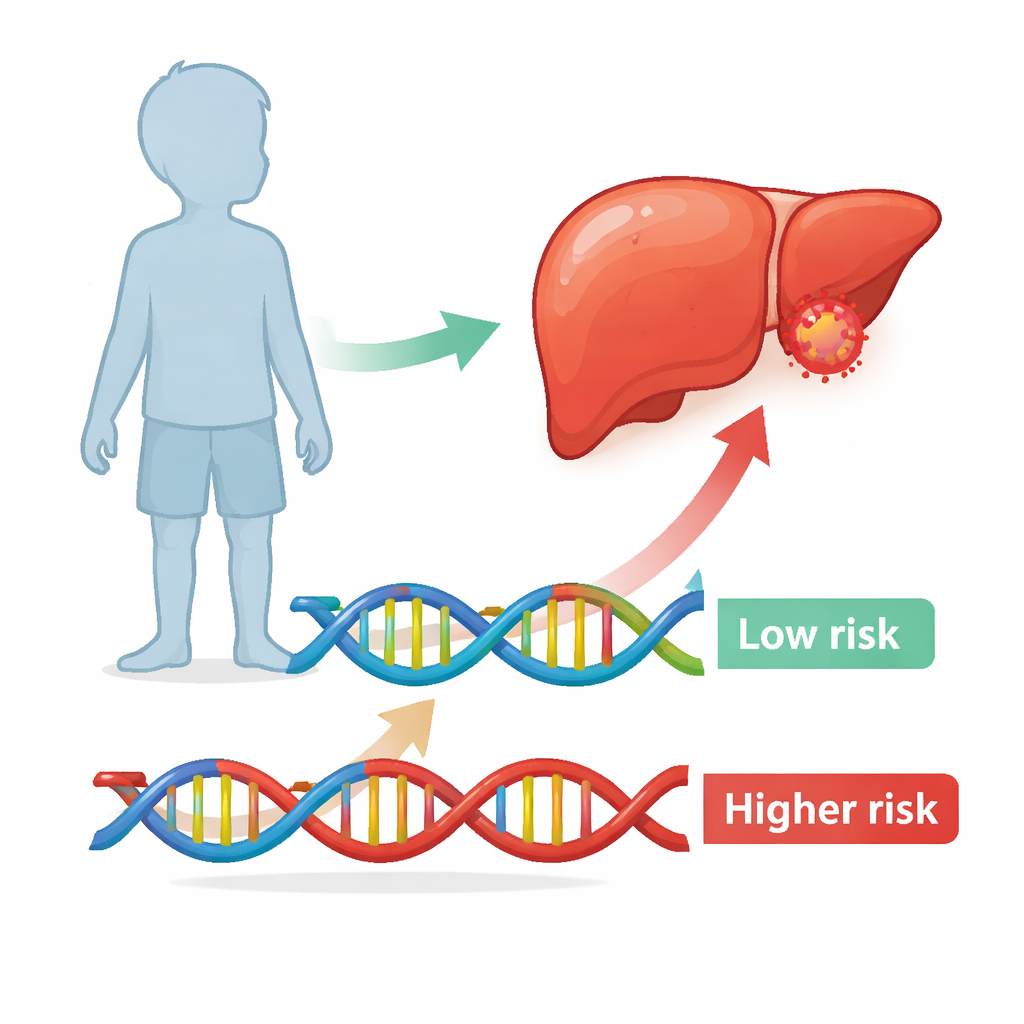
Hepatoblastoma is the most common liver cancer in young children, yet its exact causes remain murky. Parents often ask why a seemingly healthy toddler could develop such a serious disease. This study looks at one possible piece of the puzzle: small inherited differences in a gene called ALKBH1, which helps control how cells read their genetic instructions. By examining the DNA of Chinese children with and without hepatoblastoma, the researchers show that specific versions of this gene can either raise or lower a child’s risk of developing the tumor.
A rare cancer in very young children
Hepatoblastoma mostly affects infants and toddlers under three years old and often shows up as a firm lump in the belly. Thanks to surgery and chemotherapy, survival rates have improved dramatically over recent decades, but doctors still lack clear answers about why the cancer starts in the first place. Some children with certain syndromes or chromosomal abnormalities are known to be at higher risk, and previous work has hinted that many genes involved in cell growth and DNA repair may play a role. The ALKBH1 gene, which helps manage chemical marks on RNA and DNA, had been linked to several adult cancers but had not yet been explored in hepatoblastoma.
Focusing on a gene that edits cellular messages
ALKBH1 is part of a family of enzymes that fine-tune the chemical “punctuation marks” on our genetic material. These marks do not change the DNA sequence itself, but they can alter how strongly certain genes are turned on or off. In particular, ALKBH1 removes a small chemical tag called N1-methyladenosine from RNA molecules that help build proteins. Because this kind of regulation has been tied to cancer growth and spread in other organs, the authors suspected that inherited differences in ALKBH1 might influence which children are more likely to develop hepatoblastoma.
A seven-hospital genetic comparison
The team carried out a case–control study across seven hospitals in China, analyzing DNA from 313 children with hepatoblastoma and 1,446 cancer-free children. They focused on three common variants in the ALKBH1 gene, each representing a single-letter change in the DNA code. Using a standard genotyping method and careful statistical analyses that accounted for age and sex, they compared how often each variant appeared in the patient group versus the control group. The cases and controls were well matched in age and sex, giving the researchers confidence that any differences they saw were likely tied to cancer risk rather than obvious demographic imbalances.
Risk-raising and risk-lowering versions of ALKBH1
The results revealed a mixed picture. One variant, known as rs1048147, appeared protective: children carrying its A version had about a 30% lower risk of hepatoblastoma compared with those without it. The other two variants, rs6494 and rs176942, showed the opposite pattern. Children with two copies of the A version of rs6494, although rare, had several times higher risk, and those with two copies of the G version of rs176942 had roughly double the risk. When the researchers looked more closely by age, sex, and disease stage, they found that some effects were strongest in older children, in girls, or in those with earlier-stage tumors, suggesting that inherited risk may interact with other biological or environmental factors.
How nearby genes may be pulled into the act
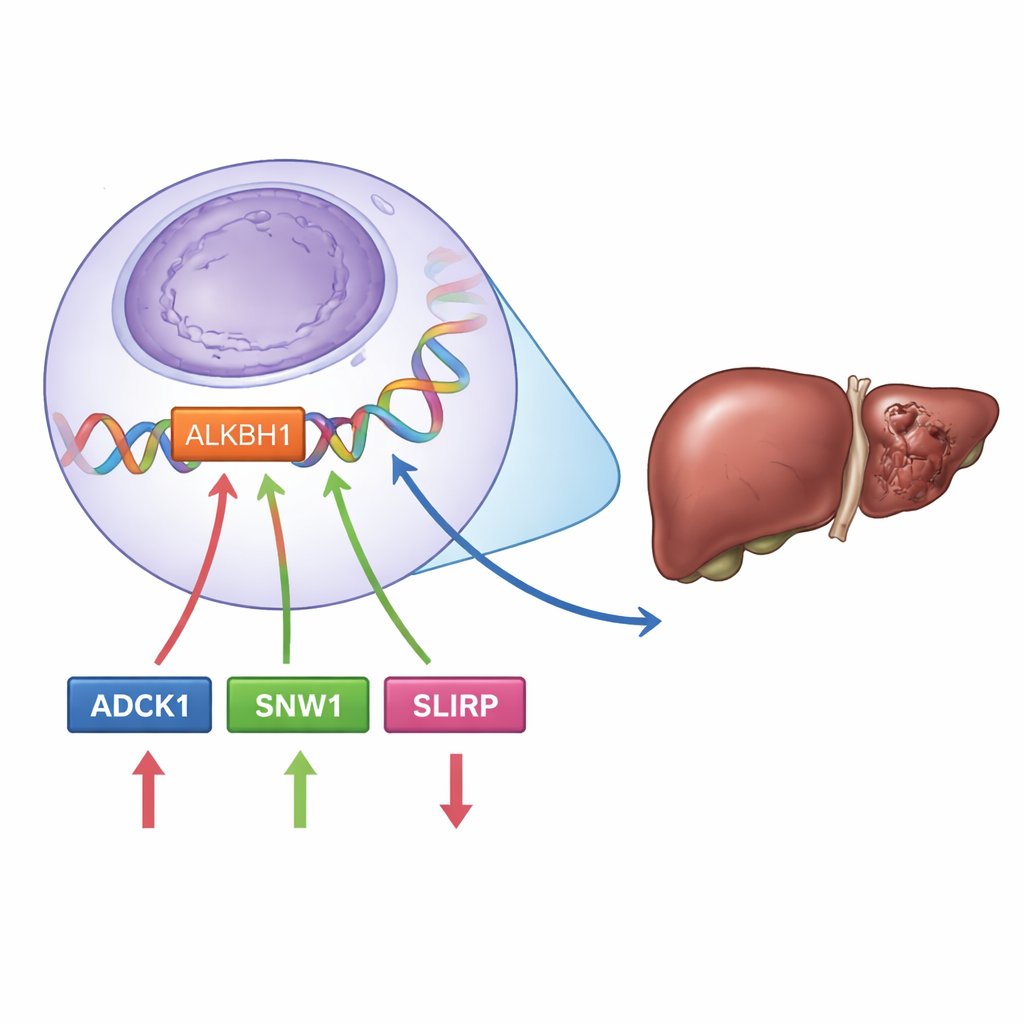
To probe how these DNA changes might influence biology, the authors turned to large public databases that link genetic variants to gene activity in human tissues. They found that the rs1048147 variant was associated with higher activity of two neighboring genes, ADCK1 and SNW1, in thyroid tissue. Another variant, rs176942, was tied to lower activity of a nearby gene called SLIRP in cultured skin cells, and rs6494 was associated with reduced ALKBH1 activity in blood. These genes are involved in pathways such as energy production, cell signaling, and hormone responses, all of which can affect how cells grow and divide. Although these measurements were made in non-liver tissues, they hint that the same variants may subtly rewire regulatory circuits relevant to liver development and cancer.
What this means for families and future research
For parents, these findings do not provide a test that can predict which child will get hepatoblastoma, and most children carrying these variants will never develop cancer. Instead, the study shows that common, inherited differences in a single regulatory gene can nudge risk up or down, adding to a complex web of genetic and environmental influences. By pinpointing specific sites in ALKBH1 that matter for susceptibility, the work lays groundwork for future studies in liver cells and animal models to uncover how altered gene regulation contributes to this rare childhood tumor and, eventually, to identify more precise ways to diagnose, monitor, or treat it.
Citation: He, C., Pan, L., Zeng, X. et al. ALKBH1 gene polymorphisms confer hepatoblastoma susceptibility in Chinese children. Sci Rep 16, 5893 (2026). https://doi.org/10.1038/s41598-026-36619-7
Keywords: hepatoblastoma, childhood liver cancer, genetic risk, ALKBH1 gene, RNA modifications