Clear Sky Science · en
Prognostic factors for severe community-acquired pneumonia in high altitude areas
Why thin air makes lung infections more dangerous
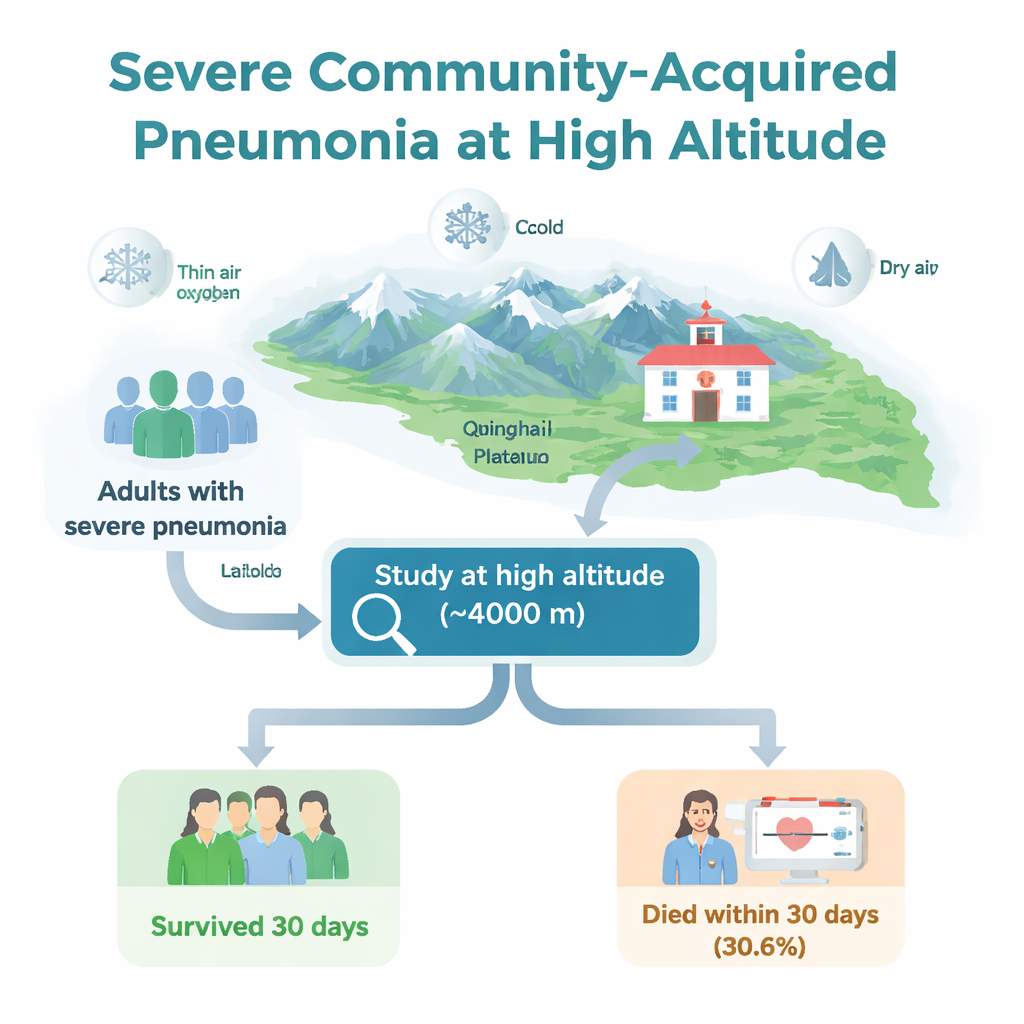
For people living on or visiting the "Roof of the World," a bad case of pneumonia can quickly turn life‑threatening. At high altitudes, the air is thin, cold, and dry, placing extra stress on the lungs and heart. Doctors on the Qinghai‑Tibet Plateau wanted to know which warning signs best predict who with severe community‑acquired pneumonia is most likely to die within a month—information that can guide faster, smarter treatment and help hospitals with limited resources focus care where it is needed most.
Who was studied on the Himalayan plateau
The research team followed 183 adults living permanently on the Qinghai‑Tibet Plateau, most at around 3,650–4,200 meters above sea level, all hospitalized with severe community‑acquired pneumonia—serious lung infections that develop outside the hospital. Every patient was treated at a major hospital in Lhasa between 2023 and 2024 and then tracked for 30 days. By the end of that period, nearly one in three patients (30.6%) had died, a sobering reminder of how dangerous severe pneumonia remains, even with modern care.
How doctors searched for early danger signs
To find out what separated survivors from those who died, the scientists compared dozens of features recorded soon after admission. These included age, symptoms, blood tests, oxygen levels, blood pressure, and whether the germ causing pneumonia could be identified. They then used statistical models to sort out which factors were truly driving the risk of death, rather than simply happening alongside it. Finally, they combined the strongest predictors into a simple risk tool—a kind of scorecard, known as a nomogram—that estimates a person’s chance of surviving 30 days.
The five red flags that matter most
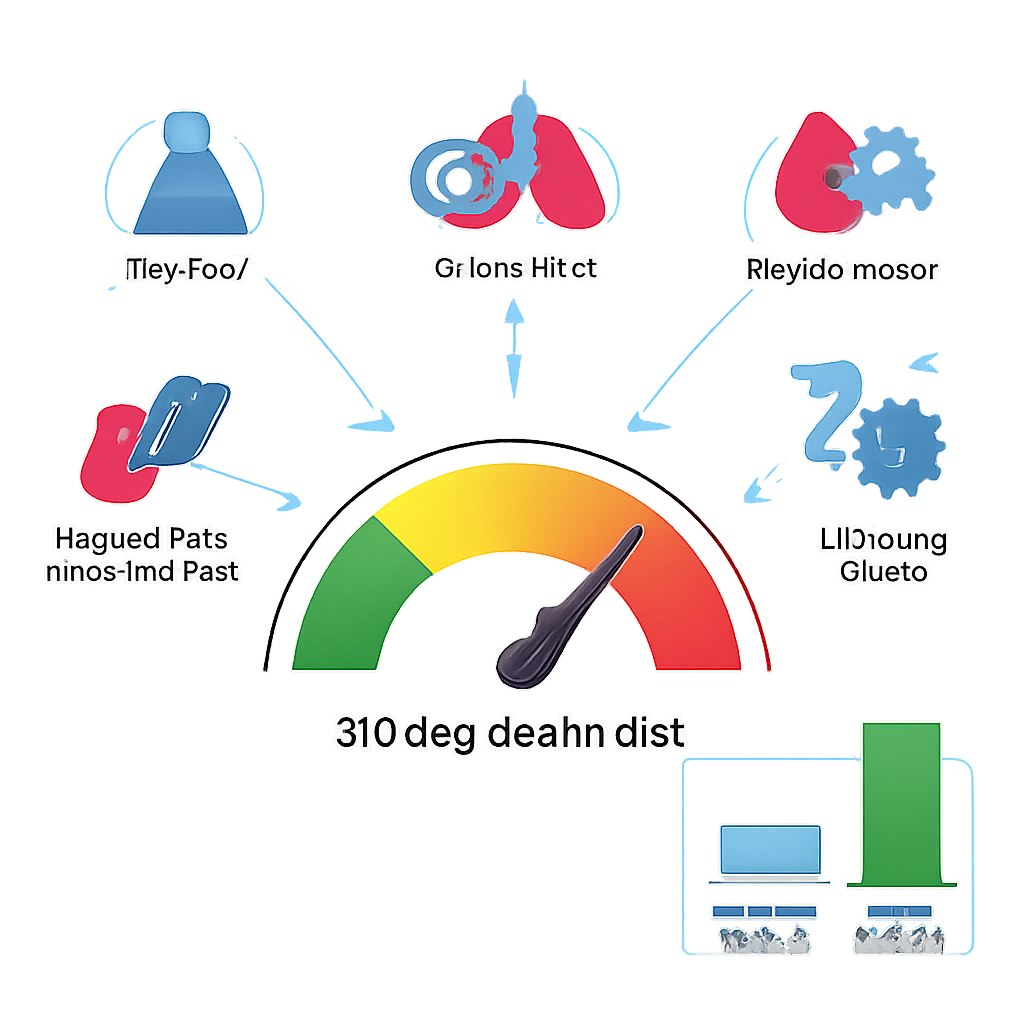
Five features stood out as independent danger signals. Patients aged 65 or older were at higher risk, likely because aging lungs and immune systems cope poorly with infection and thin air. Those in septic shock—a severe state where infection causes blood pressure to crash and organs to fail—were far more likely to die. Very low oxygen levels in the blood, captured by a measurement called the P/F ratio, signaled lungs struggling to pull enough oxygen from the already rarefied high‑altitude air. High levels of D‑dimer, a fragment produced when blood clots break down, hinted at widespread clotting and inflammation throughout the body. Finally, patients whose doctors could not pinpoint the germ causing the pneumonia did worse, probably because treatment could not be tailored precisely to the infection.
A new score that outperforms standard hospital tools
When the team blended these five red flags into a single prediction tool, it proved more accurate than widely used hospital scoring systems such as CURB‑65, the Pneumonia Severity Index, APACHE II, and the SOFA score. In both the main group of patients and a separate validation group, the new model more reliably separated lower‑risk patients from those in serious danger. The researchers could even divide people into low, medium, and high‑risk bands: those in the high‑risk band had sharply higher death rates within 30 days than those in the low‑risk band.
What this means for people living in thin air
For patients and families on the plateau and in other high‑altitude regions, this study shows that age, shock, severe lack of oxygen, high clot‑related markers, and an unknown cause of infection together paint a clear picture of danger after a severe pneumonia. A simple bedside tool based on these factors can help doctors quickly see who needs the most aggressive monitoring, breathing support, and efforts to find the exact germ. While more research in other high‑mountain settings is needed, this work offers a practical roadmap for saving lives where the air is thin and every breath counts.
Citation: Zhang, Y., Xiao, B., Yang, L. et al. Prognostic factors for severe community-acquired pneumonia in high altitude areas. Sci Rep 16, 6116 (2026). https://doi.org/10.1038/s41598-026-36609-9
Keywords: high altitude pneumonia, severe lung infection, community-acquired pneumonia, pneumonia risk factors, Qinghai-Tibet Plateau