Clear Sky Science · en
Comparative in vitro cytotoxicity of free curcumin and a liposomal curcumin formulation on various human cancer cell lines
Turning a Spice into a Sharper Cancer Weapon
Turmeric, the bright yellow spice in many kitchens, contains curcumin, a compound long praised for its anti-inflammatory and anticancer potential. Yet curcumin has struggled to live up to the hype in real-world treatments because our bodies do not absorb it well. This study explores a way to “repackage” curcumin inside tiny fat bubbles made from plant material, to see whether this simple change can make the spice-derived molecule more lethal to cancer cells while remaining gentle on healthy ones.
Why Curcumin Needs a Better Suit
Curcumin can slow the growth of many types of tumors and trigger cancer cells to self-destruct. However, it has three big drawbacks: it does not dissolve well in water, it breaks down easily, and only a small fraction reaches the inside of cells where it can do its job. Because curcumin prefers oily environments, much of it gets trapped in cell membranes instead of the cell interior. As a result, even though curcumin is inexpensive and generally safe, its direct medical use against cancer has been limited.
Tiny Bubbles Built from Plants
To tackle this problem, the researchers built liposomes—microscopic bubbles made of the same type of fatty layers that form cell membranes. They used soy lecithin, an affordable, plant-derived ingredient commonly found in food products, mixed with cholesterol and curcumin. Using a standard method in which a thin film of these components is rehydrated and then broken down into smaller spheres, they produced curcumin-loaded liposomes about 100 nanometers across—roughly one-thousandth the width of a human hair. Measurements of electrical charge on the liposome surface showed a strong negative value, suggesting these particles are stable in liquid and resist clumping. Structural tests confirmed that curcumin was tightly associated with the lipids rather than floating free in solution. 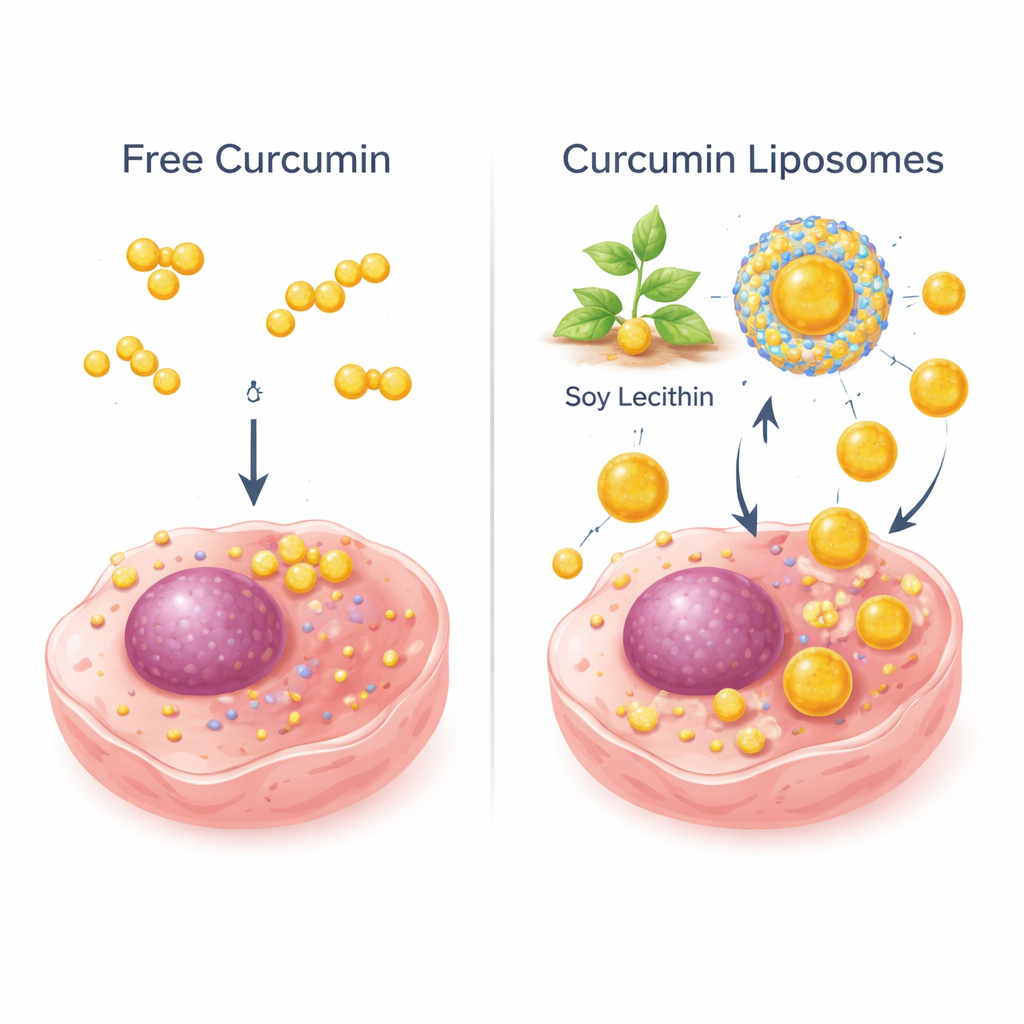
Putting the New Package to the Test
The team then compared plain curcumin with the liposomal version on a panel of human cancer cell lines grown in the lab: drug-resistant breast cancer (MCF-7/ADR), lung (A549), colon (Caco-2), pancreatic (PANC-1), and prostate (PC3) cancer cells. They also included Vero cells, a normal, noncancerous cell line, to check safety. Using a standard color-change test that reflects cell survival, they measured the concentration of each treatment needed to kill half the cells, a value known as IC50. Across every cancer type examined, liposomal curcumin required far lower doses to achieve the same cell-killing effect as free curcumin, signaling a clear boost in potency.
Stronger Against Tumors, Not Harsh on Normal Cells
In the drug-resistant breast cancer cells, for example, liposomal curcumin was nearly three times more effective than plain curcumin. Similar advantages appeared in lung, colon, pancreatic, and prostate cancer cells, with liposomal curcumin consistently showing lower IC50 values. Microscopic images supported these numbers: cancer cells treated with liposomal curcumin displayed more pronounced signs of damage and loss of their normal shape compared with cells exposed to the same dose of free curcumin. Importantly, this extra strength did not translate into extra harm for normal cells. In Vero cells, the toxic dose for liposomal and free curcumin was nearly the same, and statistical tests found no meaningful increase in damage from the liposomal form. 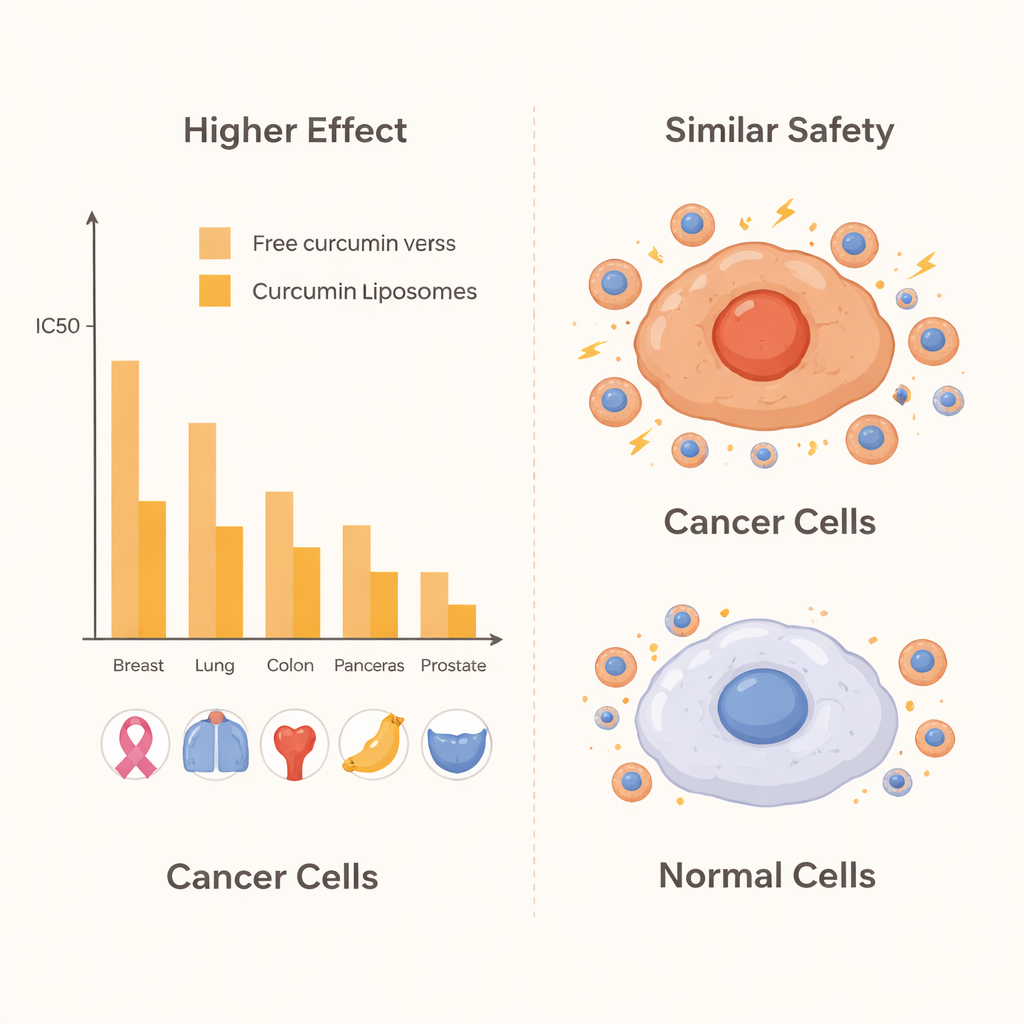
What This Could Mean for Future Cancer Care
To a non-specialist, the takeaway is straightforward: putting curcumin into tiny, plant-based fat bubbles helps it reach and damage cancer cells more efficiently without making it noticeably more dangerous to normal cells, at least in this lab setting. While these experiments were done in dishes, not in patients, they show that a simple, low-cost delivery system can turn a familiar dietary compound into a sharper, more selective anticancer tool. Further studies in animals and, eventually, humans will be needed, but this work suggests that everyday plant materials like soy lecithin could help unlock the medical power of natural substances such as curcumin.
Citation: Ali, S.A., Helmy, H.I. & Gaber, M.H. Comparative in vitro cytotoxicity of free curcumin and a liposomal curcumin formulation on various human cancer cell lines. Sci Rep 16, 6346 (2026). https://doi.org/10.1038/s41598-026-36607-x
Keywords: curcumin, liposomes, cancer cells, drug delivery, soy lecithin