Clear Sky Science · en
Antibacterial activity of essential oils from Brocchia cinerea, Artemisia campestris and Origanum vulgare growing in Algeria against antibiotic-resistant foodborne pathogens
Why kitchen herbs matter for food safety
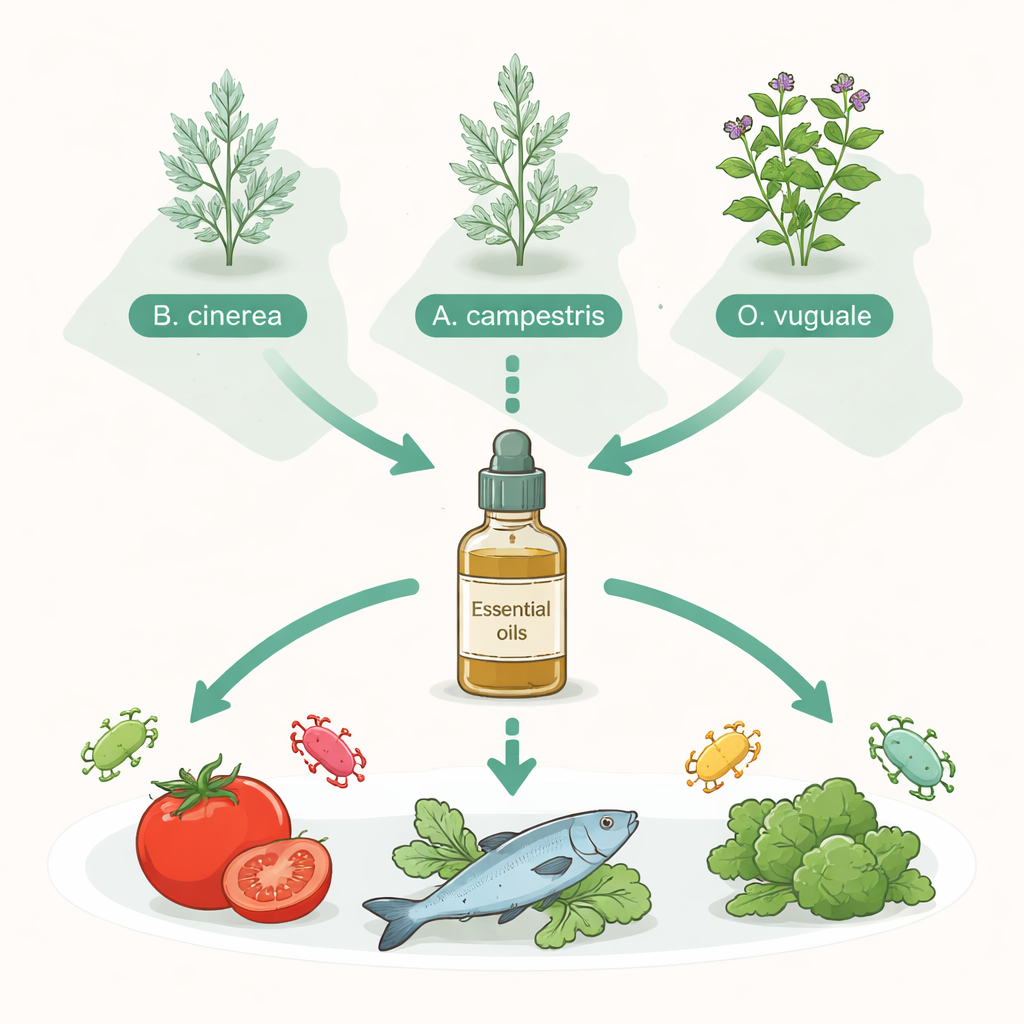
Many of the herbs used to flavor our meals also make powerful natural defenses for plants. This study explores whether essential oils from three wild plants growing in Algeria—Brocchia cinerea, Artemisia campestris, and Origanum vulgare (oregano)—can help fight dangerous foodborne bacteria that no longer respond to many antibiotics. As the world looks for safer ways to keep food fresh and free of germs, these plant oils could become useful allies in protecting public health.
Herbs from a harsh landscape
Algeria’s varied climate, from Mediterranean coast to Sahara Desert, supports a rich flora that local communities have used as medicine for generations. Artemisia campestris is a strongly scented herb used traditionally for heart, metabolic, and digestive problems, and as a food preservative. Origanum vulgare, better known as oregano, serves both as a culinary spice and as a remedy for coughs, spasms, and infections. Brocchia cinerea is a small desert plant long used in teas and infusions to soothe colic, fever, and respiratory and urinary infections. Because these plants already have a reputation for fighting disease, their essential oils are promising candidates as natural food preservatives.
From plant to essential oil
The researchers collected aerial parts (stems and leaves) of the three plants in different regions of Algeria, then extracted their essential oils using steam distillation, a standard method in pharmacopoeias. They measured how much oil each plant yielded and analyzed the chemical makeup of the oils with gas chromatography–mass spectrometry, a technique that separates and identifies individual molecules. Brocchia cinerea oil was dominated by a compound called beta-thujone, along with camphor- and citrus-like molecules. Oregano oil was rich in carvacrol and thymol, two well-known antimicrobial components. Artemisia campestris oil contained a different set of large, ring-shaped molecules, including benzocyclooctenone derivatives and germacrene D. These distinct chemical profiles suggested that each oil might attack bacteria in its own way.
Putting the oils up against tough bacteria
To test their protective power, the team challenged a panel of Gram-negative bacteria isolated from foods such as vegetables, fruits, and fish. Many of these microbes carried genes that make them resistant to last-resort antibiotics, including extended-spectrum cephalosporins, carbapenems, and colistin. Using a standard broth microdilution method in 96-well plates, the scientists exposed the bacteria to decreasing concentrations of each essential oil and determined the minimum inhibitory concentration—the lowest amount that stopped visible growth. All three oils were active against all the tested strains, but not equally so. Brocchia cinerea oil was the most potent, sometimes halting growth at just over 1 microgram per milliliter, especially against a highly resistant species called Myroides odoratimimus. Oregano oil showed intermediate strength, while Artemisia campestris oil generally required higher doses to achieve the same effect.
How plant oils may disarm resistant germs
The authors link the strong antibacterial effects mainly to a few key molecules and to possible teamwork between many smaller components. In Brocchia cinerea oil, beta-thujone, 1,8-cineole, and limonene have all been shown in earlier studies to damage a wide range of bacteria, likely by disturbing the fatty membranes that surround and protect microbial cells. Oregano’s high thymol and carvacrol content is known to make bacterial membranes leaky, causing vital contents to spill out and energy production to fail. Although the exact behavior of the larger terpene molecules in Artemisia campestris oil is still being clarified, compounds such as germacrene D are also suspected to interfere with microbial membranes. Together, these effects help explain why the oils worked even against strains that withstand powerful synthetic drugs.

What this means for safer food
This work shows that essential oils from oregano, Artemisia campestris, and especially Brocchia cinerea can inhibit growth of antibiotic-resistant bacteria that contaminate food. For the general public, the key message is that some familiar and lesser-known herbs may provide natural tools to slow spoilage and reduce foodborne infections, potentially lowering reliance on chemical preservatives and overused antibiotics. However, moving from lab tests to the dinner table will require careful safety checks, studies in real food products, and precise guidelines on how much oil can be used without affecting taste or human health. If these hurdles are met, plant-derived essential oils could become an important part of future food preservation strategies.
Citation: Chelaghma, W., Moussa, M.T.B., Bendahou, M. et al. Antibacterial activity of essential oils from Brocchia cinerea, Artemisia campestris and Origanum vulgare growing in Algeria against antibiotic-resistant foodborne pathogens. Sci Rep 16, 6937 (2026). https://doi.org/10.1038/s41598-026-36603-1
Keywords: essential oils, foodborne bacteria, antibiotic resistance, natural preservatives, oregano