Clear Sky Science · en
Co-occurrence of selenium and toxic elements and health risk assessment in commercial selenium-enriched rice from China
Why Rice and a Little-Known Nutrient Matter
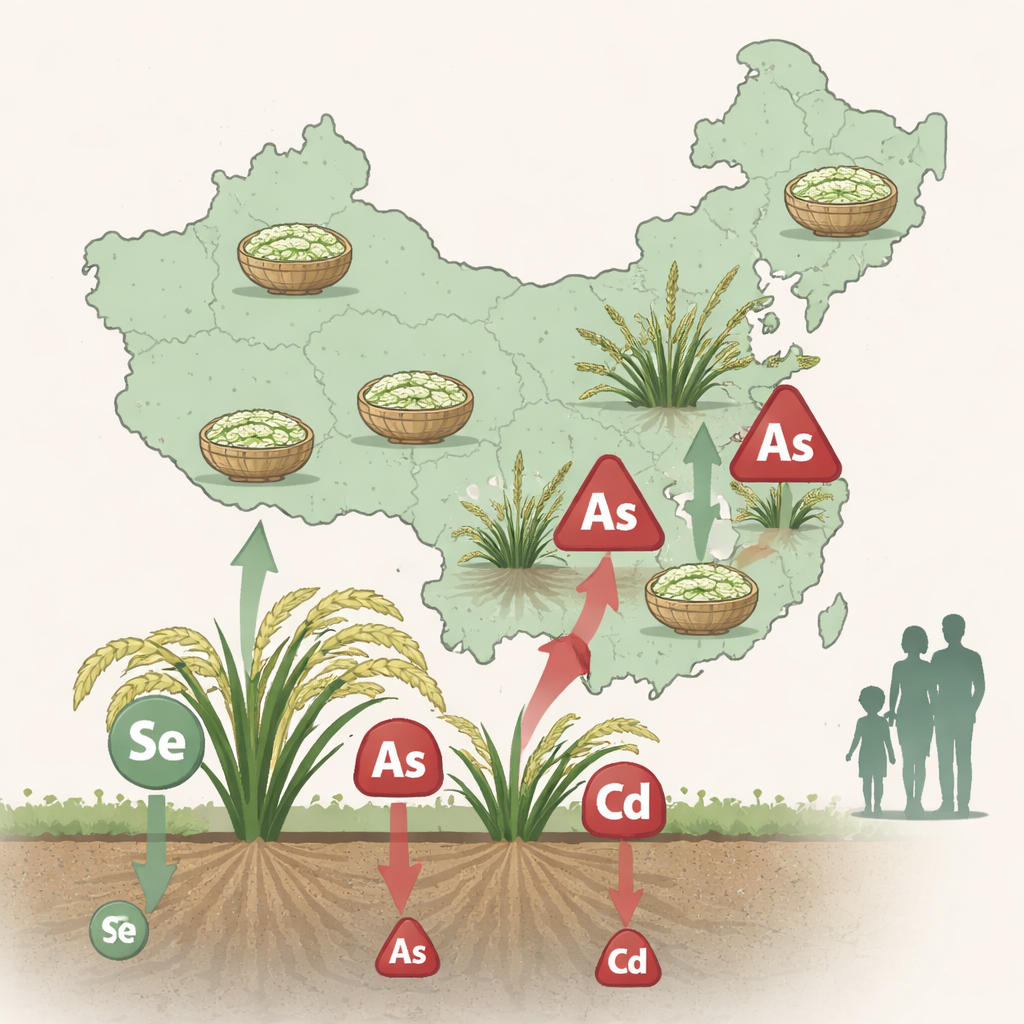
Rice is a daily staple for billions of people, especially in Asia. At the same time, many regions of the world do not get enough selenium, a trace nutrient that helps our bodies fight oxidative stress, support immunity, and may even play a role in preventing certain diseases. One popular solution in China has been to grow “selenium-enriched” rice that naturally contains more of this nutrient. But the same soils that are rich in selenium can also hold toxic metals such as arsenic and cadmium. This study asks a simple but crucial question for consumers: does selenium-enriched rice truly offer a health advantage, or does it quietly introduce new risks?
Checking What Is Really in the Rice
The researchers bought 54 brands of rice marketed as selenium-enriched from online stores across China. These samples came from 14 provinces covering all major rice-growing regions, making the collection broadly representative of what shoppers might find. They measured how much selenium, arsenic, and cadmium were actually in the grains, and then looked at how easily the selenium could be released during digestion using a laboratory model that mimics the human stomach and intestines. Finally, they estimated how much of each element people of different ages would take in if they regularly ate this rice, and compared that with international safety guidelines.
Good Nutrient, Hidden Hitch
On paper, the rice looked promising: the average selenium level was 0.13 milligrams per kilogram of rice, and most samples fell within China’s official range for selenium-enriched rice. However, almost 40% of products did not reach the minimum standard, meaning many bags sold as “selenium-enriched” actually contained too little to qualify. Even more important, only about 15% of the selenium present was in a form that the body could realistically absorb. In other words, the label may say “selenium-rich,” but the practical benefit to the average diner is smaller than the raw numbers suggest. Regions in southern and central China tended to have higher selenium levels in rice, while western and northeastern areas were generally lower.
Toxic Tagalongs in the Grain
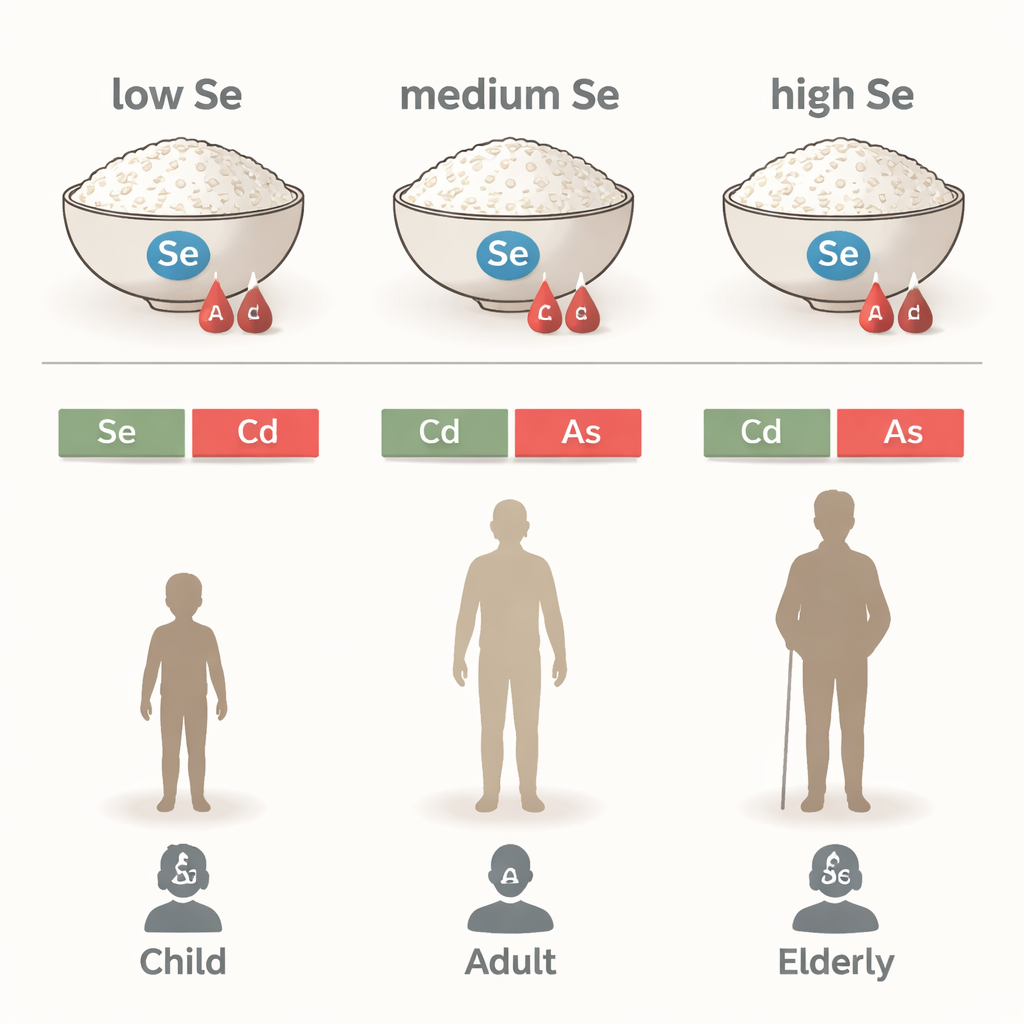
Because selenium-rich soils often also contain other metals, the team carefully examined arsenic and cadmium. On average, both toxic elements stayed below China’s food safety limits, and only a few samples exceeded the standards. That is reassuring for the majority of consumers. Yet the picture was not uniform: certain provinces, especially in the southwest, showed higher cadmium levels, reflecting local geological conditions. When the team ran simulations of daily intake, they found that most people, on average, would still be exposed to arsenic and cadmium at levels considered acceptable. But children emerged as a vulnerable group—they had the highest estimated intake of arsenic and cadmium per kilogram of body weight, while at the same time receiving the least selenium benefit, because they typically eat less rice overall.
Balancing Benefit and Risk for Different Ages
The health assessment revealed a delicate trade-off. For selenium, only about one fifth of consumers would meet the recommended minimum daily intake from selenium-enriched rice alone, and virtually no one would exceed the upper safe limit. This suggests that, used wisely, such rice can help ease selenium deficiency without pushing people into toxic territory. For arsenic, calculated exposures were comfortably below global guideline values across all ages. Cadmium, however, was more concerning at the extremes: while typical consumers stayed within safe bounds, people who consistently eat rice from the more contaminated end of the spectrum could surpass the tolerable intake. This was especially true for high-consuming children, for whom the estimated cadmium dose at the upper end of the distribution crossed the usual safety threshold.
What This Means for Your Dinner Bowl
For most people, selenium-enriched rice in China appears to offer modest nutritional advantages without creating large new risks from arsenic and cadmium. Still, the study shows that not all products live up to their labels and that a small share of rice may carry worrisome cadmium levels. The authors conclude that selenium-enriched rice can be a useful tool to combat selenium deficiency, but only if its production and marketing are carefully supervised. Better quality control, clearer labeling, and attention to children’s exposure could help ensure that this “functional food” truly delivers more help than harm.
Citation: Xie, Q., Li, J., Luo, D. et al. Co-occurrence of selenium and toxic elements and health risk assessment in commercial selenium-enriched rice from China. Sci Rep 16, 5922 (2026). https://doi.org/10.1038/s41598-026-36600-4
Keywords: selenium-enriched rice, arsenic and cadmium, dietary exposure, trace nutrients, food safety China