Clear Sky Science · en
Hydrogen inhalation is associated with a transient rightward shift in prefrontal oxyhemoglobin asymmetry and autonomic modulation
Why breathing hydrogen might matter
Most people think of hydrogen gas as rocket fuel, not as something that could gently tune the brain and heart. Yet in recent years, medical researchers have been exploring whether tiny amounts of hydrogen, breathed in safely, can protect our cells from stress and support brain and heart function. This study asked a simple but important question: what happens in the human brain and in the body’s automatic control of the heart during and after a short session of hydrogen inhalation?
A closer look at hydrogen and the body
Hydrogen is the lightest molecule in the universe, but in biology it may pack a quiet punch. Earlier work in animals and patients suggested that hydrogen can neutralize harmful oxygen radicals, calm inflammation, and protect fragile brain cells after stroke or injury. However, most human studies focused on long-term outcomes, not on what happens in the first minutes and hours after people actually breathe hydrogen. The authors of this study wanted to capture those immediate responses, especially in the front part of the brain that supports attention and decision-making, and in the autonomic nervous system, which automatically regulates heart rate and blood pressure.
How the experiment was done
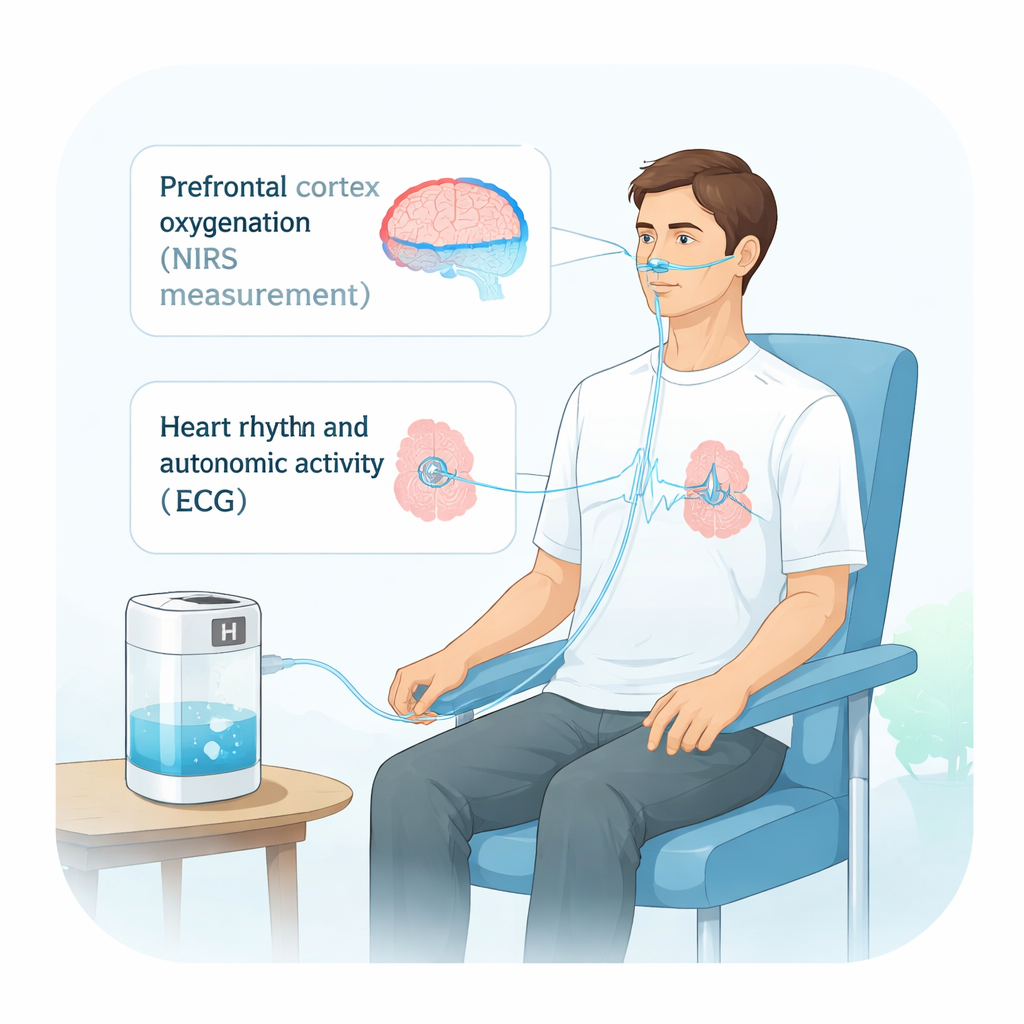
The researchers recruited fifteen healthy adults, mostly middle-aged and older, and asked them to attend a carefully controlled laboratory session. Each person sat quietly and inhaled very pure hydrogen gas through a nasal cannula for 30 minutes, while still breathing normal room air. The team used near-infrared light sensors on the forehead to monitor oxygen-rich and oxygen-poor blood in the left and right sides of the prefrontal cortex, a brain region just behind the forehead. At the same time, a wearable heart monitor recorded every heartbeat, allowing the scientists to track heart rate and subtle variations between beats that reflect the balance between “fight-or-flight” (sympathetic) and “rest-and-digest” (parasympathetic) activity.
What happened in the brain
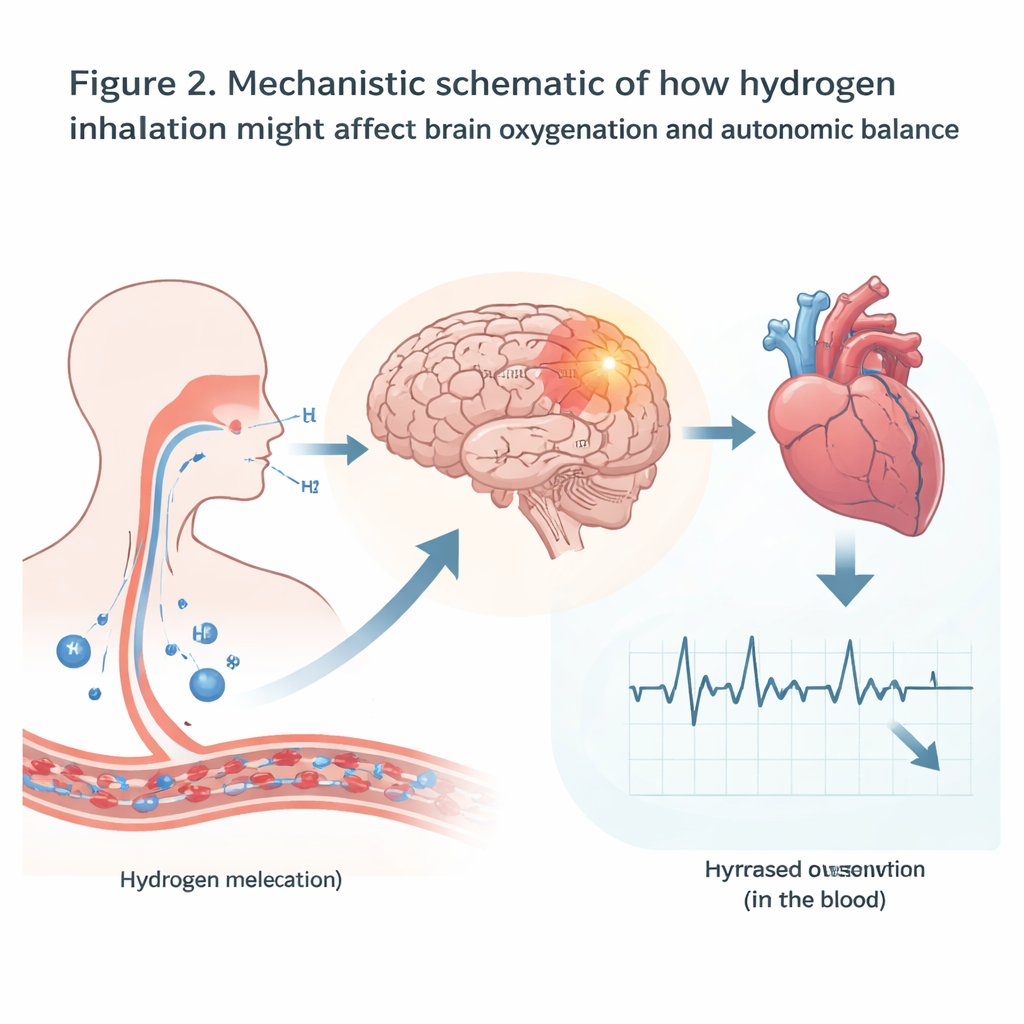
Overall, the total amount of oxygenated blood in the prefrontal cortex did not change dramatically across the two hours of observation. But when the researchers compared the left and right sides, a striking pattern appeared. During hydrogen inhalation, oxygenated blood briefly became more dominant on the right side than at baseline, then drifted back toward the original balance within about an hour. This shift did not seem to be driven by reduced oxygen on the left alone; rather, the right side showed a relatively stronger increase in oxygenation. In contrast, the balance of oxygen-poor blood between the two sides stayed fairly stable. Because the right prefrontal cortex is often more engaged in vigilance, attention, and autonomic control, this transient “right-leaning” pattern may signal a short-lived adjustment in how the brain allocates blood flow and activity while hydrogen is being inhaled.
What happened in the heart and nerves
While the brain’s oxygen pattern was shifting, the body’s automatic control systems were also adjusting. Blood pressure stayed generally stable, but heart rate gradually declined over time after hydrogen inhalation, with heartbeats becoming slightly farther apart. Measures derived from beat-to-beat variability suggested a temporary tilt toward sympathetic dominance during inhalation, followed by signs of recovery and stronger parasympathetic influence as time went on. In simple terms, the body appeared to respond first with a modest alerting reaction to the unusual inhaled gas, then settled into a calmer, slower-heart state afterward. Importantly, no adverse events were seen, and the overall changes were small but consistent with a coordinated response linking brain activity and autonomic control.
What it could mean and what we still do not know
This pilot study suggests that even a single, short session of hydrogen inhalation can briefly reshape how blood flow is distributed between the two sides of the front of the brain and can nudge the balance of the autonomic nervous system. For a layperson, the takeaway is not that hydrogen is a proven treatment, but that the brain and heart do seem to "notice" it and respond in a measurable, organized way. Because the study was small and did not include a placebo gas for comparison, the findings are still exploratory. Larger, carefully controlled trials will be needed to confirm whether hydrogen itself drives these effects and to test whether repeated sessions might support attention, healthy aging of brain circuits, or cardiovascular resilience.
Citation: Moriya, M., Oyama, K., Den, Y. et al. Hydrogen inhalation is associated with a transient rightward shift in prefrontal oxyhemoglobin asymmetry and autonomic modulation. Sci Rep 16, 6202 (2026). https://doi.org/10.1038/s41598-026-36599-8
Keywords: hydrogen inhalation, brain oxygenation, autonomic nervous system, heart rate variability, noninvasive brain monitoring