Clear Sky Science · en
Community participatory Jingchu folk pattern generation platform construction and user co-creation mechanism analysis
Bringing Ancient Patterns to Digital Life
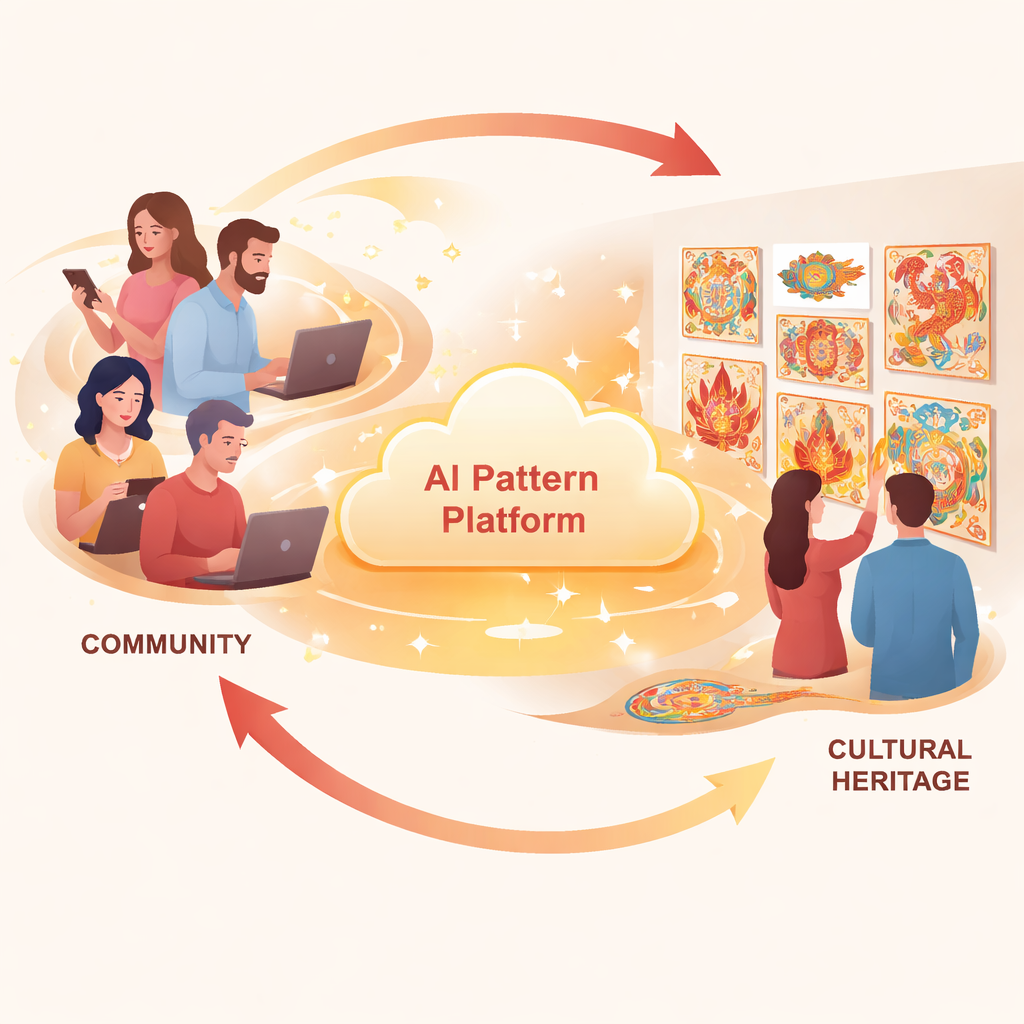
Across China’s Jingchu region, centuries-old patterns of clouds, dragons and phoenixes decorate lacquerware, textiles and bronze. Yet many of these designs risk fading from everyday life. This study shows how a new online platform, powered by an image‑generating AI system, lets ordinary people and cultural experts work together to revive and reinvent these folk patterns. For readers interested in how artificial intelligence can help preserve, rather than erase, tradition, this work offers a concrete, data-backed example.
Why Old Patterns Need New Tools
Traditional cultural heritage has often been protected like a fragile object in a glass case: carefully stored, rarely touched and mostly looked at in silence. The authors argue that this model no longer fits the digital age, especially for younger generations who expect to create and share, not just observe. Jingchu folk patterns carry rich stories of local history and belief, but suffer from a “double crisis” of aging inheritors and a lack of fresh uses. At the same time, image‑generating AI tools such as Stable Diffusion can quickly learn visual styles from large numbers of images. The central question of the paper is whether these tools can be reshaped into a respectful assistant for cultural heritage—supporting both faithful preservation and bold new designs.
Teaching an AI to Respect Culture
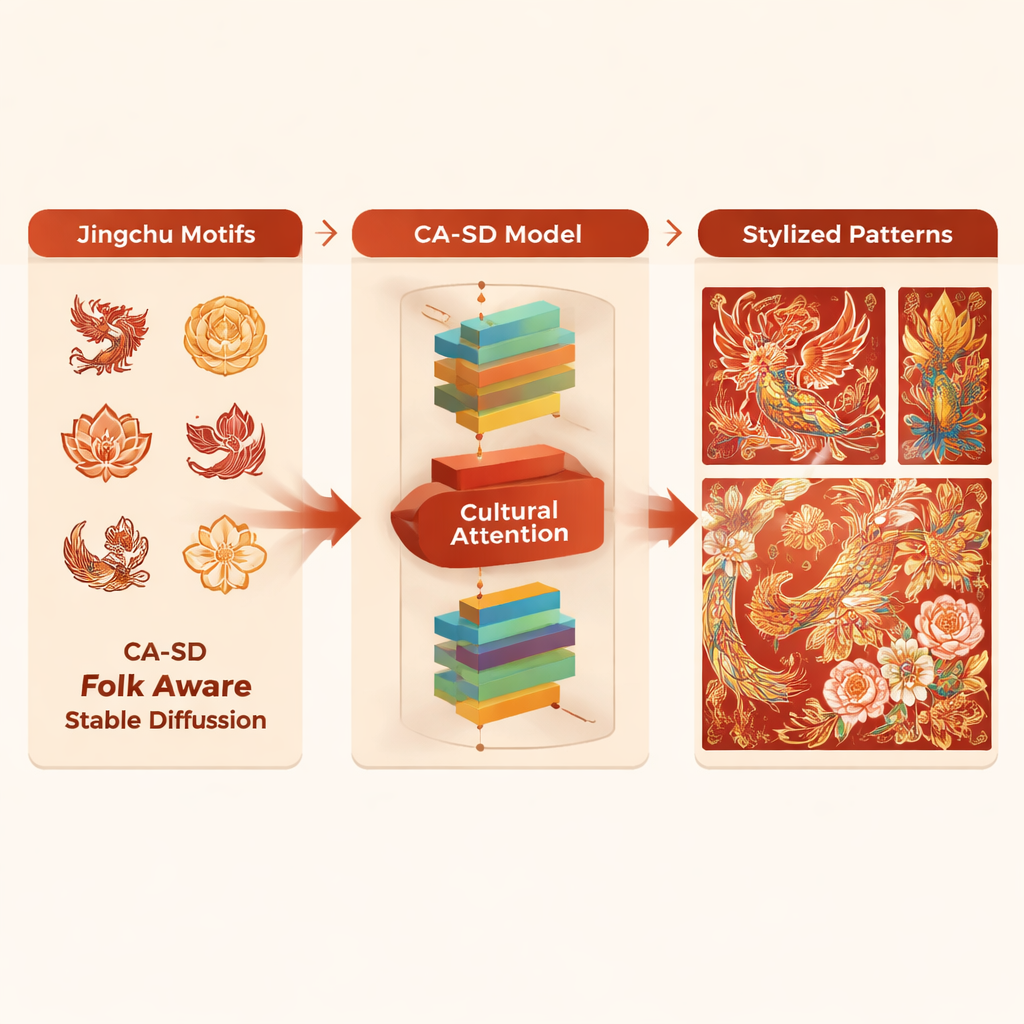
The researchers first built a detailed digital collection of 9,700 Jingchu pattern images from museums and folk artists. Experts in folklore, art history and conservation then annotated the images with more than 200 cultural tags and nearly 2,000 visual descriptors, covering motifs, layout rules and areas of special symbolic meaning. On top of this, the team modified the popular Stable Diffusion model into what they call a culturally‑aware version. In plain terms, they added special attention layers and extra training rules so the AI “looks harder” at culturally important features and is gently steered away from patterns that feel wrong or inauthentic. Tests against several other advanced image models showed that this tailored system produced patterns that experts rated as both more culturally accurate and visually consistent with Jingchu style.
Opening Creation to the Community
Technology alone, the authors stress, is not enough. They therefore designed the platform as a co‑creation community rather than a one‑click image toy. Over six months, 486 people—including cultural inheritors, designers, enthusiasts and everyday citizens—used the system. The platform guided newcomers from simple browsing and small edits toward independent and collaborative projects, and combined public ratings with expert review to judge each work’s cultural value, originality and technical quality. In total, users produced 12,847 pattern images. Statistical analysis showed that three factors strongly shaped how deeply people took part: how much they understood Jingchu culture, how comfortable they felt with the technology and how connected they were to others on the platform. Users who engaged more deeply not only created higher‑quality work but were also far more likely to stay active over time.
Measuring Diversity and Learning
To see whether this activity actually broadened Jingchu visual culture, the team tracked a “cultural diversity index” that combines how many different elements appear and how inventively they are recombined. Over the study, this index rose from moderate to high diversity, as users began to bring in rarer motifs such as ancient Chu script and bronze vessel designs alongside classic clouds and dragons. Careful testing with experts suggested that the sweet spot for new work lies at a “moderate distance” from tradition—clear roots in Jingchu symbols but noticeable twists in form or composition. Participants also took pre‑ and post‑tests of their cultural knowledge. On average, scores rose by about one‑third, and many users went on to share their creations on social media, helping Jingchu imagery circulate well beyond museums and specialist circles.
Balancing Innovation and Respect
For a lay reader, the headline message is that artificial intelligence does not have to replace human creativity or flatten cultural differences. When carefully trained and wrapped in a well‑designed social platform, it can act as a bridge between elders, experts and curious newcomers. In this case, the system helped users learn about Jingchu heritage, encouraged them to experiment within culturally safe bounds and produced a richer mix of patterns than the historical record alone. Some parts of the project—such as a blockchain‑based copyright and reward system—are still at the prototype stage. But overall, the work suggests a practical path for other regions: use AI not as an all‑powerful artist, but as a culturally sensitive tool that makes it easier for many hands to keep old traditions alive in new forms.
Citation: Wu, X., Xu, Y. Community participatory Jingchu folk pattern generation platform construction and user co-creation mechanism analysis. Sci Rep 16, 6028 (2026). https://doi.org/10.1038/s41598-026-36597-w
Keywords: Jingchu folk patterns, cultural heritage, generative AI, participatory design, digital preservation