Clear Sky Science · en
Phytochemical, in silico, and in vitro studies of wheatgrass (Triticum aestivum L.) juice powder
Why a Simple Grass Could Matter for Cancer
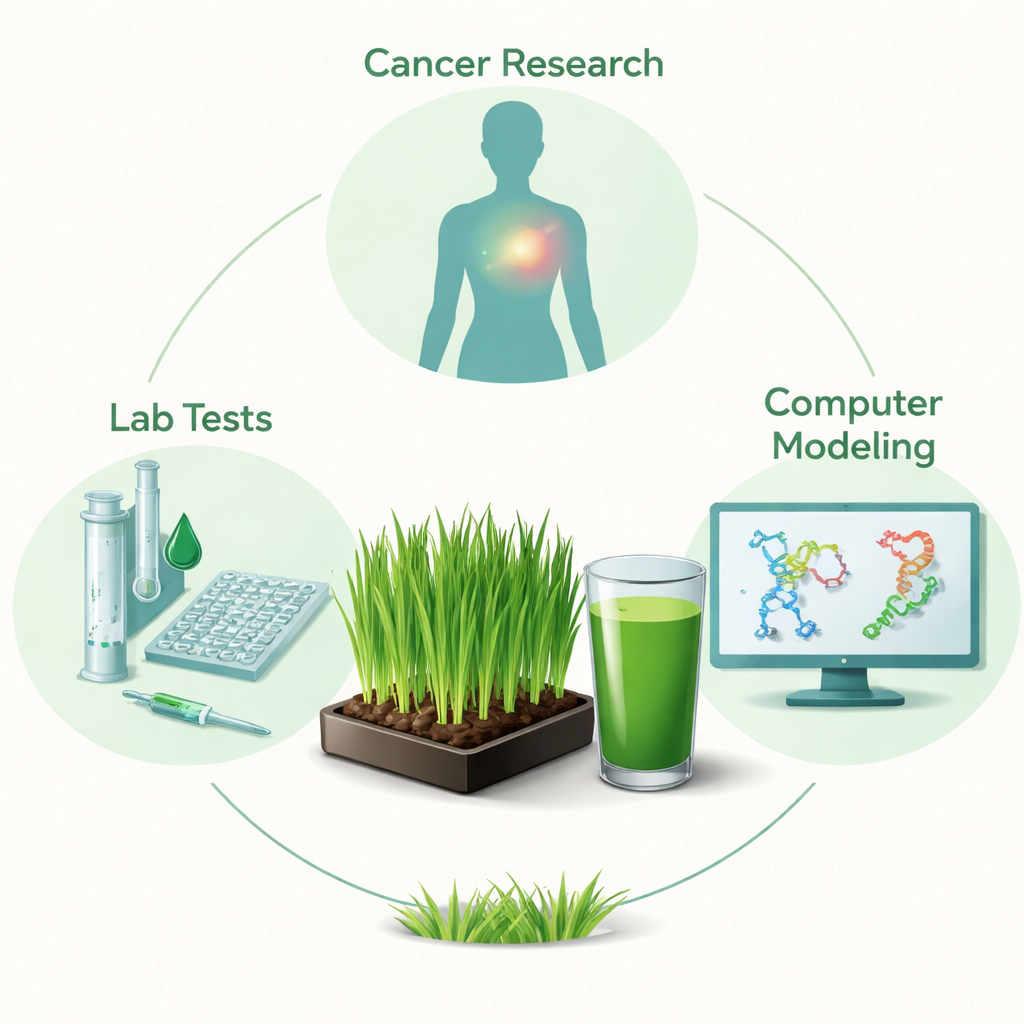
Wheatgrass – the young green shoots of common wheat – has become a staple of health-food bars and home juicers. Many people drink it hoping for extra energy, detox benefits, or even protection against disease. This study asks a deeper question: can the natural chemicals in a particular Turkish wheatgrass actually help protect our cells from damage and slow the growth of breast cancer cells, and if so, how? To answer that, the researchers combined chemical analysis, computer simulations, and cell experiments in the lab.
What Makes This Wheatgrass Special
The team focused on a traditional wheat variety called Karakılçık, grown in the grain-producing region around Gaziantep in Turkey. Local climate and genetics give this wheatgrass a distinctive chemical makeup. When the juice was dried into a powder and examined, it turned out to be rich in plant compounds known as phenolics. Using a precise separation method, the scientists identified seven key molecules, including caffeic acid, catechin, quercetin, ellagic acid, and apigenin. Caffeic acid was present in the highest amount, with catechin next. These compounds are already known from other plants for their antioxidant and potential anticancer actions, hinting that Karakılçık wheatgrass could be more than just a vitamin-rich drink.
Fighting Harmful Molecules in the Body
Our cells constantly face attack from reactive oxygen species – unstable molecules that can damage DNA, proteins, and fats. Over time, this “oxidative stress” can help drive cancer and other chronic diseases. The researchers tested how well the wheatgrass juice powder could neutralize such radicals in a standard lab assay. They found that the extract was a strong antioxidant: only a relatively small amount was needed to cut the level of a test radical in half, and the total amount of phenolic material was high compared with many earlier wheatgrass studies. This supports the idea that the dense mix of plant chemicals in this powder can help mop up harmful molecules before they injure cells.
How Computer Models Reveal Hidden Interactions
To look under the hood, the scientists turned to computer modeling. They built three-dimensional models of the seven wheatgrass compounds and “docked” them against proteins that play central roles in cancer growth and the body’s response to oxidative stress. Several molecules, especially apigenin, catechin, ellagic acid, and quercetin, fit snugly into pockets on cancer-related proteins such as the estrogen receptor, the epidermal growth factor receptor (EGFR), and an inflammation-linked enzyme called IKK-β. Others, particularly ellagic acid, showed strong binding to antioxidant guardians like catalase and KEAP1, which help keep oxidative stress in check. Additional calculations suggested that some compounds, notably caffeic acid, have favorable absorption and safety profiles, while others may act powerfully but be less easily absorbed, implying that their benefits may come from working together rather than alone.
What Happened in Breast Cancer Cells
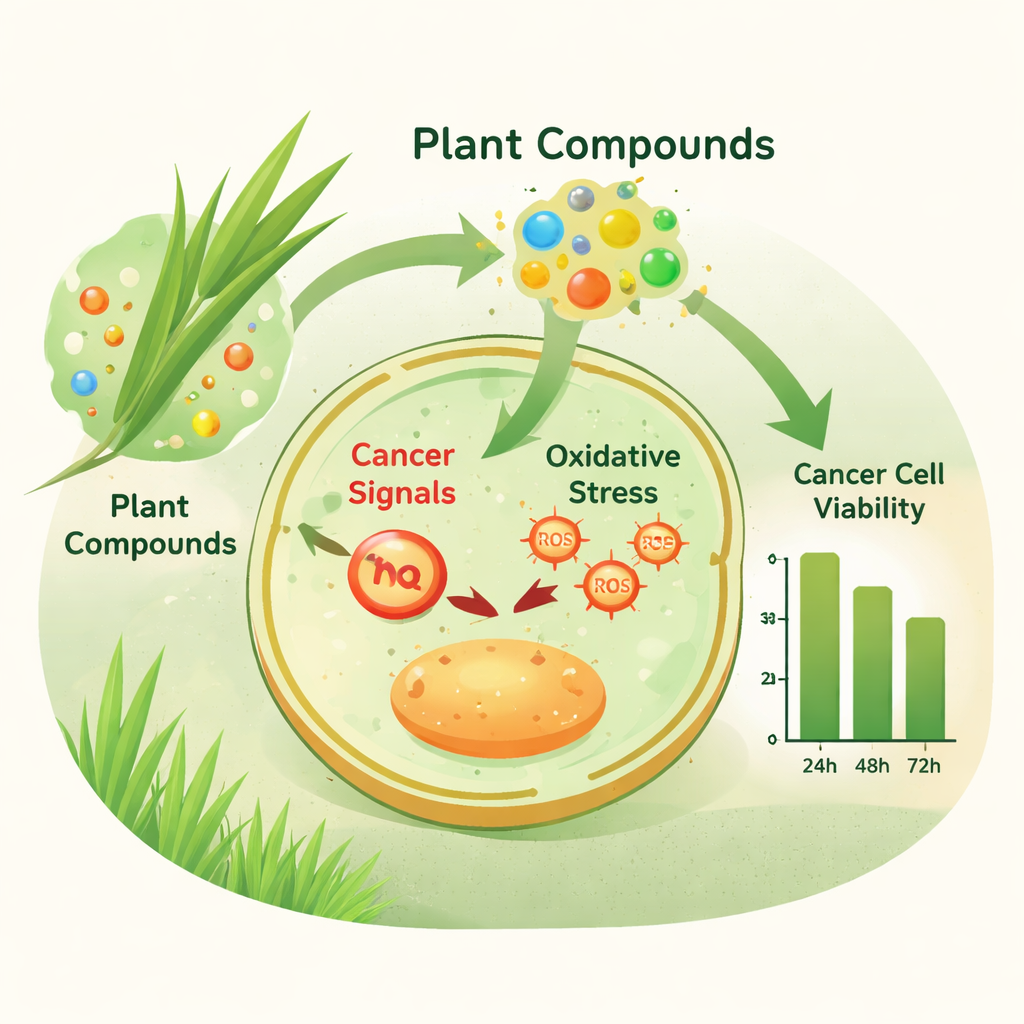
The team then moved from screens to living cells. They exposed human breast cancer cells (the widely studied MCF-7 line) to different doses of wheatgrass juice powder for up to three days. At low doses, the cells remained largely unaffected. But at higher concentrations, especially at 1 milligram of powder per milliliter of culture medium, cell survival dropped significantly after 24 and 48 hours, and additional decreases appeared at intermediate doses by 72 hours. These results show that, above a certain threshold, the mix of phenolic compounds in the wheatgrass extract can slow the growth of breast cancer cells or push them toward cell death, in line with the computer predictions about how the individual molecules might block cancer-driving signals.
What This Means for Everyday Use
For non-specialists, the takeaway is that this carefully studied wheatgrass powder is not a magic bullet, but it does contain a rich blend of natural chemicals that can neutralize damaging molecules and interfere with some of the same pathways targeted by modern cancer drugs, at least in lab tests. The work suggests that, in the future, concentrates or purified components from Karakılçık wheatgrass might be developed as “nutraceutical” helpers alongside standard therapies, particularly for breast cancer. However, these findings are based on test-tube and cell culture experiments plus computer models. Before anyone can claim that a shot of wheatgrass juice treats or prevents cancer in people, the same effects must be confirmed in animals and clinical trials, and safe, effective doses must be determined.
Citation: Demirag, A.D., Bicak, B., Akpinar, R. et al. Phytochemical, in silico, and in vitro studies of wheatgrass (Triticum aestivum L.) juice powder. Sci Rep 16, 6279 (2026). https://doi.org/10.1038/s41598-026-36596-x
Keywords: wheatgrass, antioxidants, breast cancer, plant phenolics, nutraceuticals