Clear Sky Science · en
Mini-mint ice cubes for early postoperative thirst relief in orthopedic patients undergoing general anesthesia: a randomized controlled trial
A Cool Answer to a Common Post-Surgery Problem
Waking up from surgery, many patients are surprised to find that one of their worst complaints isn’t pain, but an overwhelming, scratchy thirst. This study explores a deceptively simple idea: could tiny mint-flavored ice cubes safely and quickly ease that thirst after orthopedic operations, and even make recovery a little smoother? The results suggest that a few cubes of icy mint may offer real comfort at a moment when patients feel most vulnerable.
Why Thirst After Surgery Matters
Thirst after general anesthesia is more than a minor annoyance. Up to 70% of people in the recovery room report moderate to severe thirst. Long periods without drinking, breathing tubes that hold the mouth open, and certain medications all dry out the mouth and throat. For older orthopedic patients—who often already have other health problems—this can lead to agitation, anxiety, and even delirium. Although modern “fast-track” surgery programs recommend early drinking after surgery, many recovery units are cautious, especially with older adults, and keep patients fasting for fear of choking or vomiting. This leaves a gap between what guidelines advise and what patients actually experience.
A Simple Ice Cube with a Minty Twist
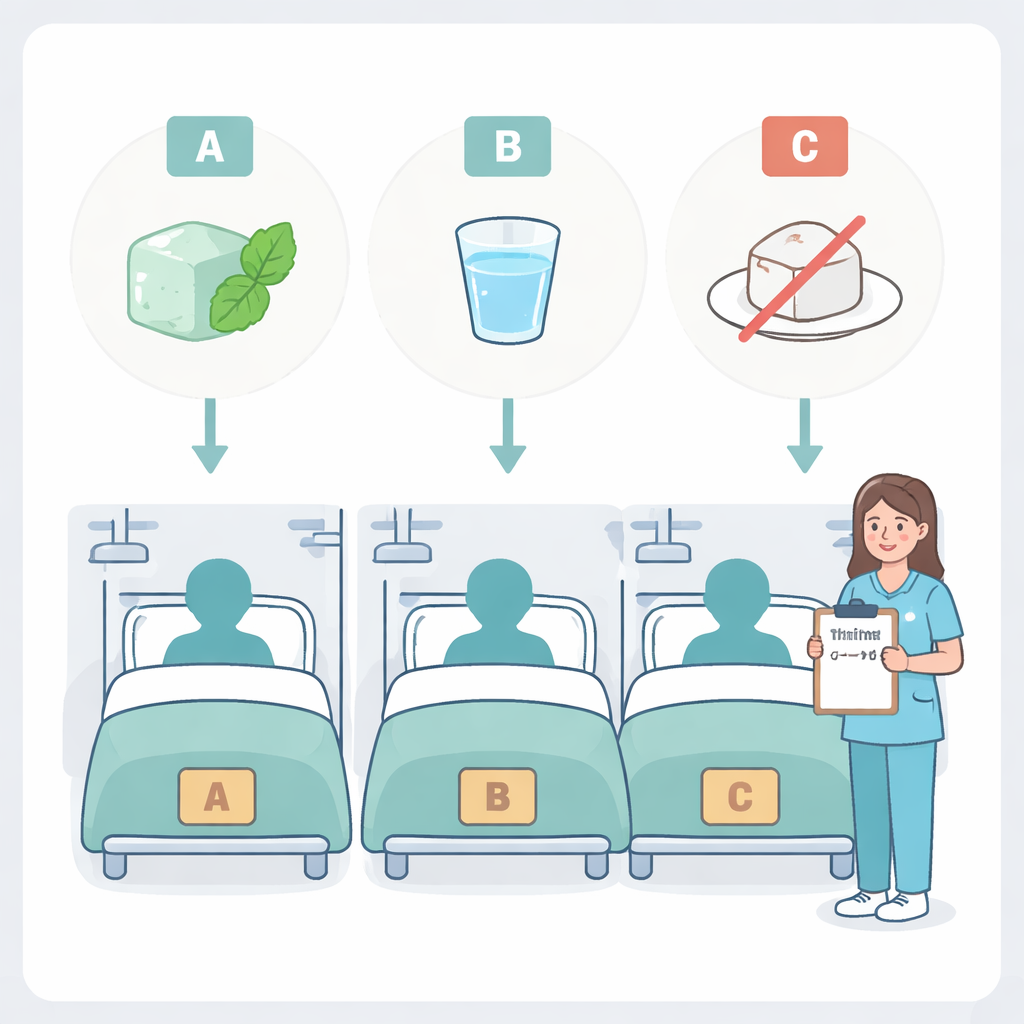
Researchers in a Chinese hospital tested a new way to bridge that gap: tiny, 1-cubic-centimeter ice cubes made with a strong 20% mint solution. The cubes are small enough to greatly reduce the risk of choking, and the mint is thought to trigger cooling sensors in the mouth and boost saliva, making the mouth feel wetter and cooler. In this randomized controlled trial, 282 adults having elective orthopedic surgery under general anesthesia were assigned to one of three groups: mini-mint ice cubes, small sips of room-temperature water, or continued fasting with no oral intake. All patients were watched closely in the recovery room, and they only received the assigned treatment once they were fully awake, breathing well, and had stable vital signs.
What the Study Found
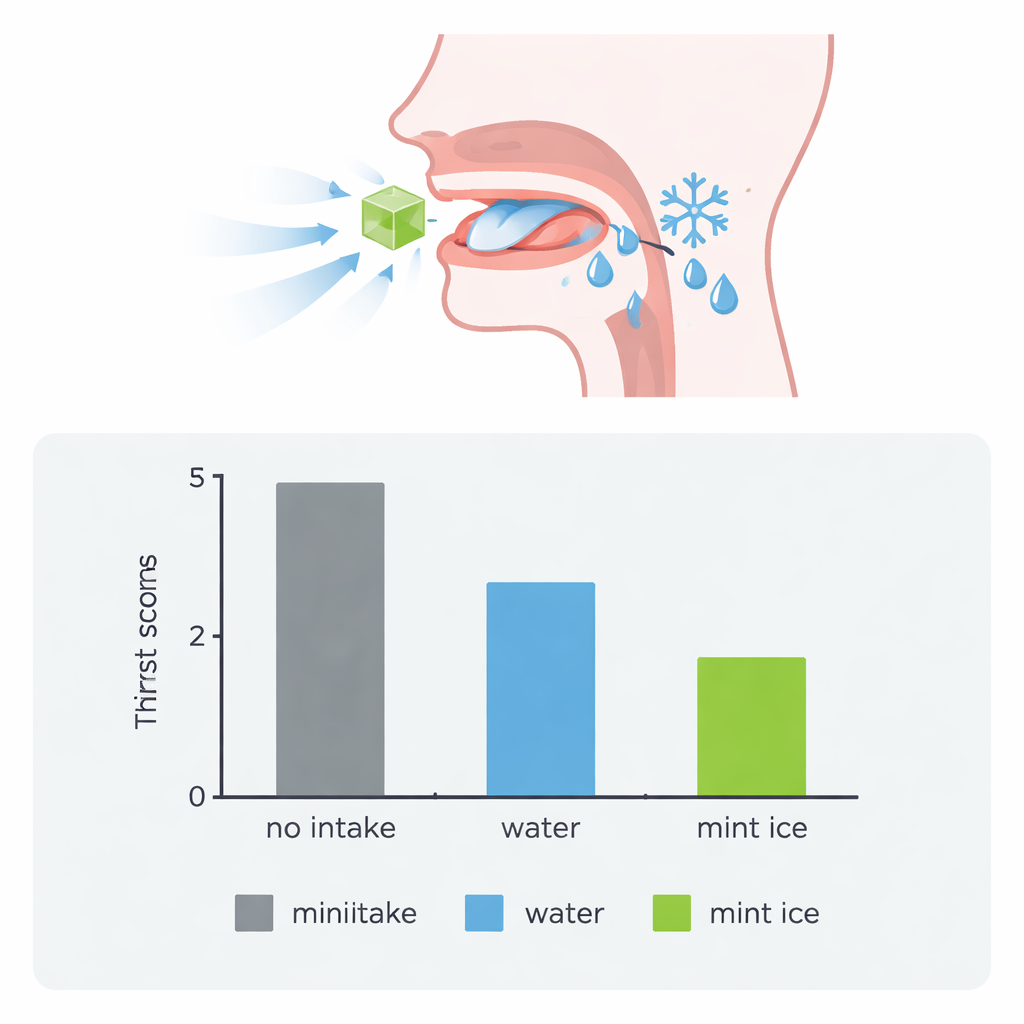
The main question was how intense patients’ thirst felt when they were ready to leave the recovery room, using a 0–10 rating scale. Patients who used the mini-mint ice cubes reported the lowest thirst, with a typical score of 3, compared with 4 in the water group and 7 in the fasting group. In other words, while both water and minty ice helped, the tiny cubes clearly outperformed doing nothing, and did a bit better than ordinary water. The mint-ice group also left the recovery room about 5 minutes earlier than the other groups, reported less throat and mouth discomfort than those who continued fasting, and were more satisfied with their care. A standard questionnaire that measures overall recovery in the first 24 hours after surgery also scored higher in the mint-ice group, suggesting their early comfort carried over into the first day of healing.
Safety and Comfort at the Bedside
Safety is critical when giving anything by mouth to someone who has just been under anesthesia. In this study, there were no episodes of low blood oxygen in any group. Interestingly, coughing occurred only in the water group, not in the mint-ice or fasting groups, hinting that the tiny cubes may actually be easier to handle than even small amounts of liquid. On average, patients in the mint-ice group used just over four cubes, a very small total volume, and nurses could flexibly offer more or fewer cubes based on each person’s comfort. The researchers suggest that this approach could reduce the workload associated with repeated small sips of water and constant monitoring, while still giving patients meaningful relief from their thirst.
What It Means for Patients
For patients and families, the takeaway is straightforward: a few tiny minty ice cubes, offered at the right moment in the recovery room, can safely turn an intense, distressing thirst into something far more tolerable. Compared with complete fasting, the benefit is large and clearly meaningful. Compared with simple water, the extra improvement is smaller and may not matter to everyone, but the cubes appear at least as safe and perhaps more comfortable. As hospitals look for low-cost ways to make surgery less miserable and recovery faster, this chilly, mint-flavored tweak to standard care may prove to be one of the easiest to adopt.
Citation: Mao, W., Zhou, Y., Zhang, H. et al. Mini-mint ice cubes for early postoperative thirst relief in orthopedic patients undergoing general anesthesia: a randomized controlled trial. Sci Rep 16, 5580 (2026). https://doi.org/10.1038/s41598-026-36593-0
Keywords: postoperative thirst, orthopedic surgery, general anesthesia, mint ice cubes, recovery room care