Clear Sky Science · en
Development and validation of a nomogram prediction model for thyroid dysfunction in patients with type 2 diabetes mellitus
Why thyroid health matters in diabetes
For millions of people living with type 2 diabetes, keeping blood sugar in check is only part of the story. The thyroid – a small, butterfly-shaped gland in the neck – also helps regulate how the body uses energy. When thyroid hormones are too high or too low, they can quietly worsen blood sugar control, raise the risk of heart and kidney problems, and increase healthcare costs. This study asked a practical question: can we build a simple tool to flag which people with type 2 diabetes are most likely to have thyroid problems, so doctors can test and treat them earlier?
Looking closely at real-world patients
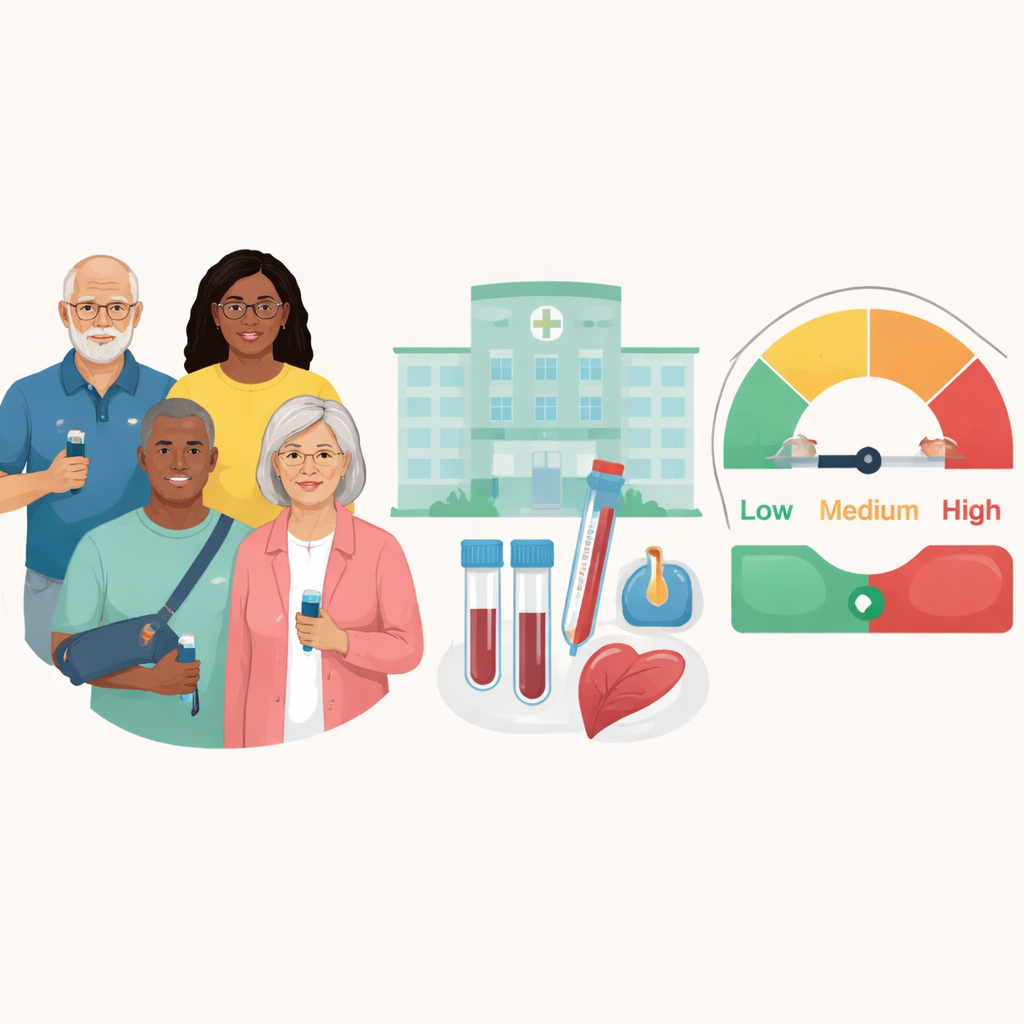
Researchers in China reviewed medical records from 1,853 adults hospitalized with type 2 diabetes between 2019 and 2024. All had standard thyroid blood tests and routine lab work, along with information on age, sex, blood pressure, cholesterol, kidney function, and common conditions such as high blood pressure and heart disease. About 1 in 10 of these patients had thyroid dysfunction – meaning abnormal thyroid hormone levels or a known thyroid disease that required treatment. To build and check their prediction tool fairly, the team randomly split the group into a larger “training” set and a smaller “validation” set.
Finding the signals that matter most
The researchers first screened more than 40 possible risk factors, from smoking history to detailed blood measurements. They then used statistical methods to narrow this list down to the factors that most clearly separated patients with thyroid problems from those without. Eight stood out: sex, levels of a “good” cholesterol called HDL, a kidney waste product called blood urea nitrogen (BUN), urine glucose results, and the presence of high blood pressure, high uric acid (hyperuricemia), coronary heart disease, and liver disease. Women with type 2 diabetes, and those who also had these cardiovascular or liver conditions, were more likely to have thyroid dysfunction. Certain lab patterns, including lower HDL and altered kidney and glucose findings, were also linked to thyroid issues.
Turning numbers into an easy risk score
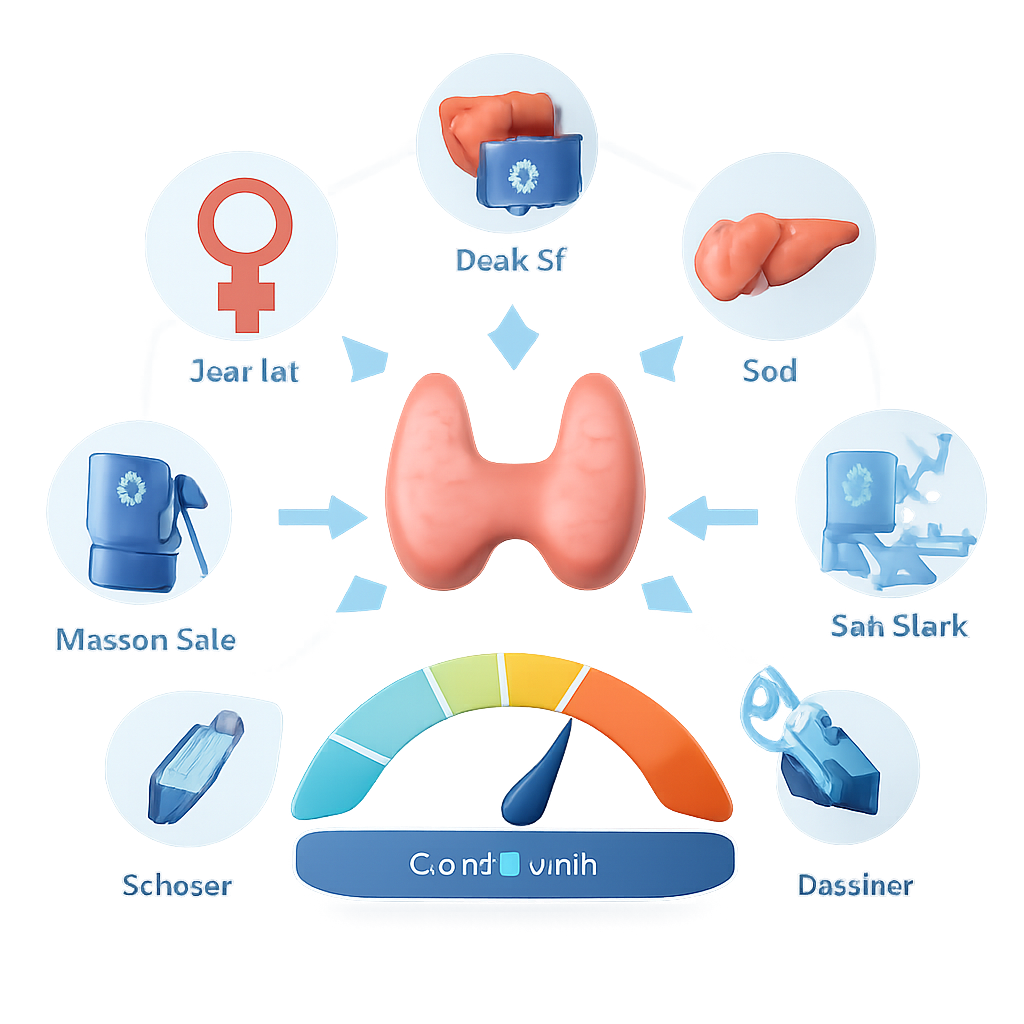
To make these findings usable in everyday clinics, the team built a “nomogram” – a visual chart that turns several pieces of information into a single risk score. On this chart, each risk factor is assigned a number of points: for example, being female, having high blood pressure, or having liver disease each adds to the total. A clinician can line up a patient’s values, sum the points, and then read off the estimated probability of thyroid dysfunction at the bottom of the chart. In testing, this tool showed moderate accuracy: it could distinguish higher- from lower-risk patients reasonably well in both the training and validation groups, and its predictions matched the actual rates of thyroid problems closely.
What the model could change in practice
The study went a step further by asking whether using this risk chart would likely help doctors and patients in real life. Through decision-curve analysis – a way of weighing the benefits of catching disease early against the costs of extra testing – the nomogram offered a clear advantage over simply testing everyone or almost no one. In other words, it helped focus thyroid screening on those who need it most, without missing too many cases. This is important because current diabetes guidelines recommend checking thyroid function but offer little guidance on how often to repeat tests or in whom to prioritize them.
What this means for people with diabetes
In plain terms, the study shows that a handful of routine clinical features – sex, cholesterol type, kidney and glucose markers, and common heart and liver conditions – can be combined into a simple score that estimates a person’s chance of having a thyroid problem alongside type 2 diabetes. While the tool still needs to be tested in other hospitals and in different countries, it points toward a more tailored approach to thyroid screening. For patients, this could mean that those at higher risk get checked sooner and more often, allowing hidden thyroid issues to be found and treated before they quietly make diabetes and its complications harder to manage.
Citation: Niu, Y., Chen, Z., Li, Y. et al. Development and validation of a nomogram prediction model for thyroid dysfunction in patients with type 2 diabetes mellitus. Sci Rep 16, 6115 (2026). https://doi.org/10.1038/s41598-026-36582-3
Keywords: type 2 diabetes, thyroid dysfunction, risk prediction model, nomogram, endocrine comorbidity