Clear Sky Science · en
Dissemination of vancomycin-resistant Enterococcus faecalis and Enterococcus faecium between humans and fishes
Why germs in fish matter to people
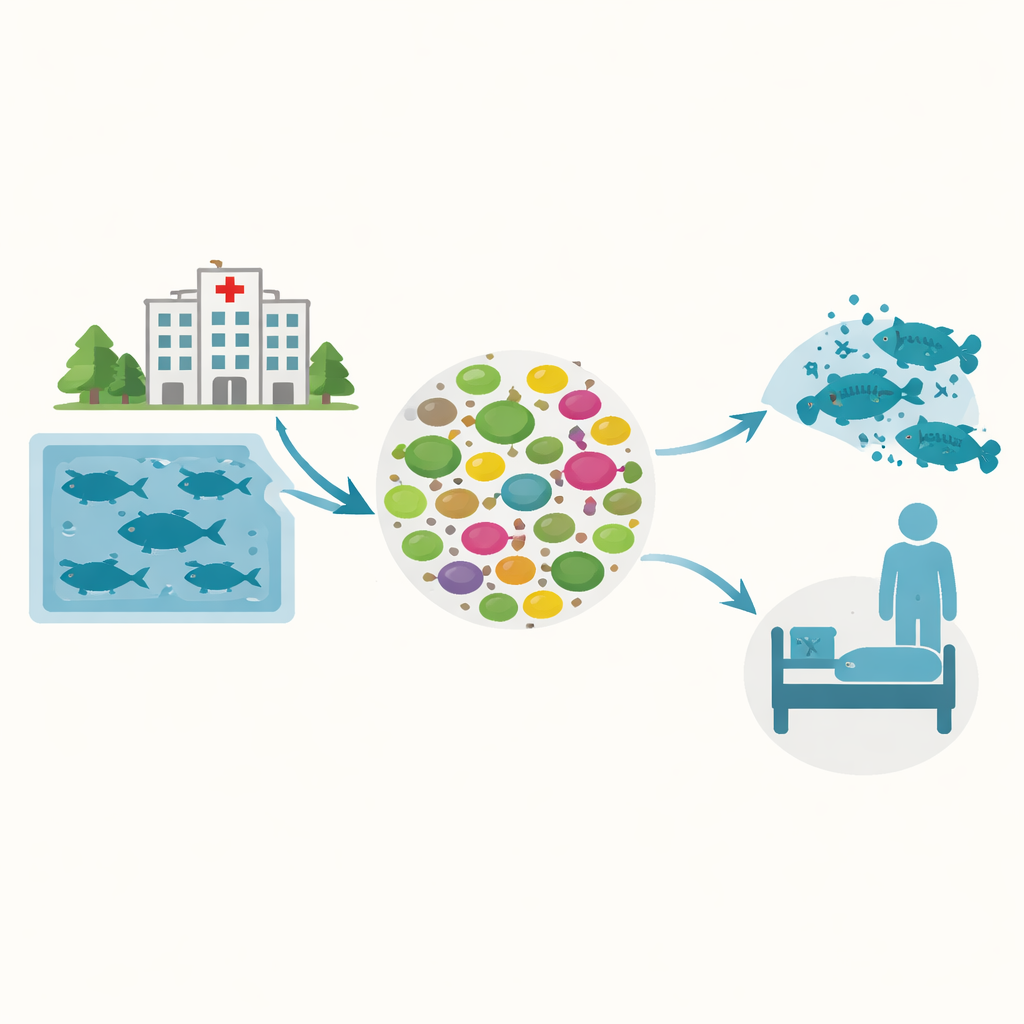
Farmed fish has become a staple protein on dinner tables worldwide, but the ponds and rivers where fish grow can also harbor tough bacteria that ignore our most powerful medicines. This study explores a worrisome question: are dangerous, drug‑resistant bacteria moving between people and the fish they eat, and could fish farms be helping these microbes spread?
Tracking hard‑to‑treat germs
The researchers focused on two closely related bacteria, Enterococcus faecalis and Enterococcus faecium. These microbes normally live in the intestines of humans and animals, yet they can cause serious infections in hospitals, especially when they become resistant to vancomycin, an antibiotic often used as a last resort. The team collected samples from hospitalized patients and from two common freshwater fish species—Nile tilapia and African catfish—raised on farms in Egypt. They identified which samples contained enterococci, tested how well different antibiotics still worked, and examined the bacteria’s genetic fingerprints and known “weapons” that make them better at causing disease.
Resistance that spans pond and ward
Enterococcus was found in one‑third of human clinical samples and in about 60% of the diseased fish examined, with E. faecalis generally more common than E. faecium in fish. Alarmingly, many isolates from both sources shrugged off multiple antibiotics. More than half of the human strains and over 70% of the fish strains were resistant to several different classes of drugs (multidrug‑resistant), and roughly one‑third fell into an even more extreme category that resisted almost everything tested. Resistance was especially high to drugs widely used in people and aquaculture, including common penicillins, fluoroquinolones, macrolides and tetracyclines, while one of the very few drugs that still worked reliably was linezolid, a specialist hospital medicine.
The rise of last‑resort resistance
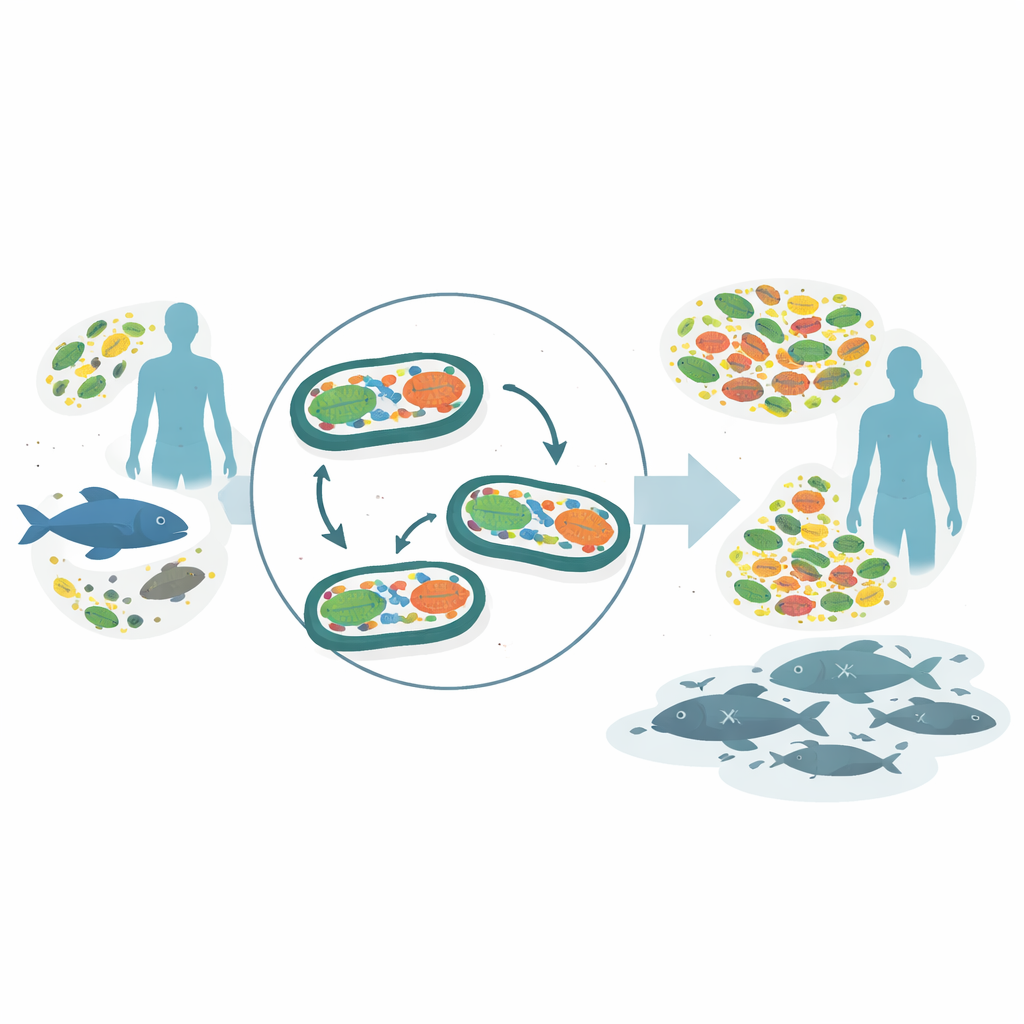
Vancomycin‑resistant enterococci (VRE) turned out to be common on both fronts: nearly half of the fish isolates and three‑quarters of the human isolates could grow in the presence of vancomycin. Most of these carried a genetic “instruction manual” known as vanA, which allows bacteria to remodel their cell wall so the drug can no longer bind. Some also carried vanB or vanC, alternative resistance cassettes. Many vancomycin‑resistant strains were also resistant to multiple other antibiotics, leaving clinicians with very few treatment options. Genetic typing showed that some bacterial lineages appeared only in humans or only in fish, but at least one type, called ST21, was shared across hosts, hinting that certain strains may move between environmental, animal and human settings.
Bacterial tools that worsen disease
Beyond resisting drugs, the enterococci carried numerous traits that help them colonize and damage hosts. The team looked for genes that promote sticking to tissues, forming biofilms on surfaces, breaking down host proteins, and damaging cells. Most vancomycin‑resistant isolates, from people and fish alike, possessed several of these factors at once. For example, nearly all E. faecalis strains made enzymes that digest gelatin‑like material and a partner enzyme that fine‑tunes this activity; many also produced proteins that help cells clump together or punch holes in host cells. E. faecium had a slightly different mix but was similarly well equipped. In an infection experiment, vancomycin‑resistant strains taken from diseased fish killed 100% of tilapia when they were E. faecalis and 60% when they were E. faecium, reproducing the severe signs seen on farms.
What this means for food, farms, and hospitals
To a lay reader, the bottom line is stark: the same families of bacteria that trouble hospitals are present in farmed fish, often carrying the same drug‑resistant and disease‑boosting traits. While this study cannot prove direct transmission between fish and nearby patients, it shows that aquatic environments can act as a reservoir and mixing ground for dangerous strains. Heavy antibiotic use in fish farming, together with pollution from human and animal waste, likely fuels this problem. The authors argue that protecting both food safety and human health will require tighter control of antibiotic use, better hygiene in farms and hospitals, and a “One Health” view that treats people, animals and the environment as one connected system when tackling antimicrobial resistance.
Citation: Tartor, Y.H., Enany, M., Elsheshtawy, H.M. et al. Dissemination of vancomycin-resistant Enterococcus faecalis and Enterococcus faecium between humans and fishes. Sci Rep 16, 8622 (2026). https://doi.org/10.1038/s41598-026-36572-5
Keywords: vancomycin-resistant enterococci, antimicrobial resistance, aquaculture, fish-borne pathogens, One Health