Clear Sky Science · en
Green synthesis of Ag/ZnO nanocomposites from Phyllanthus emblica seed for multifunctional wound healing applications
Healing Wounds with Nature-Inspired Nanotechnology
Slow-healing wounds are more than just a nuisance—they can lead to serious infections, long hospital stays, and high healthcare costs. This study explores a new way to speed up healing and fight germs at the same time by combining two powerful ideas: nanotechnology and plant-based chemistry. Using the seeds of the Indian gooseberry tree, the researchers created tiny particles that can both kill bacteria and help skin cells close a wound more quickly, offering a greener and potentially safer alternative to conventional treatments.
Why Wounds Need Smarter Bandages
When skin is injured, the body moves through a carefully timed sequence of stopping bleeding, triggering inflammation, rebuilding tissue, and finally remodeling the scar. Problems arise when this sequence is disrupted—by stubborn bacteria, too much inflammation, or harmful molecules called free radicals. Traditional dressings mostly protect the surface and keep the area clean, but they cannot actively control microbes or support the healing cells underneath. Scientists are therefore turning to nanoscale materials that can interact directly with cells and microbes, offering targeted antibacterial action while also nudging tissue to repair itself.
Turning Waste Seeds into Useful Healing Materials
The team focused on a medicinal plant known as Phyllanthus emblica, or Indian gooseberry, widely used in traditional remedies and rich in natural antioxidants. Instead of the commonly used fruit, they chose the seeds—an agricultural waste product that turns out to be packed with polyphenols, flavonoids, tannins, and vitamin C–like compounds. These plant chemicals can gently convert dissolved metal salts into solid nanoparticles and keep them stable, removing the need for harsh synthetic chemicals. Using the seed extract, the researchers first formed zinc oxide nanoparticles and then decorated them with tiny amounts of silver, producing silver–zinc oxide "nanocomposites" with different silver levels. 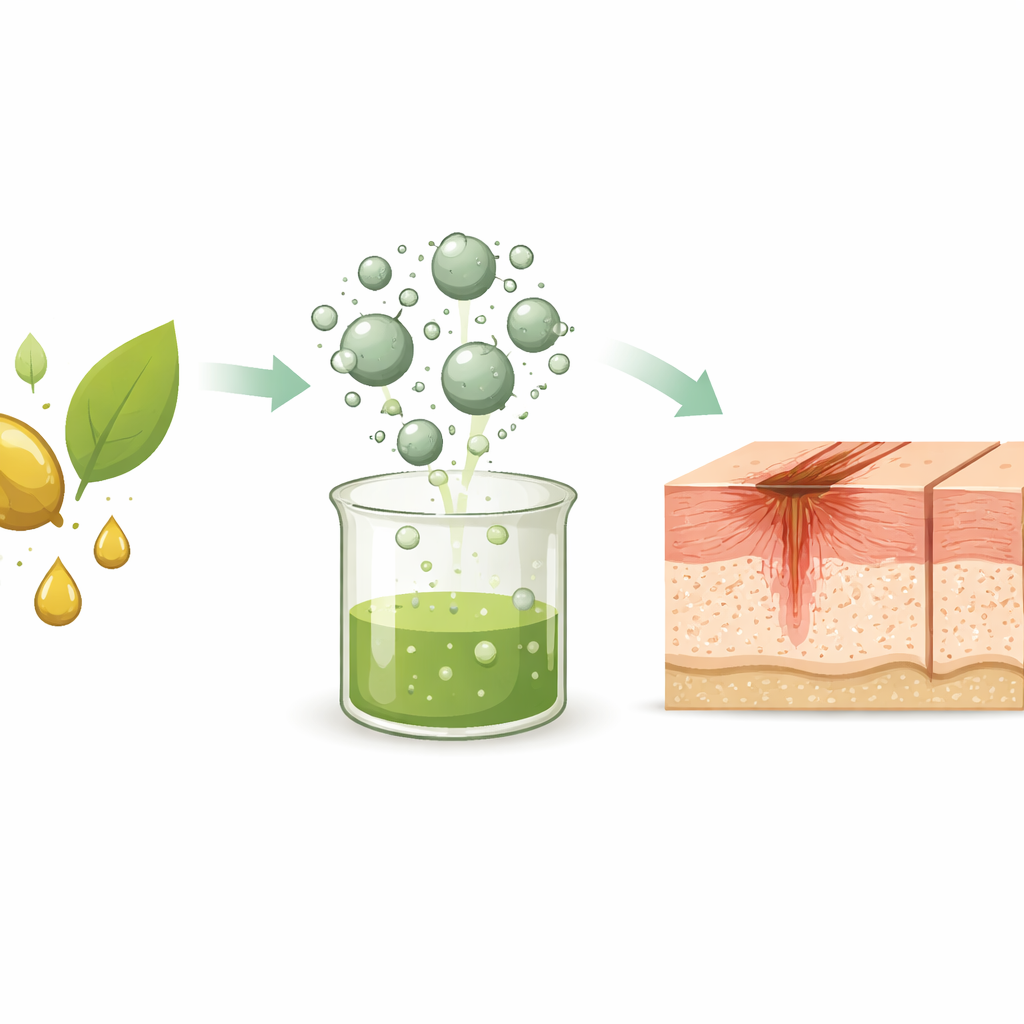
How the Tiny Particles Fight Germs and Help Cells
Silver is well known for its broad germ-killing power, while zinc oxide can both block microbes and encourage skin repair. When combined into a single particle made via the plant extract, the two metals act together. In lab tests, the silver–zinc oxide nanocomposites created clear zones where dangerous bacteria—such as Bacillus subtilis, Staphylococcus epidermidis, and Salinivibrio proteolyticus—could not grow. The version containing 1.5% silver performed especially well, outdoing plain zinc oxide alone. Separate experiments showed that these particles could neutralize free radicals and reduce markers of inflammation, both of which are important for moving a wound from a swollen, irritated state into one where new tissue can form.
Testing Safety and Wound Closure in Living Cells
Because any potential wound dressing must be safe for human cells, the researchers exposed mouse skin-like fibroblast cells (a common model in labs) to different particle doses. They measured how many cells survived and how the cells moved to close an artificial "scratch" that mimics a wound. Among all tested formulations, the 1.5% silver nanocomposite again hit the sweet spot: it was potent enough to affect unwanted cells and microbes, but still compatible with healthy fibroblasts. In a wound-scratch test, cultures treated with this formulation showed much faster closure—about two-thirds of the gap closed in 24 hours—compared with only about one-third in untreated cultures. Microscopy and additional stability tests suggested that the particles are well-dispersed, thermally stable, and hold a surface charge that keeps them from clumping, which is important for consistent biological effects. 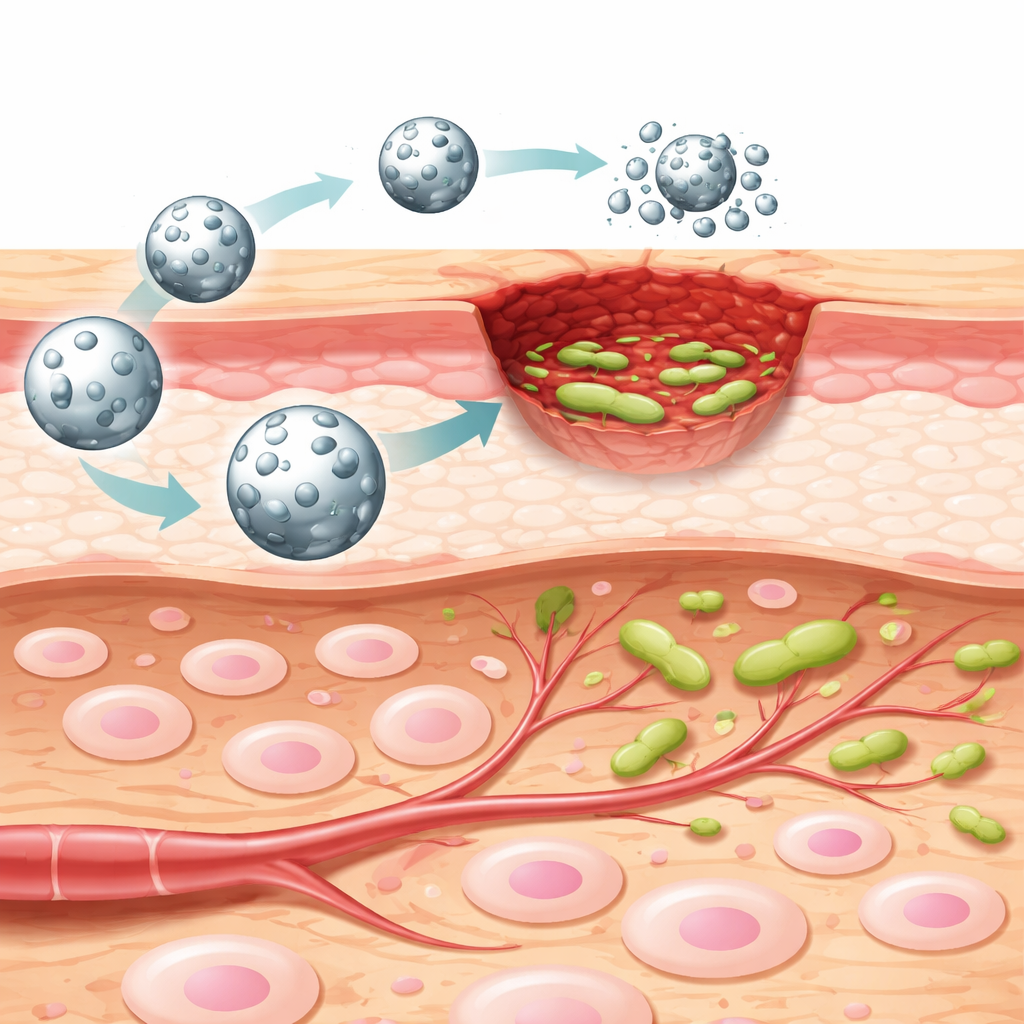
From Lab Bench to Smarter Wound Dressings
In plain terms, this work shows that it is possible to turn discarded plant seeds and simple metal salts into a multifunctional wound-healing aid. The plant-powered silver–zinc oxide particles can kill bacteria, tame excessive inflammation, mop up harmful free radicals, and encourage skin cells to migrate and close wounds more quickly. While more studies in animals and humans are needed before clinical use, the findings point toward future bandages or hydrogels that are at once antibacterial, supportive of healing, and made using environmentally friendly chemistry.
Citation: Vidhyadevi, G., Suseem, S.R. Green synthesis of Ag/ZnO nanocomposites from Phyllanthus emblica seed for multifunctional wound healing applications. Sci Rep 16, 8032 (2026). https://doi.org/10.1038/s41598-026-36568-1
Keywords: wound healing, nanoparticles, green synthesis, silver zinc oxide, plant-based medicine