Clear Sky Science · en
Food insecurity among waste-picking children in Iran and its associated factors
Why this story matters
Across many big cities, children help their families survive by collecting and sorting garbage. This study looks closely at such children in Tehran, Iran, and asks a simple but vital question: do they have enough safe, nutritious food to grow and stay healthy? By measuring how often these young waste pickers go hungry, and what pushes them toward or away from hunger, the research shines a light on a hidden crisis that affects not only their plates, but their health, schooling, and future lives. 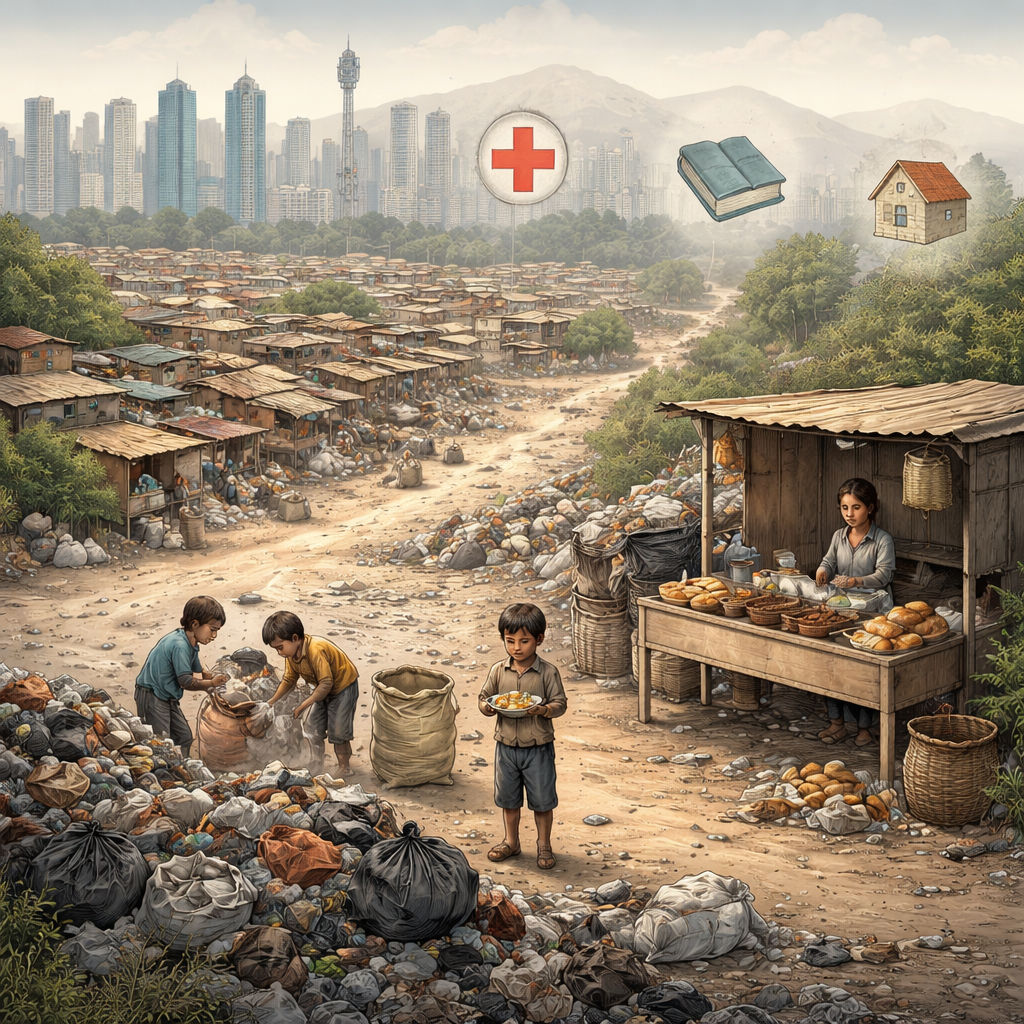
Life on the margins of the city
Waste-picking children are among the most invisible workers in modern cities. They spend long days searching through trash for items that can be sold or recycled, usually for very low pay. Many come from families facing deep poverty, unstable housing, and limited access to basic services. In Tehran, rapid urban growth, economic sanctions, and rising prices have made daily life especially hard for low-income and migrant households. For children in these families, collecting waste is often one of the few ways to earn money, but it also exposes them to unsafe environments, illness, and a constant struggle to eat well.
How the research was done
The researchers carried out a survey of 417 waste-picking children between the ages of 13 and 18 during the autumn and winter of 2024. They worked in different districts of Tehran and used trained interviewers to speak directly with the children, many of whom did not have parents or guardians nearby. The team used a standard questionnaire called the Household Food Insecurity Access Scale, which asks about worries over food, the quality of meals, and whether people have had to skip meals or eat less in the past month. They also collected basic information about each child’s age, schooling, nationality, health, living situation, and behaviors such as smoking.
How common is going hungry?
The results show that true food security was the exception rather than the rule. Only about one in four children were classified as food secure. The rest experienced varying degrees of food insecurity: 11 percent had mild problems, 38 percent had moderate problems, and nearly 24 percent suffered severe food insecurity. This last group is likely to cut meal sizes, skip meals, or go to bed hungry regularly. On average, the children’s answers pointed to poor food quality and insufficient intake, confirming that most of them cannot count on regular, balanced meals. These figures are higher than those reported for many other groups of children in Iran, underlining how uniquely vulnerable young waste pickers are.
What puts some children at higher risk?
To understand why some children were worse off than others, the researchers used statistical models to examine different influences side by side. Two main protective factors emerged: living with one’s own family and being of Iranian nationality. Children who lived with their parents were less likely to face severe food shortages, likely because families can pool resources and offer emotional and practical support. Iranian children also appeared somewhat better protected, perhaps because citizens are more likely to have stronger family networks and better access to local charities or public services than undocumented or migrant children. 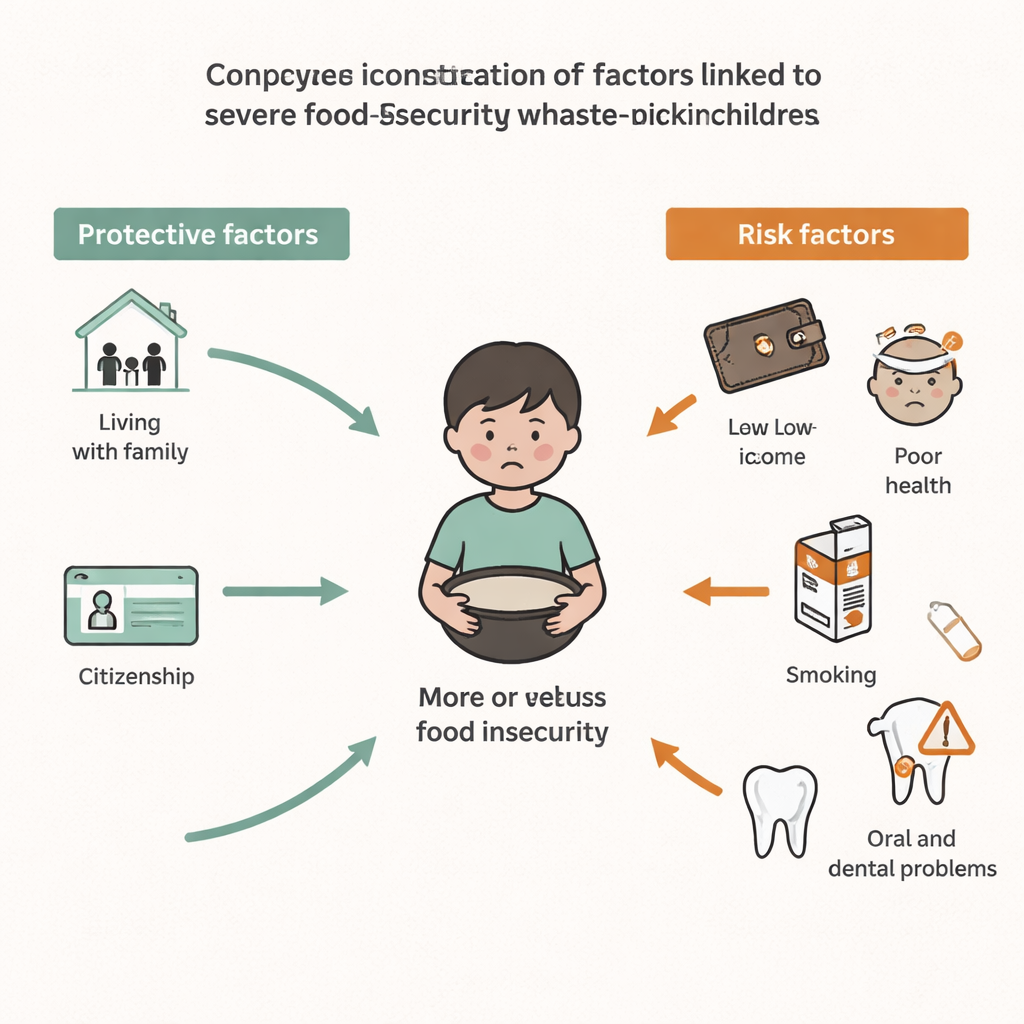
Signals of deeper hardship
Several warning signs were strongly linked to severe food insecurity. Children from households with very low income were far more likely to go hungry, reflecting the simple reality that food costs money. Poor self-rated health, smoking, and untreated mouth or tooth problems also went hand in hand with a lack of adequate food. These issues can both stem from and worsen food insecurity: for example, constant hunger may push children toward unhealthy coping behaviors like smoking, while painful teeth can make it hard to eat the limited food that is available. Together, these indicators point to a cycle of neglect in which poor health, risky behaviors, and hunger reinforce one another.
Turning evidence into action
For a general reader, the key message is clear: in Tehran, many children who collect waste simply do not get enough safe and nutritious food, and this is not just a matter of individual choices. It reflects a web of economic hardship, weak social protection, and the marginal status of migrants and informal workers. The authors argue that breaking this cycle will require programs that deliberately include waste-picking children and their families in health care, schooling, food support, and social welfare systems, regardless of their legal status. By investing in family support, basic health and dental care, and child-focused nutrition programs, policymakers can reduce hunger today and help prevent long-term damage to the health and prospects of some of the city’s most vulnerable young residents.
Citation: Kamal, S.H.M., SoleimanvandiAzar, N., Ahmadi, S. et al. Food insecurity among waste-picking children in Iran and its associated factors. Sci Rep 16, 6754 (2026). https://doi.org/10.1038/s41598-026-36559-2
Keywords: food insecurity, waste-picking children, Tehran, urban poverty, migrant children