Clear Sky Science · en
Patients with tuberculosis and diabetes show altered clinical and biochemical parameters during anti-TB treatment
Why this matters to everyday health
Tuberculosis and type 2 diabetes are each serious diseases on their own, but growing numbers of people now live with both at the same time. This study from Ghana asks a simple but important question: when someone has tuberculosis and diabetes together, what happens to their blood chemistry and overall health during tuberculosis treatment—and what should doctors be watching out for?
Two common diseases, one dangerous pairing
Tuberculosis (TB) is a lung infection that still affects more than ten million people worldwide every year, while type 2 diabetes is rising quickly, especially in low- and middle-income countries. Diabetes weakens the immune system and upsets the body’s metabolism, making it harder to fight infections. Earlier research showed that people with diabetes are more likely to get TB and can have more complications. Yet doctors have had limited information on how basic blood measurements—such as salts, kidney and liver tests, and fats—change over time in patients who have both conditions.
Following patients through treatment
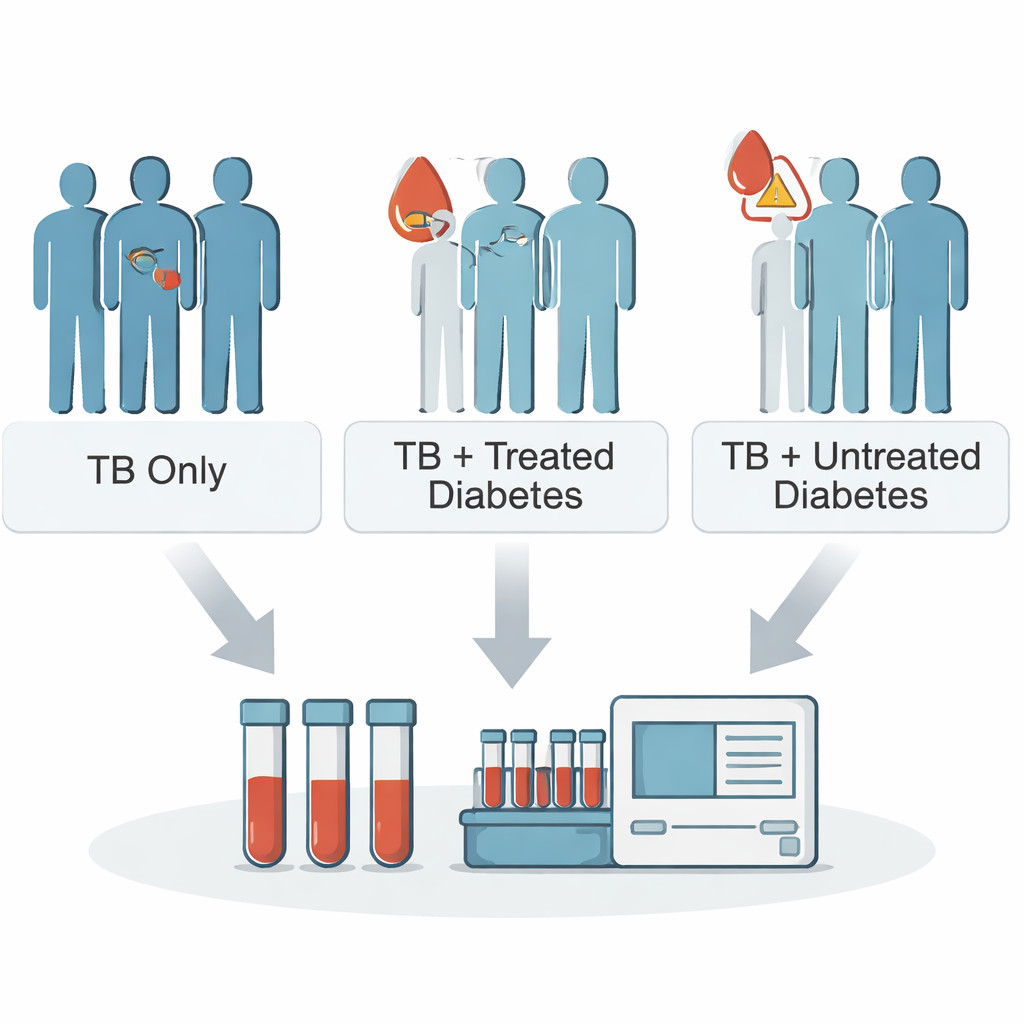
The researchers tracked 95 adults in Ghana who were newly diagnosed with lung TB and did not have HIV or drug-resistant disease. They divided them into three groups: people with TB only; people with TB plus diabetes already on the drug metformin; and people with TB plus newly discovered diabetes who were not yet on diabetes medicines. All patients received the standard six-month TB treatment. Blood samples were collected before treatment and then after about one and two months, during the most intensive phase of therapy, and were tested for salts, kidney and liver function, and blood fats such as cholesterol and triglycerides.
Hidden disturbances in blood salts and organ function
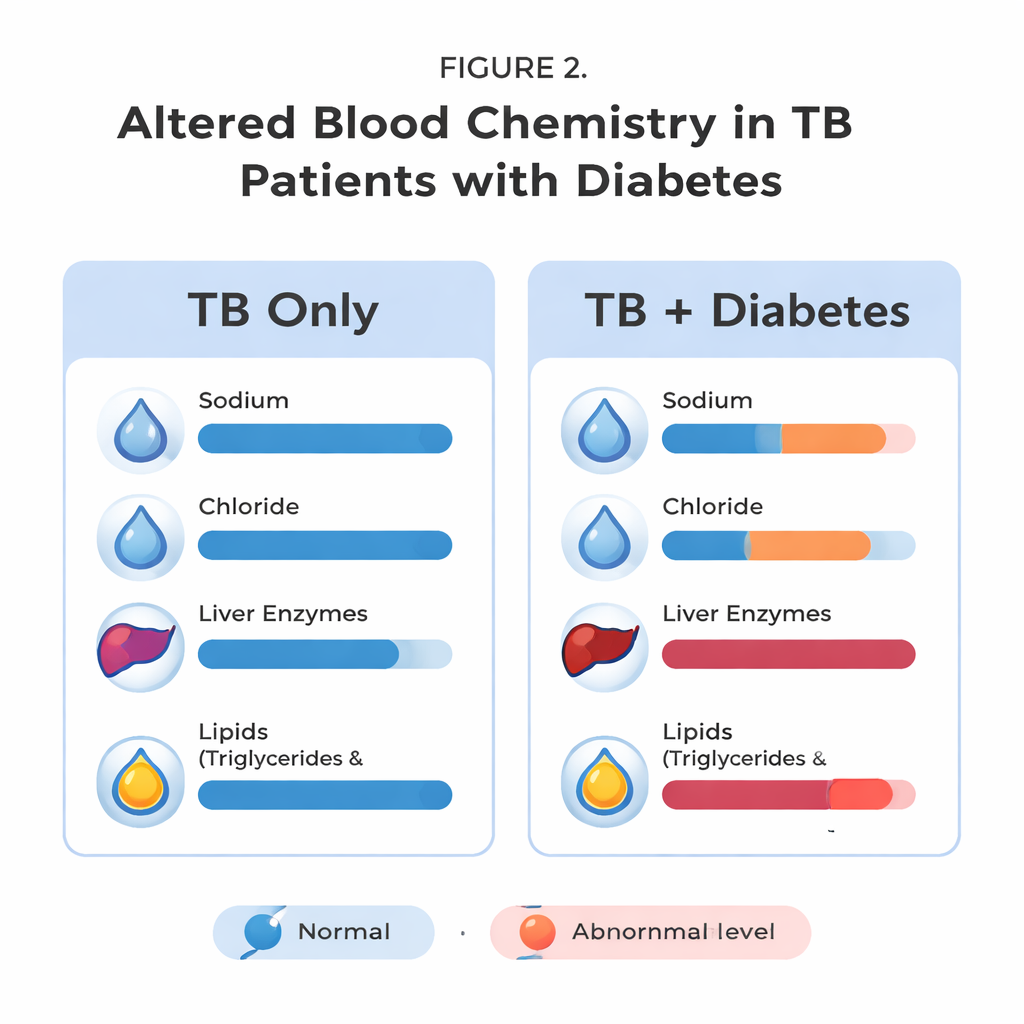
One of the clearest findings was that low blood sodium—known as hyponatremia—was very common, especially in patients with untreated diabetes, where it affected about seven in ten people at the start of TB therapy. Chloride, another key salt, was also consistently lower in patients with diabetes than in those with TB alone. These shifts in basic salts can be overlooked yet may cause confusion, weakness, or even dangerous complications if not corrected. Kidney measures were mostly similar across groups, but there were important warning signs in the liver tests. Patients with TB and untreated diabetes had noticeably higher levels of several liver markers at the beginning of treatment, suggesting their livers were under extra stress. Encouragingly, these markers tended to return toward normal as TB treatment progressed.
Blood fats and the heart risk connection
The study also uncovered striking differences in blood fats. People with TB and diabetes often showed a pattern linked to higher heart disease risk: raised triglycerides and total cholesterol, and frequent abnormalities in “good” and “bad” cholesterol. Those already taking metformin sometimes had higher levels of good cholesterol, hinting that diabetes treatment might partly protect the blood vessels, even while other fats remained elevated. Overall, the results suggest that TB combined with diabetes can quietly increase future cardiovascular risk, even while patients and clinicians focus mainly on clearing the lung infection.
What this means for patient care
Despite these metabolic disturbances, the core TB outcomes—such as clearing the bacteria from sputum and completing treatment—were similar in people with and without diabetes when care was well organized. The study’s message for non-specialists is straightforward: TB can be treated successfully in people with diabetes, but it requires more than just antibiotics. Regular checks of blood salts, liver tests, and cholesterol, especially in those with poorly controlled or newly discovered diabetes, can guide safer timing of diabetes drugs like metformin and help prevent complications. In other words, when TB and diabetes collide, careful, integrated care allows patients not only to survive the infection but also to protect their long-term health.
Citation: Asare, A.B., Asare, P., Yeboah-Manu, M. et al. Patients with tuberculosis and diabetes show altered clinical and biochemical parameters during anti-TB treatment. Sci Rep 16, 7266 (2026). https://doi.org/10.1038/s41598-026-36529-8
Keywords: tuberculosis, type 2 diabetes, comorbidity, electrolyte imbalance, lipid profile