Clear Sky Science · en
Therapeutic potency and the related mechanism of deinoxanthin in experimental animal and cell models of periodontitis
Why Protecting Your Gums Matters
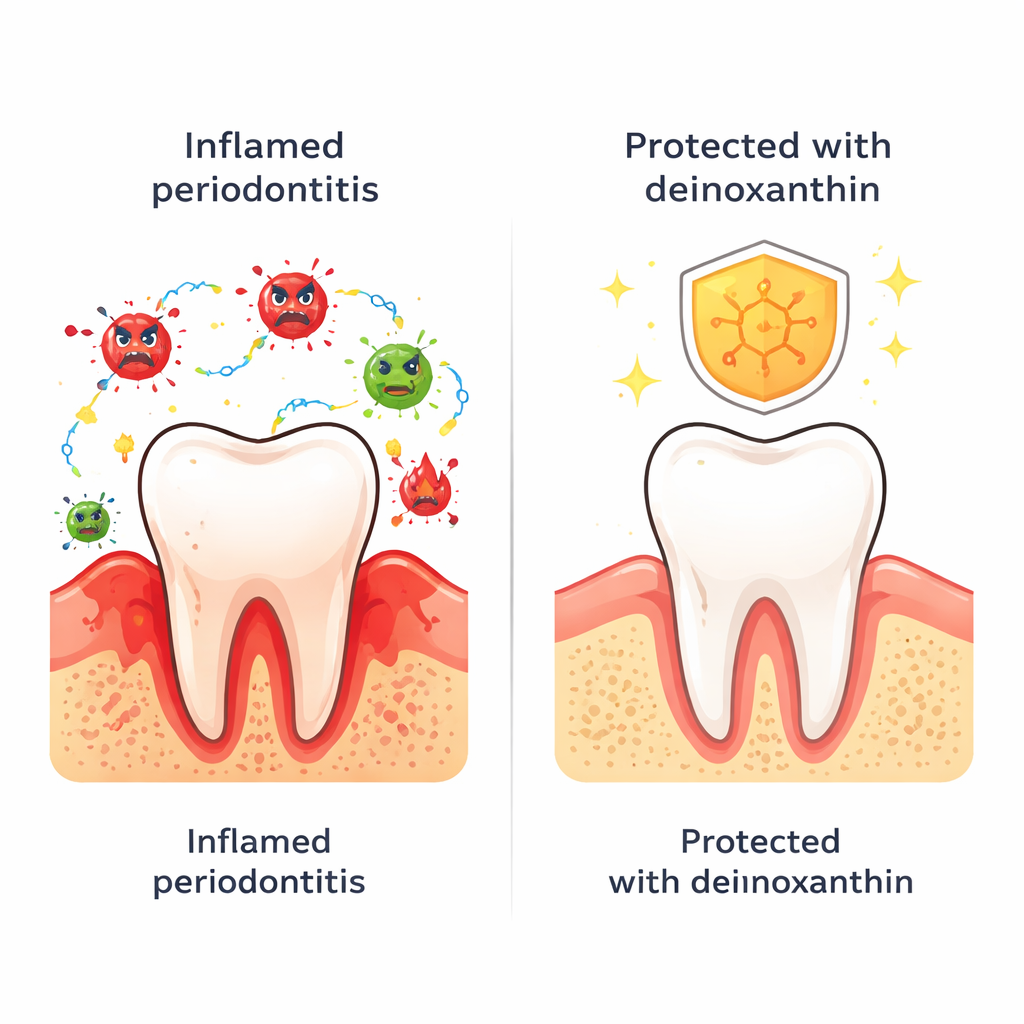
Bleeding gums and loose teeth might seem like minor annoyances, but chronic gum disease, or periodontitis, can quietly erode the bone that holds teeth in place and may even influence whole‑body health. This study explores a naturally occurring antioxidant pigment called deinoxanthin, made by an unusually tough bacterium, to see whether it can shield gums and jawbone from damage in experimental models of severe gum disease.
A Powerful Colorful Molecule
Deinoxanthin is a bright yellow‑orange carotenoid pigment produced by the radiation‑resistant microbe Deinococcus radiodurans. Carotenoids are the same family of compounds that give carrots and some fruits their color, and many of them act as strong antioxidants, mopping up harmful reactive oxygen species—unstable molecules that can injure cells. Earlier work showed that deinoxanthin is particularly effective at neutralizing certain oxygen radicals. The researchers wondered whether this extra‑strong antioxidant could counteract the twin forces that drive periodontitis: runaway inflammation and oxidative stress in the tissues that support the teeth.
Testing Deinoxanthin in Diseased Gums
To mimic advanced human gum disease, the team induced periodontitis in rats by tying tiny ligatures around a back tooth after coating them with the well‑known gum pathogen Porphyromonas gingivalis. This setup provokes inflammation, bacterial overgrowth, and bone loss around the tooth. After a week, some rats received daily oral doses of deinoxanthin for two weeks, while others received only the oil used to deliver it. High‑resolution 3D X‑ray scans revealed that untreated diseased animals lost a significant amount of supporting bone, whereas animals given deinoxanthin retained much more bone mineral and bone volume, close to that of healthy controls. Microscopic examination showed that deinoxanthin‑treated gums had fewer invading inflammatory cells and shorter distances between the tooth surface and the bone crest, both signs of preserved tissue.
Quieting Inflammation and Bone Breakdown
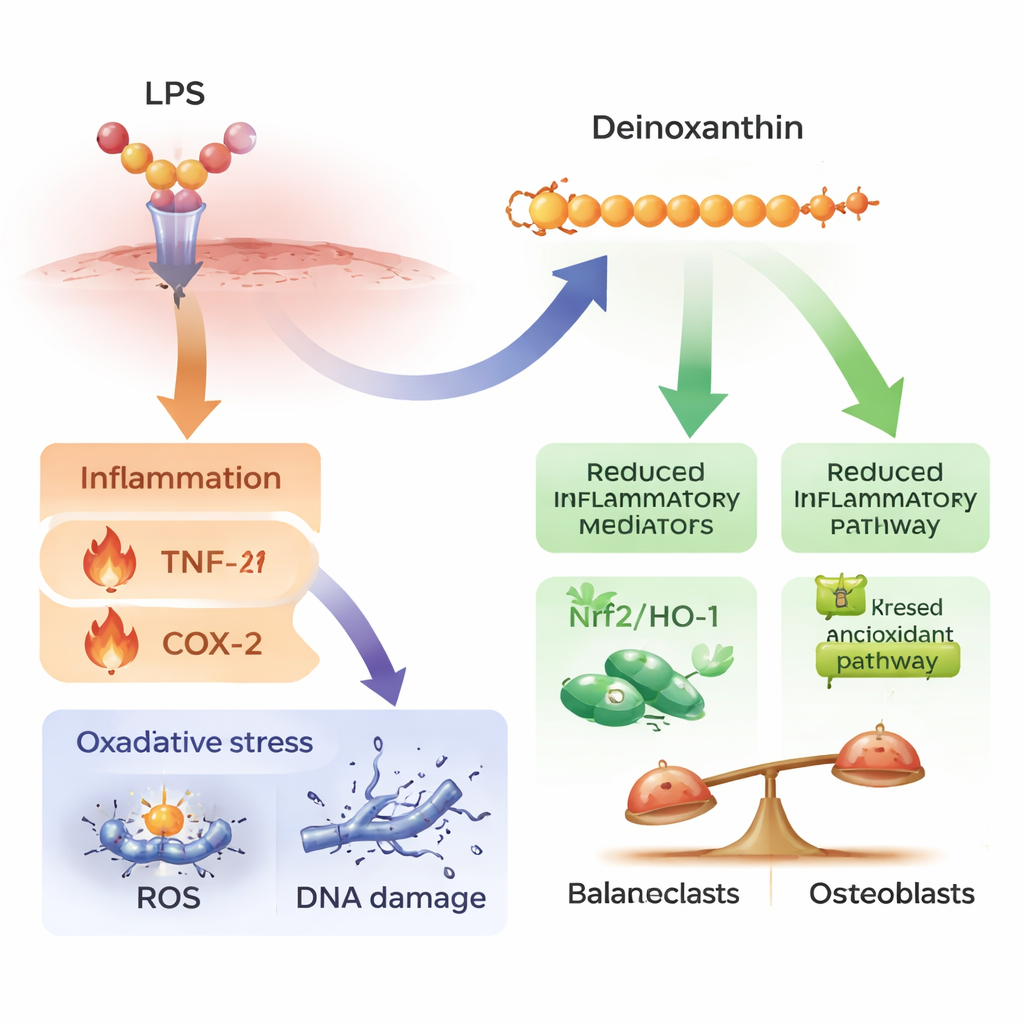
The researchers then asked why bone and soft tissue fared better with deinoxanthin. Blood tests and tissue staining showed that ligature‑induced periodontitis raised classic inflammatory messengers such as TNF‑α, IL‑1β, and COX‑2, all strongly linked to tissue breakdown and pain. Deinoxanthin markedly lowered these signals in both the bloodstream and the ligament that anchors the tooth. In the jawbone itself, the disease increased the number and size of bone‑eating cells (osteoclasts) and boosted molecules that drive their formation, including RANKL and cathepsin K. Deinoxanthin reduced these bone‑resorbing cells and their markers, while at the same time restoring proteins associated with new bone formation—such as RUNX2, BMP2, osterix, osteocalcin, and osteopontin—and enhancing an internal protective pathway (Nrf2/HO‑1) that helps cells cope with oxidative stress.
Zooming In on Human Cells
Because rat studies cannot fully explain how a compound might work in people, the team studied human periodontal ligament cells and a human immune cell line in the lab. They challenged these cells with bacterial components that normally trigger strong inflammatory responses and oxidative damage. Under this stress, the cells produced more inflammatory factors, accumulated reactive oxygen species, showed DNA damage, and lost some of their ability to grow, migrate, and support bone formation. Adding a low, non‑toxic dose of deinoxanthin restored cell growth, reduced oxidative stress and DNA injury, and improved wound‑like healing in culture dishes. It also shifted gene activity away from chemokines and cytokines that attract and activate inflammatory cells and toward antioxidant and tissue‑repair programs.
From Pigment to Potential Therapy
Altogether, the study suggests that deinoxanthin can act on multiple fronts: it dampens key inflammatory molecules, curbs oxidative stress, restrains bone‑destroying cells, and supports bone‑building cells in gum tissues. While these findings come from animal experiments and cultured human cells—and much work remains to confirm safety, dosing, and effectiveness in people—they raise the possibility that a naturally derived antioxidant pigment could one day complement standard care for chronic periodontitis, helping patients better preserve their teeth and the bone that supports them.
Citation: Bhattarai, G., An, YH., Shrestha, S.K. et al. Therapeutic potency and the related mechanism of deinoxanthin in experimental animal and cell models of periodontitis. Sci Rep 16, 5735 (2026). https://doi.org/10.1038/s41598-026-36514-1
Keywords: periodontitis, deinoxanthin, antioxidant therapy, gum inflammation, bone loss