Clear Sky Science · en
Night-eating syndrome is associated with food consumption frequency among Chinese college students
Why late-night eating matters
Many college students are no strangers to midnight snacks, but regularly eating much of one’s daily food late at night may be more than just a habit. This pattern, known as night-eating syndrome, has been linked to sleep problems, mood issues, and long-term health risks. This study explores how night-eating syndrome is connected to what, and how regularly, Chinese college students eat during the day, shedding light on a behavior that could quietly shape their future health. 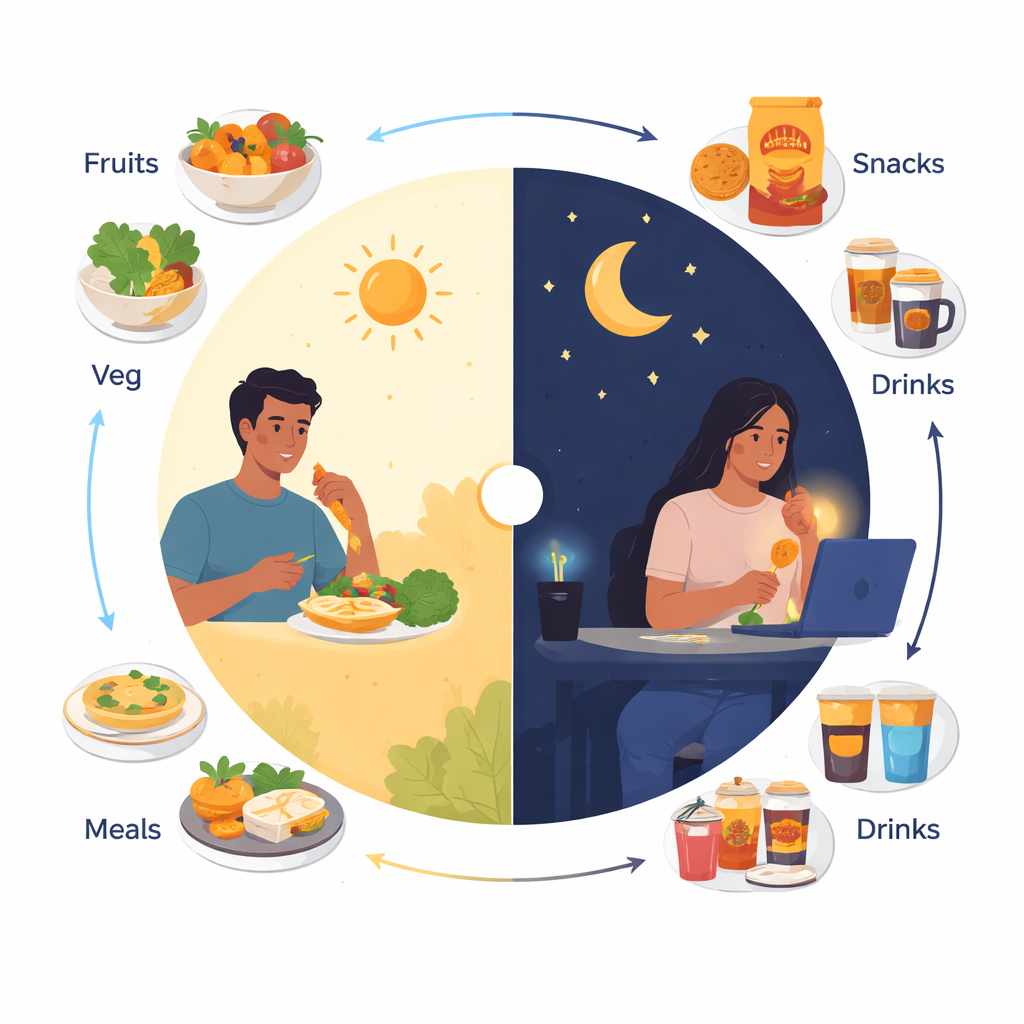
A closer look at night-eating habits
Night-eating syndrome is more than grabbing the occasional snack. It involves taking in a large share of daily calories after dinner, often waking up at night to eat, and struggling with both falling and staying asleep. People with this pattern tend to feel little hunger in the morning and much more in the evening. Earlier research has linked night eating to obesity, diabetes, insomnia, depression, and anxiety, but most of those studies focused on small groups or special populations, not the everyday university students who are forming lifelong habits.
Studying thousands of students
To understand how night eating relates to daily food choices, researchers surveyed 11,856 students from 11 universities in different regions of China. The students completed a questionnaire that measured how strongly they showed signs of night-eating syndrome, grouping them into no, mild, or severe night eaters. They were also asked how much they liked and consumed fruits, vegetables, fast food, salty snacks like chips, and sugary drinks such as soft drinks and sweet fruit beverages. In addition, they reported how often they ate breakfast, lunch, and dinner each week, which allowed the researchers to see who kept regular mealtimes and who did not.
What late-night eaters tend to choose
When the researchers compared students with and without night-eating syndrome, clear patterns emerged. Those with stronger night-eating traits were more likely to report a higher intake of high-calorie, low-nutrient foods, especially sugary drinks and salty snacks. At the same time, they were less likely to report eating fruits and vegetables regularly. In other words, the more students shifted their eating toward the night, the more their overall diets tilted toward quick, energy-dense options and away from nutrient-rich foods that support long-term health.
How night eating disrupts daily meals
Night eaters did not just differ in what they ate; they also differed in when they ate. Students with more severe night-eating symptoms were more likely to skip or irregularly eat breakfast and lunch compared with students without these symptoms. University schedules may make this worse: early morning classes can be hard to face after a late night of snacking, and a late breakfast can blunt hunger for lunch. Interestingly, dinner did not show the same strong pattern, suggesting that night eaters may still sit down to an evening meal but continue eating into the night. These findings fit with what is known about the body’s internal clock, which tends to increase hunger and cravings for high-energy foods in the evening, especially when sleep is short or delayed. 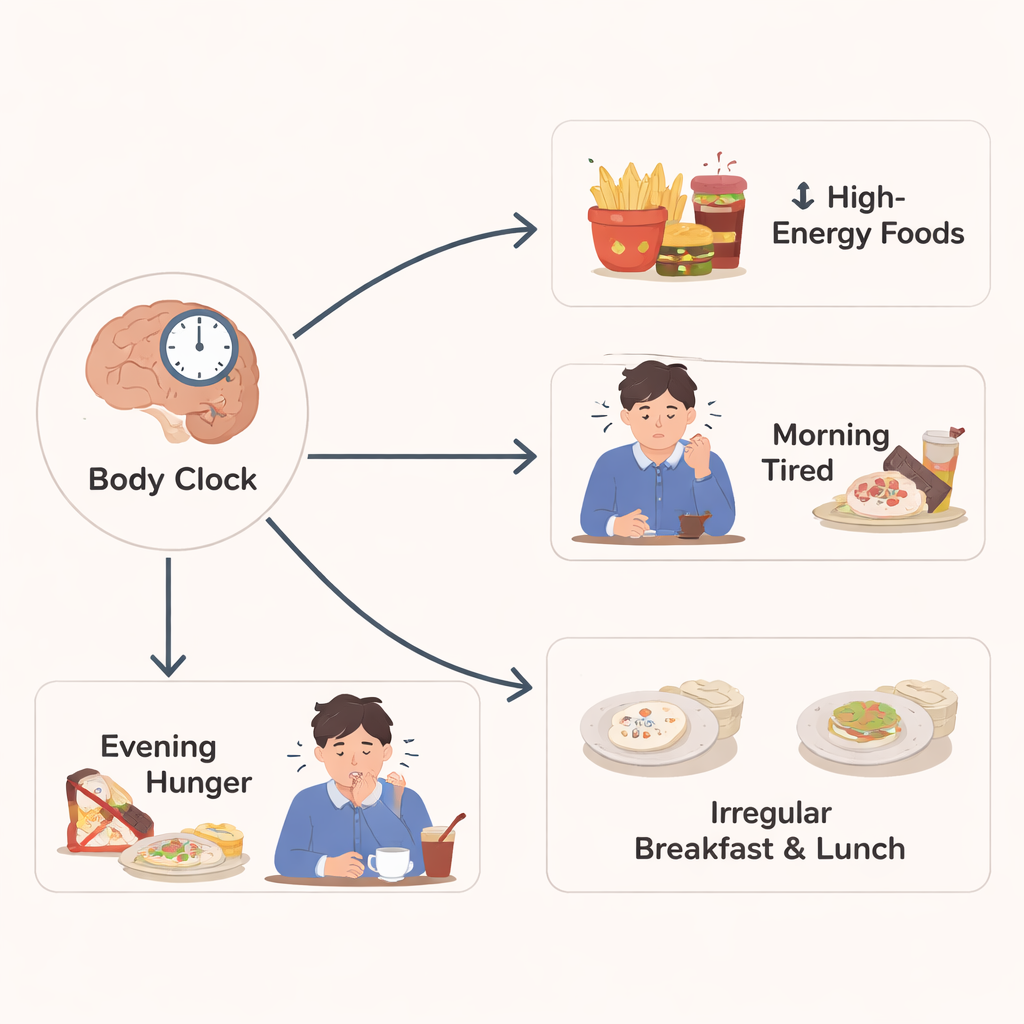
What this means for students and health
For a layperson, the key message is simple: when eating shifts toward the night, it can nudge people toward more sugary drinks and snacks and away from regular, balanced breakfasts and lunches. While this study cannot prove that night eating directly causes poor diet or health problems, it shows that the two travel together in a large group of young adults. Recognizing night-eating syndrome as a distinct pattern can help universities, families, and health professionals design programs that encourage students to keep more consistent meal times and choose healthier foods, potentially reducing the hidden risks of late-night eating over the long term.
Citation: Hao, Z., Guo, X., Jing, Q. et al. Night-eating syndrome is associated with food consumption frequency among Chinese college students. Sci Rep 16, 5595 (2026). https://doi.org/10.1038/s41598-026-36505-2
Keywords: night eating syndrome, college students, late-night snacking, meal timing, diet habits