Clear Sky Science · en
Research on optimization methods for multi-energy expansion supply plans in industrial parks based on genetic algorithms
Why smarter factory energy matters
As the world races to cut greenhouse gas emissions, factories face a tough challenge: how to power growing production lines while using more clean energy and keeping costs under control. This paper looks at a new way for industrial parks to plan their energy systems over decades, combining solar power and efficient on-site generators so that capacity grows step by step with demand. The work shows that careful planning with modern algorithms can dramatically reduce both energy bills and carbon footprints, without asking companies to gamble on huge upfront investments.
From one-size-fits-all to tailored energy plans
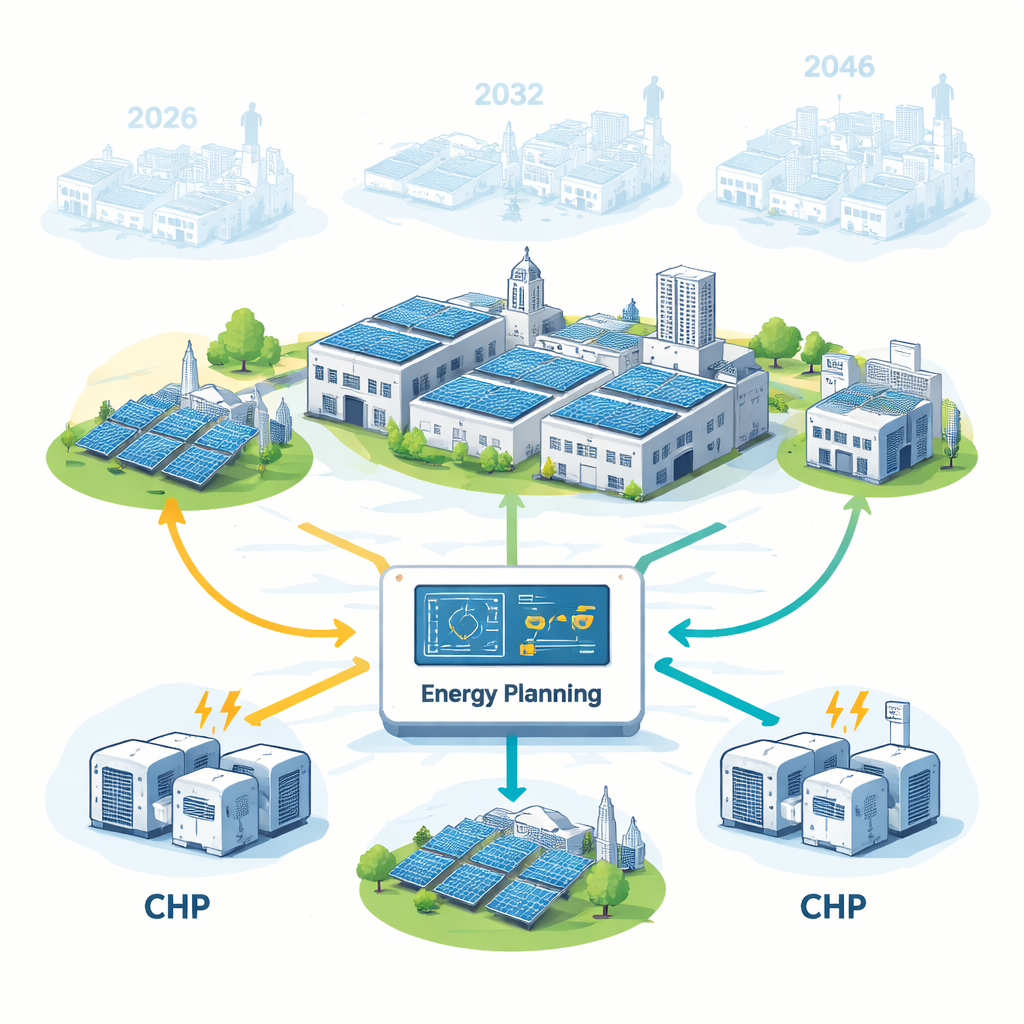
Many factories now want “multi-energy” systems that blend electricity from the grid, natural gas, solar power and combined heat and power (CHP) units that produce both electricity and usable heat. Existing planning tools and commercial software can design such systems, but they often assume that a factory’s energy demand is fixed and that all equipment is installed at the start. For real factories, demand usually grows as production expands, and it rarely makes sense to buy all future capacity on day one. The authors argue that what is missing is a planning tool designed for small industrial sites that can handle changing demand and staged construction, while still keeping the analysis practical for engineers and managers.
Letting evolution search for better energy systems
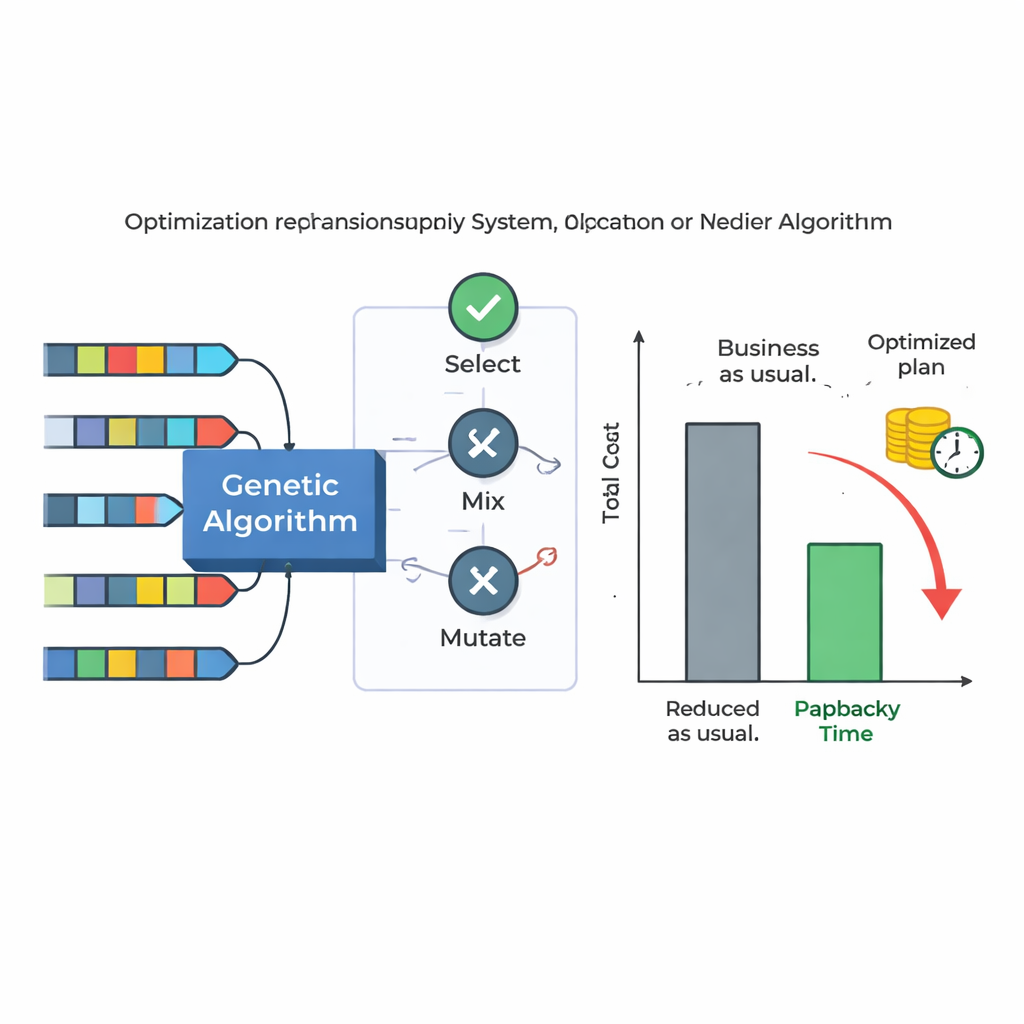
To fill this gap, the researchers built an optimization model based on a “genetic algorithm,” a search method inspired by biological evolution. Instead of trying to take derivatives of a complicated cost formula, the algorithm treats each possible long-term energy plan as a string of choices: how many solar panels and CHP units to install in year one, how much to add every few years, and when to replace aging equipment. Each candidate plan is simulated over a 20-year period, tracking investment costs, fuel use, grid purchases and maintenance. The algorithm then “selects” the better plans, “mixes” their features and occasionally “mutates” some choices, gradually evolving towards strategies that minimize overall cost or shorten the payback time.
Designing how and when to build
The model breaks down each technology into a few simple planning knobs: initial capacity, the size of each later expansion, how often expansions occur and, when relevant, which hardware modules are chosen. For solar panels, these choices must respect roof area limits, minimum practical installation sizes and typical project economics so that tiny, uneconomical add-ons are avoided. For CHP units, the tool assumes modular 1,000 kW blocks and prevents overbuilding far beyond the factory’s heat and power needs. Because the decision variables are discrete—adding a whole turbine or CHP unit at a time—the authors show that genetic algorithms are better suited than many traditional methods that assume smooth, continuous adjustments.
Beating commercial software and fixed-build strategies
The team first checked their approach against HOMER, a widely used commercial planning tool. For a test case that allowed solar, wind and CHP, their model found a configuration with one wind turbine, several CHP units and modest solar capacity that cut total project cost by about 23% compared with HOMER’s design and shortened the simple payback period from nine years to five. A second, more detailed case examined an industrial park in Hainan, China, with large electricity and cooling demand and space for rooftop solar. There the optimized plan installed the maximum 1.6 megawatts of solar panels and started with nine CHP units, then added more CHP capacity every two years as demand grew. Over 20 years this “dynamic installation” reduced total energy costs by 77% compared with a business-as-usual scenario that bought everything from the grid and gas network.
Why building in stages wins
The authors also compared their step-by-step approach with a simpler “fixed installation” strategy that installs all on-site equipment at the start. While both used the same maximum solar capacity, the fixed plan proposed 26 CHP units upfront, more than the factory needed in the early years. That option achieved a four-year payback time but had higher lifetime cost and left many units underused. By contrast, the dynamic plan needed less than half the initial investment, reached payback in just two years and kept the CHP units operating at higher utilization, making better use of each dollar invested. This staged approach also spreads replacement costs and leaves more room to adapt if future demand or energy prices differ from today’s forecasts.
What this means for factories and climate goals
For non-specialists, the message is straightforward: factories do not have to choose between saving money and going green. By planning when and how much on-site energy equipment to install, and by using smart search methods to explore thousands of possible build-out paths, industrial parks can sharply cut their energy bills while shifting to cleaner sources like solar and high-efficiency CHP. The study suggests that thoughtful, phased investment can trim initial spending by up to 40%, speed up payback and lower risk, all while supporting global efforts to reduce emissions.
Citation: Guo, S., Wei, H., Li, F. et al. Research on optimization methods for multi-energy expansion supply plans in industrial parks based on genetic algorithms. Sci Rep 16, 5200 (2026). https://doi.org/10.1038/s41598-026-36503-4
Keywords: industrial energy planning, renewable energy in factories, combined heat and power, genetic algorithm optimization, multi-energy systems