Clear Sky Science · en
Evaluating the potential to predict chemotherapy-induced nausea and vomiting in carboplatin-containing treatment based on symptoms induced by prior cisplatin-containing treatment
Why this matters for people facing chemotherapy
Chemotherapy often saves lives, but it can also bring miserable side effects such as nausea, vomiting, and loss of appetite. For people with lung and other chest cancers, two common drugs—cisplatin and carboplatin—are especially known for upsetting the stomach. This study asks a simple, practical question: if a patient feels sick from cisplatin, can that experience help doctors predict and better prevent similar problems when the patient later receives carboplatin?
Two powerful drugs used at different times
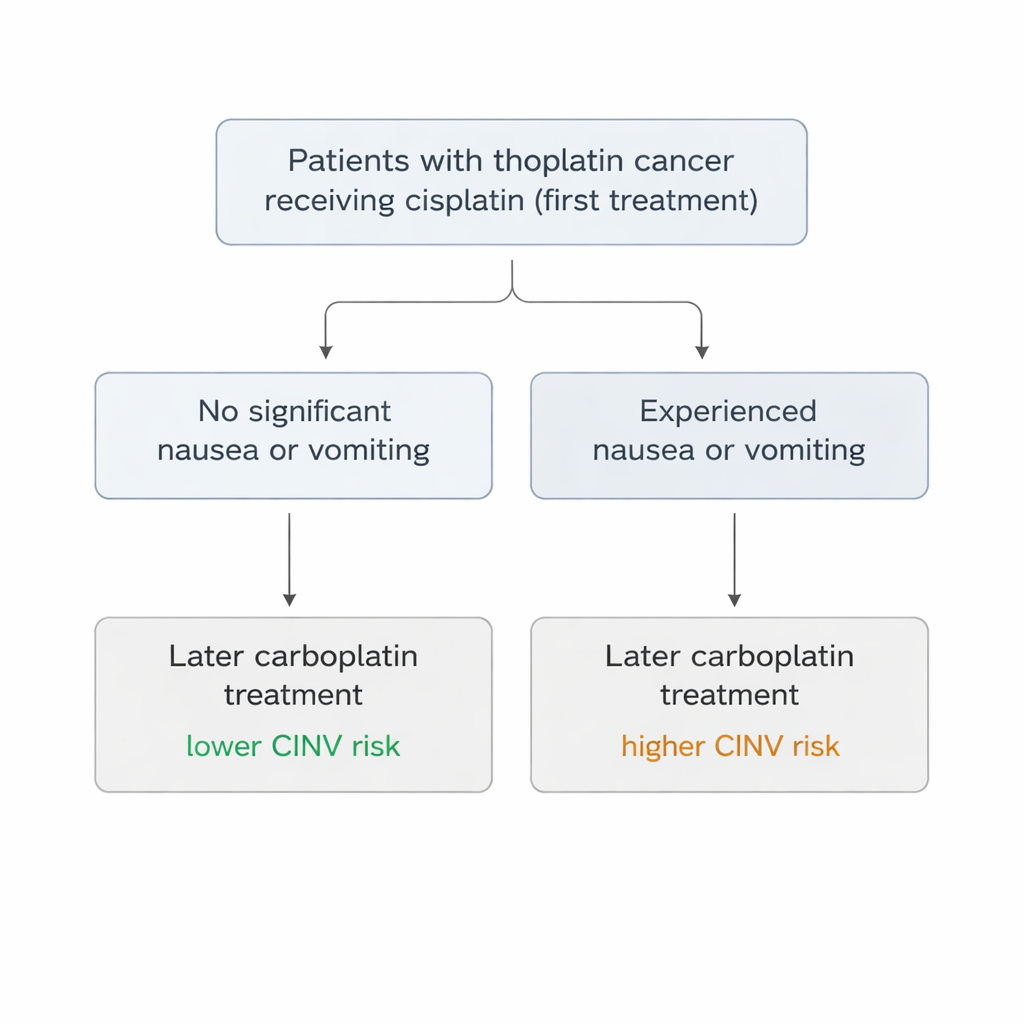
Cisplatin and carboplatin are both “platinum” chemotherapy drugs widely used to treat thoracic (chest) cancers, including lung cancer. In many treatment plans, patients first receive cisplatin, which is considered highly likely to cause nausea and vomiting, and later switch to carboplatin, which has a somewhat lower but still substantial risk. Modern anti-nausea medicine—combinations of drugs that block key brain and gut signals—has greatly reduced these side effects, but not for everyone. Some patients still suffer despite standard protection, and doctors have lacked clear tools to identify who is most vulnerable in advance.
Comparing patients with and without earlier sickness
Researchers at a Japanese university hospital looked back at the records of 52 adults with thoracic cancers who were hospitalized for both cisplatin-based and later carboplatin-based treatments. Everyone received strong, guideline-based anti-nausea prevention for both drugs. The team divided patients into two groups based on their first cisplatin cycle: a control group whose symptoms were fully controlled (no vomiting, no need for rescue medicine, and no nausea), and a “CINV-experience” group who had any nausea or vomiting. They then checked what happened during the first cycle of carboplatin in each group, closely tracking nausea, vomiting, and loss of appetite over the first five days.
Clear warning signal from past experience
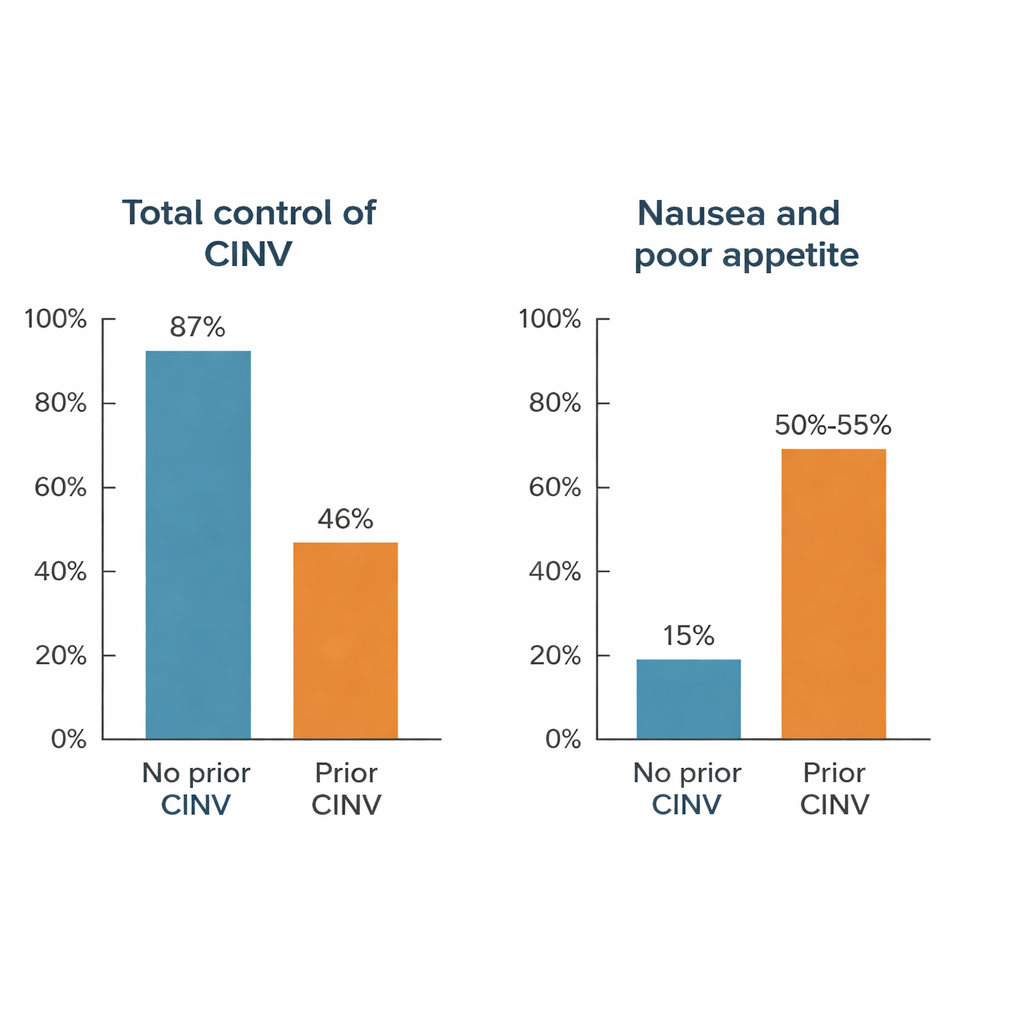
The results showed a striking pattern. Among patients who had felt well during cisplatin, nearly nine out of ten continued to have “total control” of symptoms with carboplatin. In contrast, less than half of those who had suffered nausea or vomiting with cisplatin achieved that same level of control when they later received carboplatin. While severe vomiting remained relatively uncommon and similar between groups, milder but very troublesome problems were much more frequent in the CINV-experience group: over half had nausea and about half had loss of appetite, compared with only about one in six in the control group. Even when the researchers used a statistical matching method to balance basic factors such as age and sex, the same general pattern held up.
What this means for care teams and patients
The study suggests that a person’s reaction to cisplatin is not just an unpleasant memory—it is a practical warning flag for future treatment. If a patient struggles with nausea, vomiting, or poor appetite during an early cisplatin course, doctors and pharmacists should treat that person as high-risk when carboplatin is introduced later. That could mean strengthening anti-nausea protection (for example, adding drugs like olanzapine), monitoring symptoms more closely, and involving nurses and pharmacists in regular check-ins or follow-up calls so problems can be caught and managed quickly.
Take‑home message for patients and families
In everyday terms, this research shows that “how you felt last time” really matters. People who get sick to their stomach from cisplatin are more likely to have similar trouble when they later receive carboplatin, even with good standard protection in place. The encouraging side is that this information is easy to obtain—simply by listening to patients—and can guide doctors to act early with extra safeguards. By using past symptoms as a warning signal, cancer care teams can better tailor nausea prevention, helping more patients stay hydrated, nourished, and able to continue treatment as safely and comfortably as possible.
Citation: Saito, Y., Watanabe, T., Takekuma, Y. et al. Evaluating the potential to predict chemotherapy-induced nausea and vomiting in carboplatin-containing treatment based on symptoms induced by prior cisplatin-containing treatment. Sci Rep 16, 5817 (2026). https://doi.org/10.1038/s41598-026-36488-0
Keywords: chemotherapy side effects, nausea and vomiting, cisplatin, carboplatin, lung cancer treatment