Clear Sky Science · en
Integrated preharvest salicylic acid maleic hydrazide and postharvest 1 MCP delay softening and preserve strawberry quality during cold storage
Why keeping strawberries fresh matters
Strawberries are among the most beloved fruits worldwide, but they spoil quickly: they soften, leak juice, lose flavor, and grow mold even in the refrigerator. This study asked a simple but important question for growers, retailers, and shoppers alike: can we gently "prepare" strawberries on the plant and right after harvest so they stay firm, tasty, and nutritious longer in cold storage, without relying on harsh preservatives?
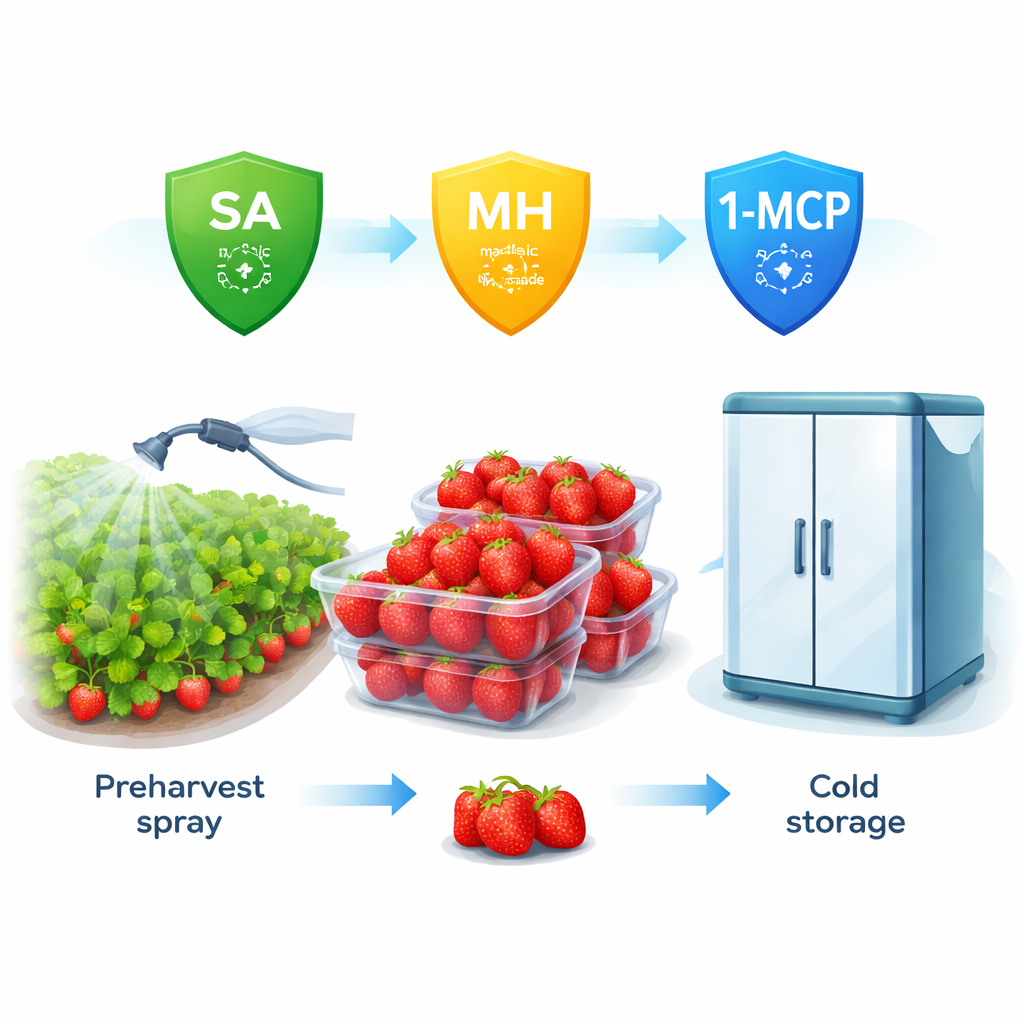
Helping berries before they are picked
The researchers worked with a commercial strawberry variety called ‘Nabila’ over two growing seasons in northern India. Before harvest, they sprayed the plants several times during flowering with solutions containing salicylic acid and maleic hydrazide, either alone or together. Salicylic acid is a natural plant signal related to how plants respond to stress, while maleic hydrazide is a long‑used growth regulator that slows aging in produce and has been evaluated as safe when used properly. These sprays were intended to toughen the fruit’s natural defenses and strengthen the structures in the berry that hold its cells together, so that the fruit would be better prepared for the rigors of harvest, handling, and cold storage.
A gentle boost after harvest
Right after picking, some of the strawberries received an additional treatment with a gas called 1‑methylcyclopropene, or 1‑MCP. This compound attaches to the fruit’s ethylene receptors—tiny molecular switches that help control ripening and aging. Even though strawberries do not have the dramatic "gas surge" that bananas or tomatoes show, ethylene still nudges them toward softening and loss of quality. By briefly exposing the berries to 1‑MCP and then storing them at refrigerator temperatures for six days, the team tested whether blocking this aging signal, on top of the earlier sprays, could meaningfully change how the fruit behaved in storage.
Firmer texture, better taste, and more vitamins
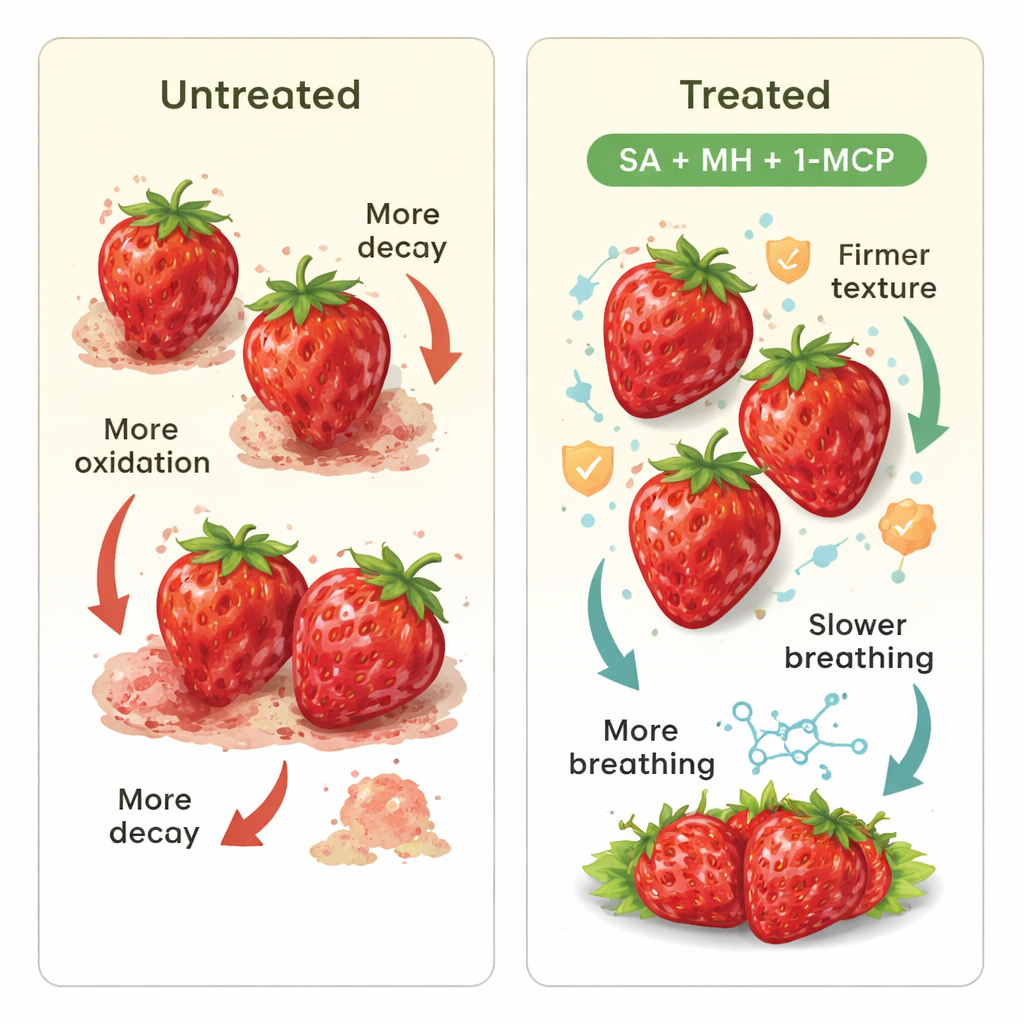
The combination of treatments made a striking difference. Strawberries that received both preharvest sprays and the postharvest 1‑MCP gas stayed about two‑thirds firmer than untreated fruit after six days in the cold room. Inside the berries, the activities of enzymes that normally chew through the cell wall—essentially the fruit’s scaffolding—were cut roughly in half. At the same time, the treated fruit held onto more of the sugars and natural acids that give strawberries their sweetness and tang. The berries also "breathed" more slowly, releasing about one‑third less carbon dioxide, a sign that their internal metabolism was running at a calmer pace instead of racing toward senescence.
More natural defenses and less damage
The benefits were not just about texture and flavor. The treated strawberries were richer in health‑promoting compounds: total phenolics, flavonoids, and anthocyanins—the pigments that give strawberries their vivid red color and antioxidant punch—rose by roughly 40–50 percent compared with untreated fruit. Levels of vitamin C climbed as well. At the same time, a key marker of damage to cell membranes, called malondialdehyde, dropped by nearly half, showing that the berries suffered less oxidative stress during storage. Enzymes that help neutralize reactive oxygen molecules, the biochemical sparks that drive this damage, became more active, suggesting that the fruit’s built‑in protection systems were switched on and working harder.
A roadmap for longer‑lasting berries
When the researchers looked at all their measurements together using statistical tools, they saw a clear pattern: firm texture, high sugar and acid contents, and abundant antioxidants clustered with the treated fruit, while high levels of softening enzymes, rapid respiration, and damage markers clustered with the untreated controls. In everyday terms, priming the plants in the field and then briefly shielding the fruit from aging signals after harvest created strawberries that stayed firmer, tastier, and more nutritious through a typical week of refrigerated storage. For consumers, this approach points to strawberries that are less likely to turn mushy or bland in the fridge. For growers and retailers, it outlines a practical, repeatable strategy to cut waste and extend shelf life using tools that work with the fruit’s own biology rather than masking decline.
Citation: Sharma, N., Bakshi, P., Dhotra, B. et al. Integrated preharvest salicylic acid maleic hydrazide and postharvest 1 MCP delay softening and preserve strawberry quality during cold storage. Sci Rep 16, 4723 (2026). https://doi.org/10.1038/s41598-026-36487-1
Keywords: strawberry shelf life, fruit firmness, postharvest treatment, antioxidants, cold storage