Clear Sky Science · en
Repeated induced abortion among women seeking abortion care services in public health facilities in Harar town, Eastern Ethiopia
Why this study matters to everyday women
Across the world, many women face pregnancies they did not plan or feel ready for. Some decide to end these pregnancies through abortion more than once in their lives. This study, conducted in Harar town in eastern Ethiopia, looks closely at why a significant number of women return for repeated induced abortions. Understanding these reasons is vital for designing health services that prevent unplanned pregnancies, protect women’s health, and expand their choices—issues that matter to families and communities everywhere.
How common repeat abortions are
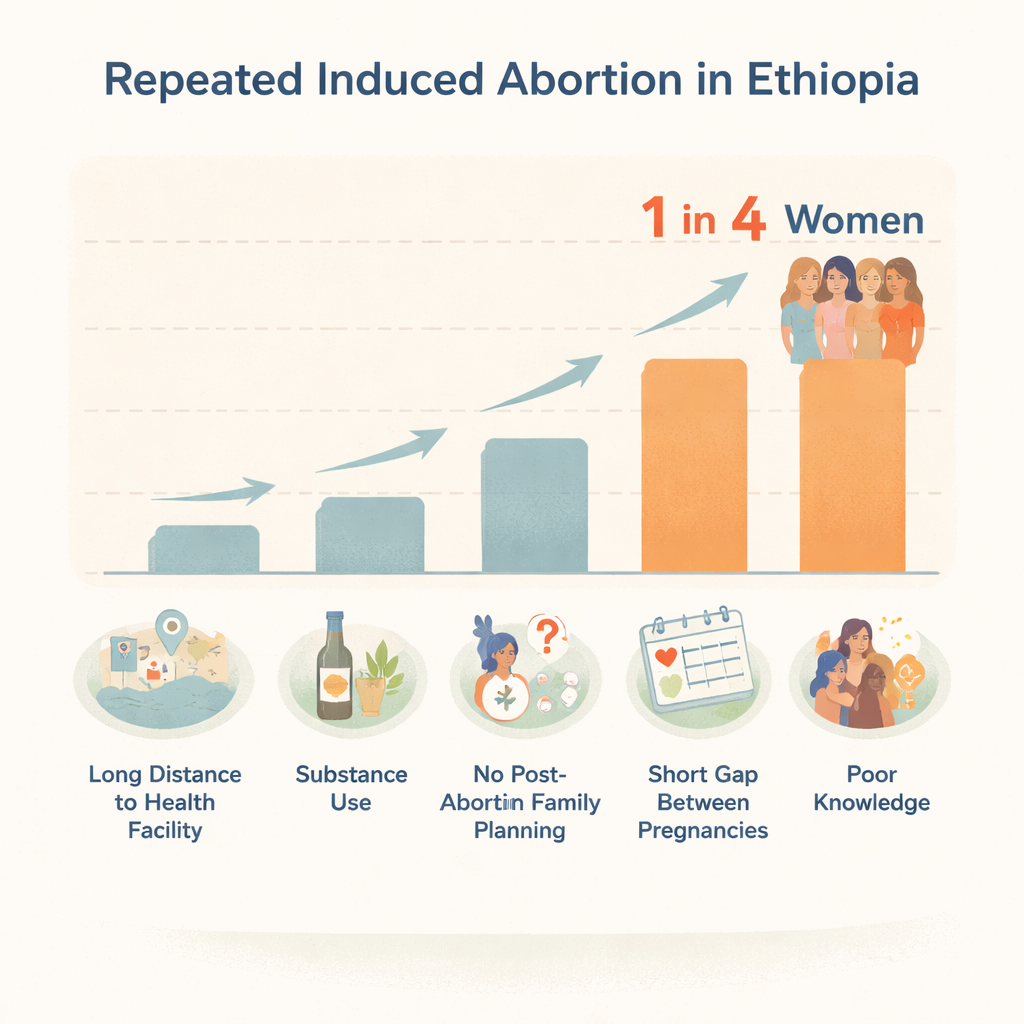
Researchers surveyed 374 women of reproductive age who sought abortion care in public hospitals and health centers in Harar over two months in 2022. They found that about one in four—25.7 percent—had already had at least one previous induced abortion. Most of these procedures took place in the first three months of pregnancy, when abortion is typically safer, and the majority were performed in hospitals. This level of repeat abortion is similar to patterns seen in some other African countries, and it signals that many women are still struggling to avoid unwanted pregnancies despite existing family planning programs.
Who was included in the research
The study focused on women who came to public health facilities specifically for induced abortion, rather than for treatment of complications or miscarriage. Most participants were young, with an average age of about 25 years, and nearly three out of five were 24 or younger. The majority lived in urban areas and had at least some secondary schooling. Many were government employees, but students, merchants, and housewives were also represented. Most women had been pregnant more than once and already had one or more living children, showing that repeat abortion often occurs in the context of ongoing family life rather than at the very start of someone’s reproductive years.
Key factors that raise the risk
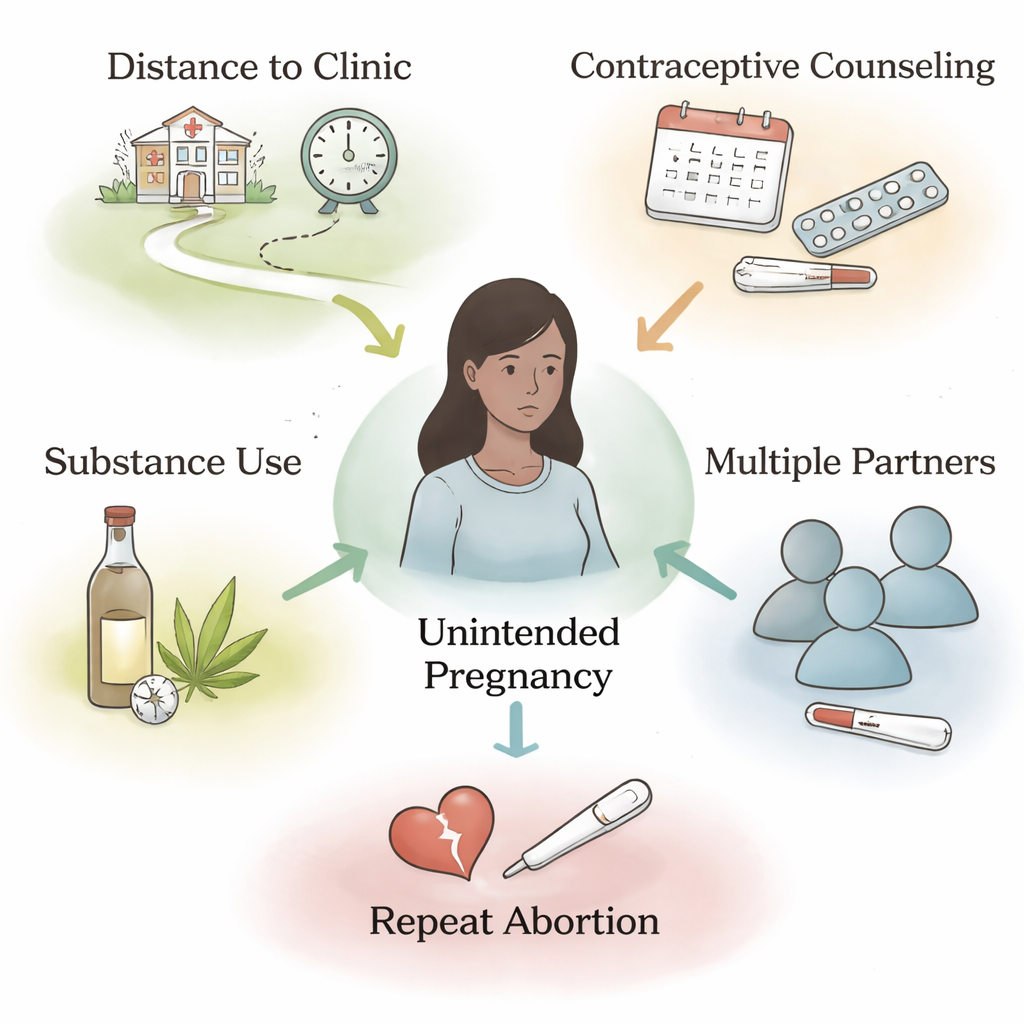
Using statistical models, the researchers identified several conditions that made repeat abortions much more likely. Women who lived more than a 30-minute walk from a health facility had over four times the odds of having repeat abortions compared with those living closer. Those who used substances such as alcohol or other locally common stimulants had roughly three times the odds, likely reflecting riskier sexual behavior and lower contraceptive use. Not receiving a contraceptive method after a previous abortion—known as post-abortion family planning—also stood out: women who left their earlier visit without such protection were nearly four times more likely to return for another abortion.
Relationships, timing, and knowledge gaps
The pattern of women’s relationships and the spacing between pregnancies also played a strong role. Having multiple sexual partners in the past year was linked to about three times higher odds of repeated abortion, suggesting more unstable relationships and less consistent contraception. Nearly half of the women had a short gap—less than 18 months—between pregnancies, and these women were over four times more likely to have repeated abortions. Finally, understanding of abortion and reproductive health mattered: women who scored poorly on basic questions about abortion were about two and a half times more likely to have had multiple abortions, hinting that some may be using abortion in place of reliable contraception.
What this means for women’s health
To a layperson, the study’s message is straightforward: when women live far from clinics, lack clear information, do not receive effective contraception after an abortion, use substances, or have unstable relationships and closely spaced pregnancies, they are much more likely to face repeated unwanted pregnancies and abortions. The authors argue that better outreach—bringing reproductive health services closer to where women live, improving counseling, ensuring that every abortion visit includes an opportunity to choose contraception, and addressing substance use and relationship risks—could significantly reduce the need for repeat abortions. In essence, the study shows that repeated abortion is not simply an individual choice repeated over time; it is often a sign that health systems and social conditions are failing to provide women with the tools they need to plan their families safely.
Citation: Mustefa, A., Mezmur, H., Abdurahman, D. et al. Repeated induced abortion among women seeking abortion care services in public health facilities in Harar town, Eastern Ethiopia. Sci Rep 16, 6239 (2026). https://doi.org/10.1038/s41598-026-36475-5
Keywords: repeat abortion, unintended pregnancy, family planning, reproductive health Ethiopia, post-abortion care