Clear Sky Science · en
GC–MS-based metabolome classification of sturgeon caviar and fish roe samples reveals unique caviar signatures, interspecies and gender variabilities
The Secret Chemistry Behind Tiny Luxury Eggs
Caviar and fish roe are often celebrated for their price tag and gourmet reputation, but what actually makes these tiny eggs special—nutritionally and chemically—has remained surprisingly unclear. This study peeks under the glossy surface of black caviar, salmon roe, and a range of other marine eggs to reveal their hidden chemical signatures, how they differ between species, and what that might mean for taste, health value, and honest labeling in the seafood aisle.
Many Kinds of Roe, One Big Question
True black caviar comes from endangered sturgeon and commands steep prices, while more affordable substitutes—from salmon, bream, crab, squid, and even sea urchins—are sold worldwide. Despite booming global demand driven by sushi and fine dining, most research has looked only at broad components like fat and protein. The authors set out to build a much more detailed “chemical map” of roe by examining 48 samples from 10 commercially important species, including both males and females where possible. Using a sensitive technique called gas chromatography–mass spectrometry, they identified and measured 139 small molecules, ranging from fatty acids and amino acids to sugars, organic acids, and cholesterol-like compounds. 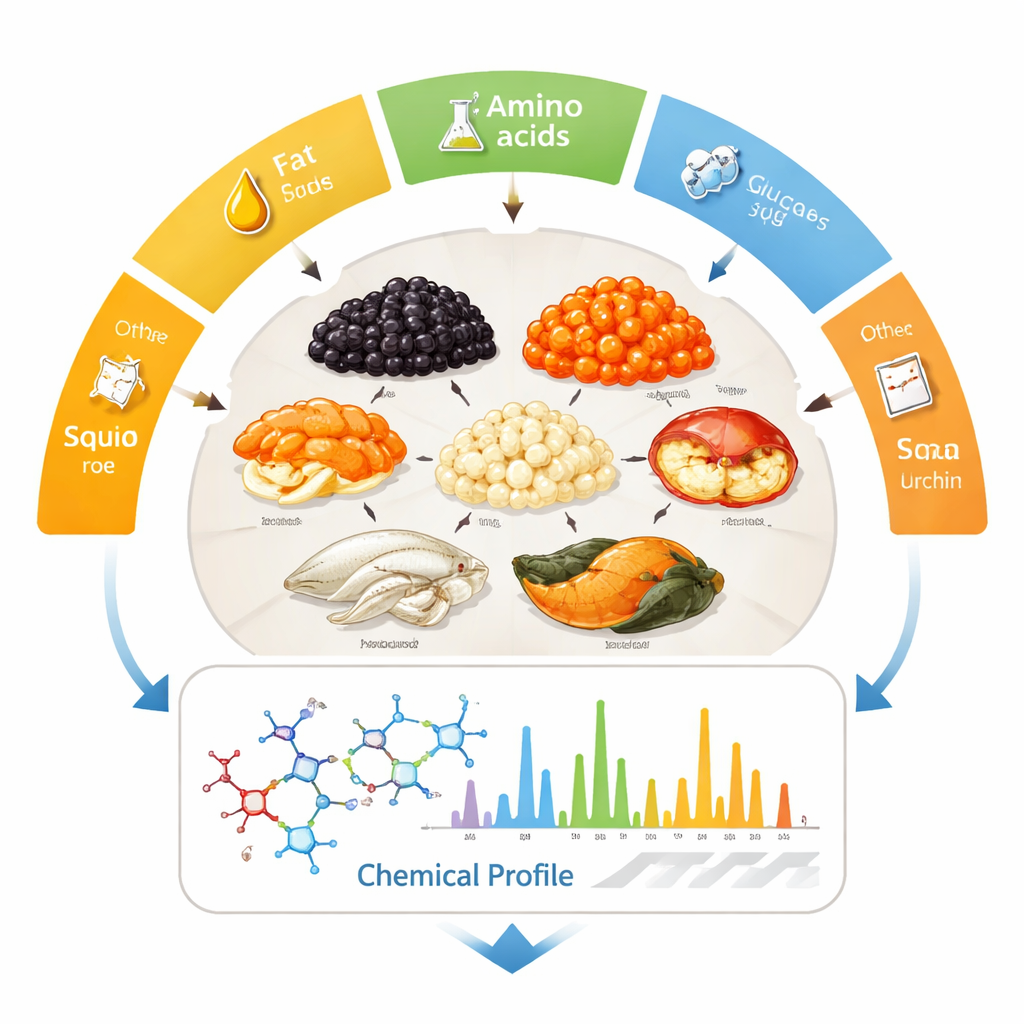
What These Tiny Eggs Are Really Made Of
Across all species, fats turned out to be the dominant group of molecules, followed by organic acids and amino acids. Some roe types stood out as especially rich in particular nutrients. Sturgeon caviar and roe from male gilt-head bream had the highest overall fat levels, including abundant palmitic and stearic acids (common saturated fats) and a suite of other fatty acids used for energy and cell membranes. The roe of female common cuttlefish also packed substantial fat, including valuable omega‑3 fats such as EPA and DHA, plus the antioxidant gamma‑tocopherol (a form of vitamin E) and a favorable balance of omega‑3 to omega‑6 fats. In contrast, sea urchin roe led in certain amino acids, especially glycine, while bream roe was notable for pyroglutamic acid, a compound linked to umami taste and potential metabolic benefits.
Chemical Fingerprints that Tell Species Apart
Because the dataset was so complex, the researchers applied pattern-recognition tools to see whether chemical profiles naturally clustered by species or sex. These statistical maps showed that some roes formed clear groups. Sturgeon caviar, salmon roe, and cuttlefish roe could be separated from others based on their fat signatures, especially palmitic acid and cholesterol. Black caviar consistently showed high levels of palmitic acid, its related fat breakdown products, and cholesterol, which distinguished it from non-sturgeon roes. Salmon roe, by comparison, was marked by higher urea and the amino acid serine, reflecting differences in protein metabolism. Within the bream family, certain male and female fish grouped together because they shared elevated levels of lactic acid, creatinine, pyroglutamic acid, and other small molecules, suggesting especially nutrient-dense roes that might merit future product development. 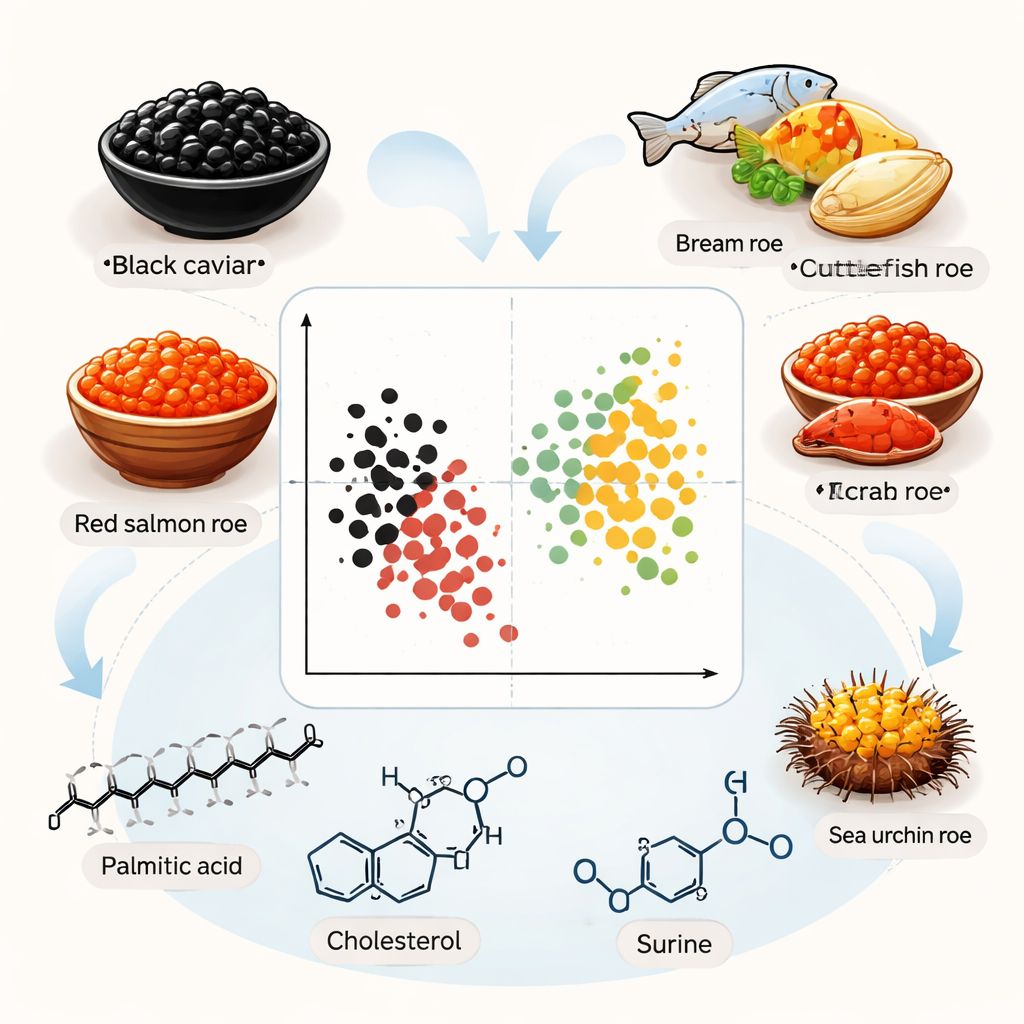
Do Males and Females Make Different Roe?
The team also explored whether sex alone leaves a noticeable chemical stamp on roe. In a swimming crab species, male and female eggs showed a promising pattern: males tended to have more amino acids, while females were richer in fats such as palmitic and oleic acids and cholesterol, consistent with females investing energy reserves into eggs. However, in other species like gilt-head bream and common cuttlefish, the models did not find strong or consistent differences between male and female roes. The authors caution that limited sample size, as well as environmental factors like water temperature, salinity, and diet, may blur gender effects and call for larger, standardized studies.
From Luxury Treat to Labeled Functional Food
In plain terms, this work shows that not all “caviar” or roe is created equal: each species—and occasionally each sex—produces eggs with its own chemical identity. The study highlights bream and cuttlefish roes as particularly promising sources of heart-friendly omega‑3 fats, and suggests that some roes may also contribute desirable taste notes such as umami. At the same time, the clear chemical markers that distinguish authentic black caviar from cheaper substitutes could help protect consumers against mislabeling and support better quality control. By turning caviar and roe into well-characterized foods rather than mysterious luxuries, this research lays the groundwork for more honest labeling, smarter use of by‑product roes that are now discarded, and future exploration of roe as a functional ingredient in a healthy diet.
Citation: Ibrahim, N., Khattab, A.R., Mohammad, A.S. et al. GC–MS-based metabolome classification of sturgeon caviar and fish roe samples reveals unique caviar signatures, interspecies and gender variabilities. Sci Rep 16, 7195 (2026). https://doi.org/10.1038/s41598-026-36474-6
Keywords: caviar, fish roe, omega-3 fatty acids, food metabolomics, food authenticity