Clear Sky Science · en
Effects of date palm and green tea polyphenol extracts on the thermal stability and mechanical properties of poly lactic acid
Why everyday plastics need an upgrade
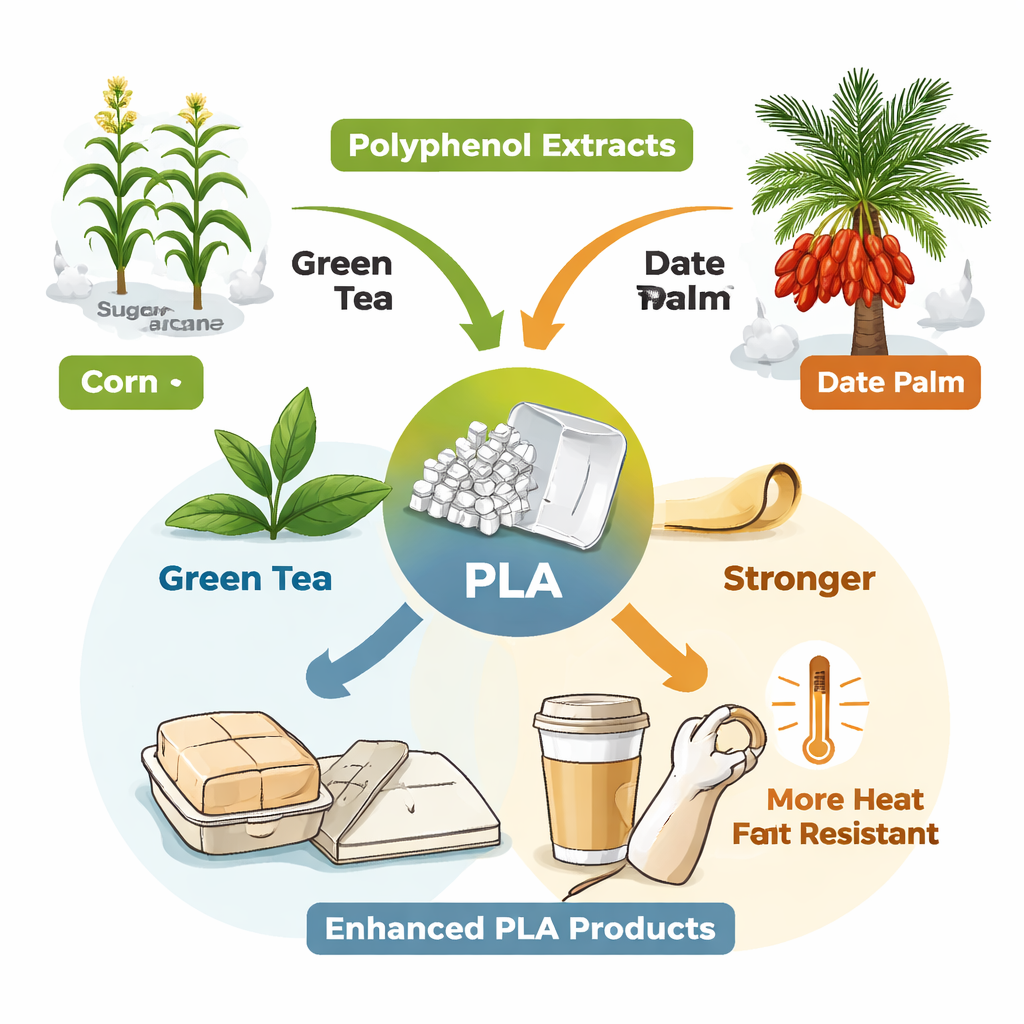
From grocery packaging to coffee cup lids, many products made from plastic end up in landfills or the environment for decades. Poly(lactic acid), or PLA, is a plant-based plastic that can break down much more easily, but on its own it can be brittle and sensitive to heat. This study explores whether natural compounds from green tea leaves and date palm fruits can make PLA tougher and more heat‑resistant, without sacrificing its eco‑friendly nature.
Plant helpers inside a green plastic
The researchers focused on polyphenols, a large family of antioxidant molecules found in many plants. They extracted polyphenols from green tea and from date palm fruits, then mixed them into molten PLA at low levels (1, 5, and 10 percent by weight). Thin films were pressed from these blends and carefully tested. The goal was to see if these natural additives could act like built‑in shields against heat and oxygen, while also softening the plastic enough to prevent it from snapping easily during use.
Comparing tea leaves and date fruits
Using chemical analysis, the team showed that the green tea extract contains a rich mix of complex polyphenols called catechins and gallates, while the date palm extract holds simpler phenolic acids and fewer total polyphenols. When the extracts were heated on their own, green tea polyphenols stayed stable to higher temperatures than those from dates. This difference in chemical makeup turned out to matter: when blended into PLA, both extracts improved heat stability, but green tea did so more strongly, especially at the lower loadings that are most practical for manufacturing.
From brittle to more flexible films
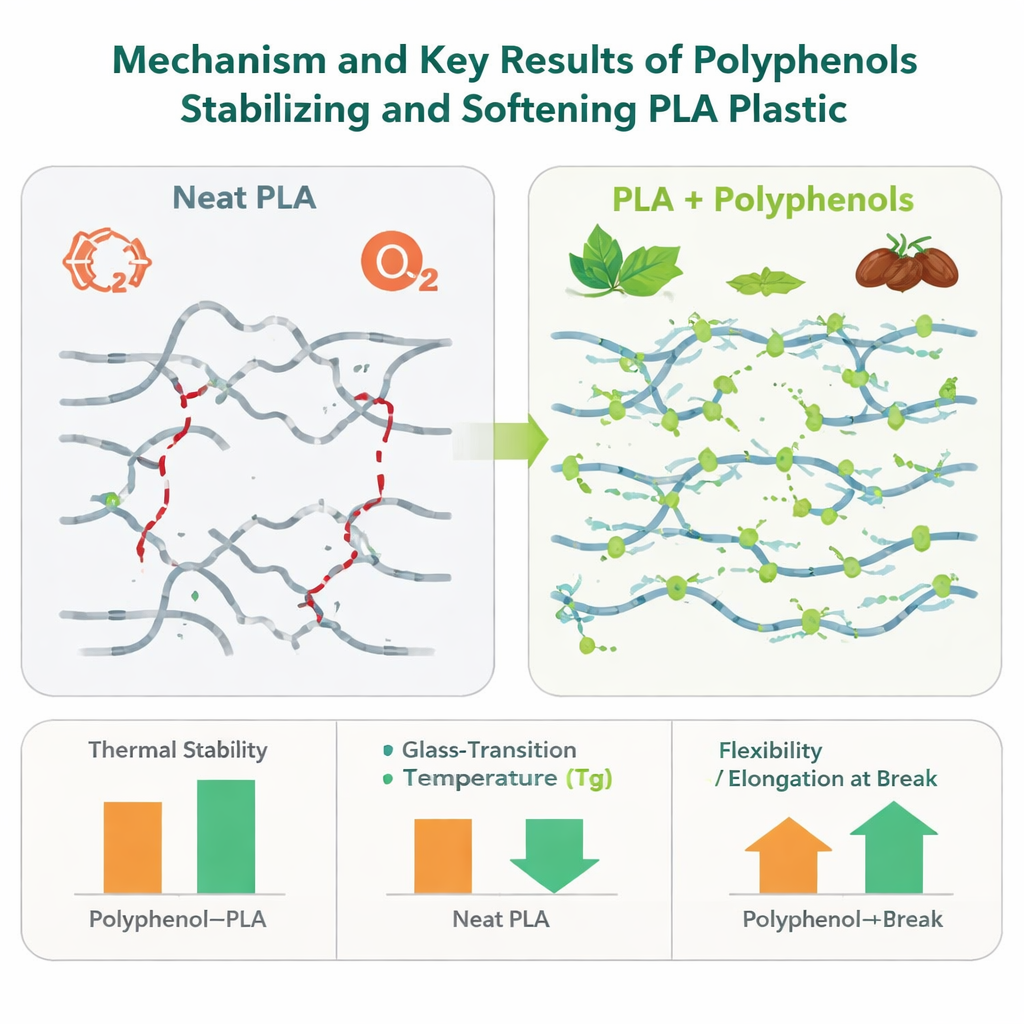
Mechanical tests revealed that adding polyphenols changes how PLA behaves when pulled or stretched. Pure PLA film is stiff and breaks after a small amount of stretching. With either plant extract, the films became less stiff and somewhat weaker in terms of maximum strength, but they could stretch more before breaking. Microscopy pictures of fractured samples supported this shift, showing smooth, brittle cracks in neat PLA and rough, fibrous patterns in the blends that signal more ductile, energy‑absorbing failure. Green tea polyphenols gave the clearest boost in flexibility, suggesting that they mix more evenly and interact more strongly with PLA chains.
How the molecules do their work
Thermal tests under controlled heating and cooling showed that the temperature at which PLA’s chains begin to move (its glass transition) drops slightly when polyphenols are present. This makes the plastic easier to deform instead of crack. At the same time, measures of oxidative stability—such as the time before rapid oxygen‑driven degradation begins—are extended, particularly for green tea blends. The team attributes this to two linked actions: the polyphenols donate electrons or hydrogen atoms to neutralize reactive species that would otherwise attack PLA, and their many “grabbing points” for hydrogen bonding sit between PLA chains, loosening the packing just enough to increase mobility without changing the basic crystalline structure.
What this means for greener products
In plain terms, the study shows that small amounts of plant extracts, especially from green tea, can make a biodegradable plastic both tougher and more resistant to heat and oxygen. The trade‑off is a modest loss in stiffness and strength, but a gain in useful flexibility and durability. Because date palm extracts can be sourced from agricultural by‑products, and green tea polyphenols are already produced at scale, these additives offer a realistic path toward more robust, fully bio‑based packaging and other disposable items that are gentler on the environment.
Citation: Zadeh, K.M., Luyt, A.S., Hassan, M.K. et al. Effects of date palm and green tea polyphenol extracts on the thermal stability and mechanical properties of poly lactic acid. Sci Rep 16, 6846 (2026). https://doi.org/10.1038/s41598-026-36473-7
Keywords: biodegradable plastics, poly lactic acid, polyphenols, green tea, date palm