Clear Sky Science · en
Spatial neighborhood patterns of pulmonary tuberculosis in a large urban area: the case of Santiago, Chile
Why city neighborhoods matter for a lung disease
Tuberculosis, a lung infection many people think of as a problem of the past, remains one of the world’s top infectious killers. In crowded cities, it does not strike at random: some neighborhoods bear a far heavier burden than others. This study looks closely at the Santiago metropolitan area in Chile to see exactly where pulmonary tuberculosis cases cluster, what kinds of communities are most affected, and how mapping these patterns can help health services find and treat people earlier.
Taking a street-level look at tuberculosis
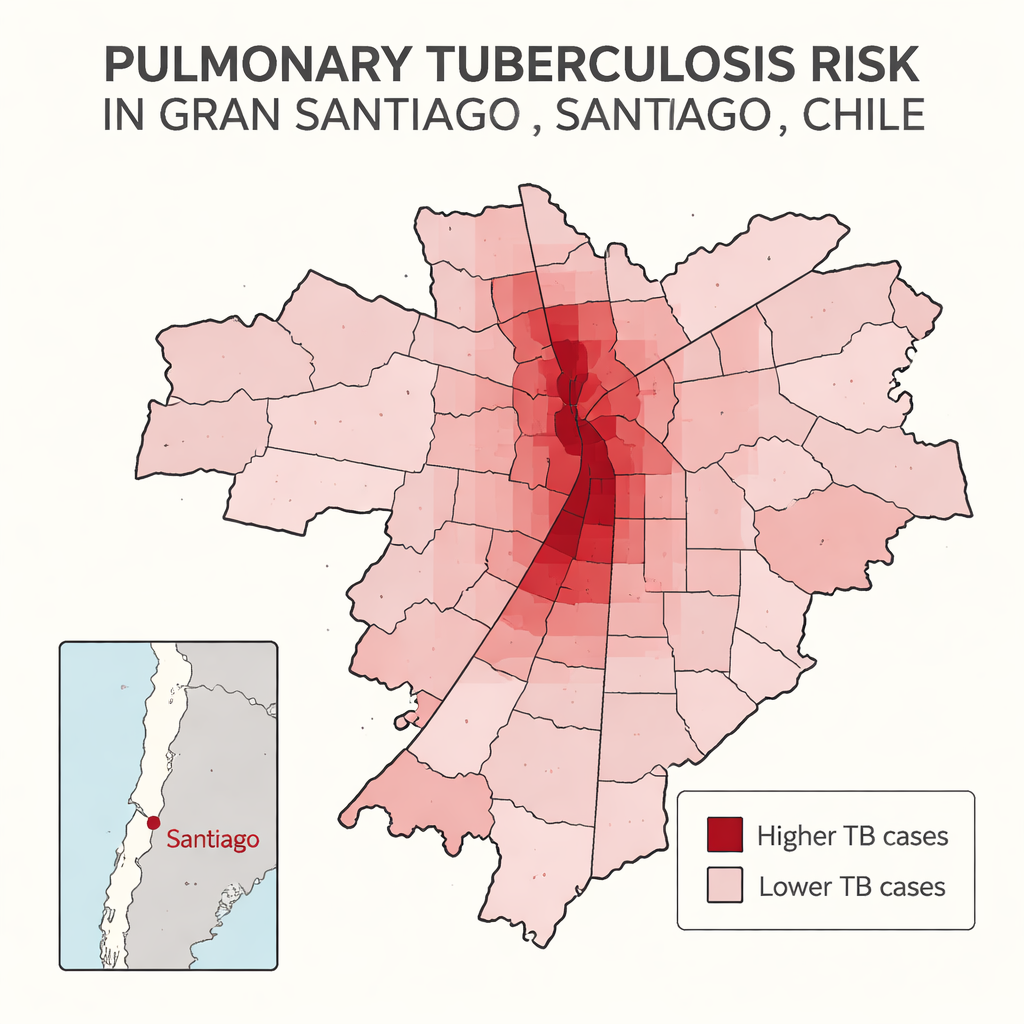
Instead of working with large regions or entire municipalities, the researchers zoomed in to the neighborhood level across Gran Santiago, the country’s largest urban area. They analyzed 3,348 confirmed lung tuberculosis cases reported between 2016 and 2020, using home addresses to place each case on the map. After careful geocoding with online map services and manual checks, nearly all addresses were matched to specific neighborhoods. The team then combined these case locations with census information on population size, age, migration status, Indigenous identity, housing conditions, and access to primary health centers.
Spotting hot spots on the city map
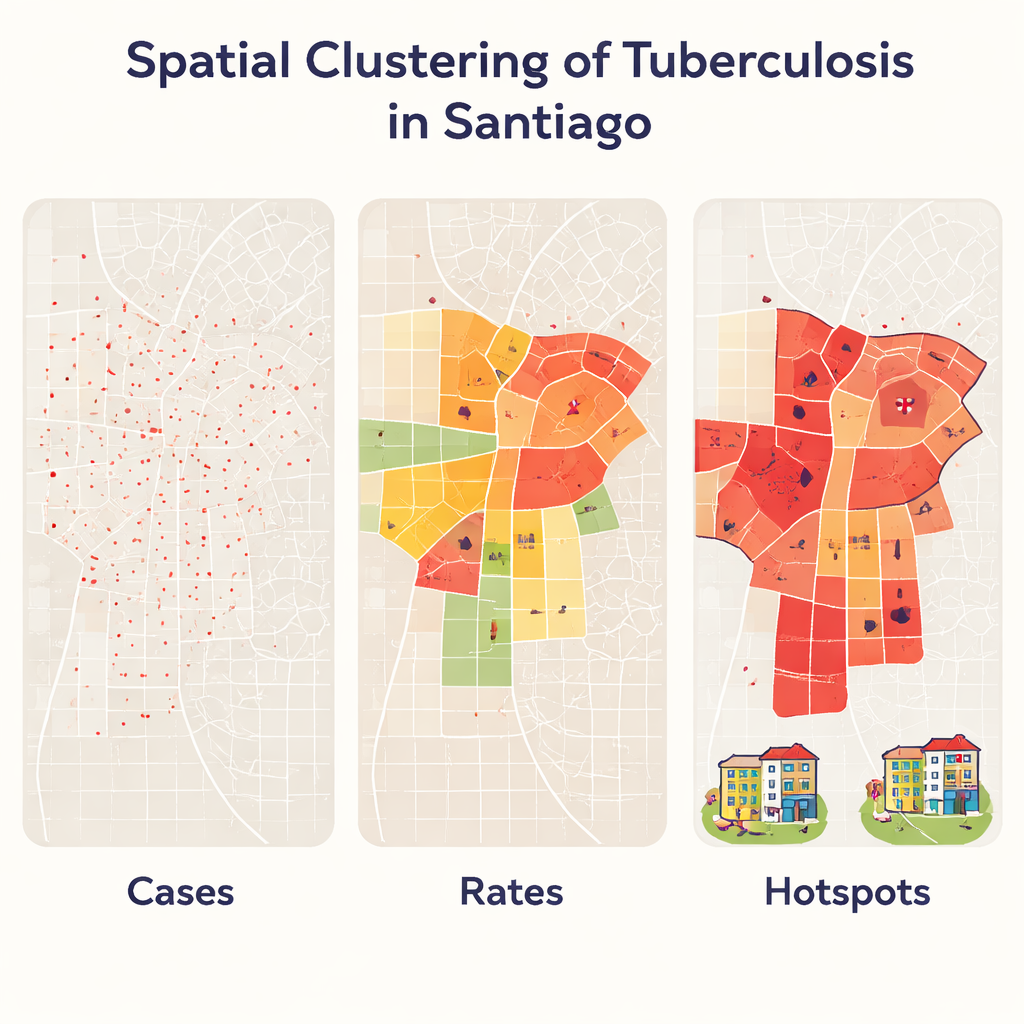
With these data in hand, the scientists used statistical tools designed to detect non-random geographic patterns. They first checked whether neighborhoods with high tuberculosis rates tended to sit near one another, and found clear signs of clustering in most years studied. Next, they applied a flexible scanning method that can outline groups of neighboring areas where the risk is much higher than expected. This approach revealed 11 distinct clusters of elevated tuberculosis risk. Although these clusters covered only about one in nine neighborhoods, they contained almost one in three reported cases—evidence that tuberculosis in Santiago is strongly concentrated rather than evenly spread.
Who lives in the hardest-hit areas
The high-risk neighborhoods shared notable social and housing features. They had higher proportions of men and included more immigrants and Indigenous residents than other parts of the city. Overcrowded homes and tenement-style housing—buildings divided into many small rooms—were also much more common, as was greater population density. The main stretch of elevated risk formed a central corridor through the city that includes large wholesale markets, busy workplaces, and heavy daily movement of people. These conditions create more opportunities for the airborne bacteria that cause tuberculosis to pass from person to person.
Age, gender, and city boundaries
When the researchers separated the data by age and sex, they found that adults, especially men, experienced the highest incidence, and their risk clusters overlapped with the main city corridor. Children and older adults showed some distinct patterns, including a pediatric cluster that did not match the overall map, hinting at special vulnerabilities in certain local communities. Another practical challenge emerged: several clusters straddled borders between municipalities and health service jurisdictions. Because tuberculosis control programs in Chile are usually planned within these administrative lines, this fragmentation can make it harder to coordinate effective outreach in areas where people’s daily lives routinely cross those boundaries.
What this means for stopping tuberculosis
For non-specialists, the core message is that where you live in a big city can strongly shape your risk of catching tuberculosis, largely because neighborhoods differ in crowding, housing quality, and who lives there. The study shows that by mapping these patterns at the neighborhood scale, health authorities can pinpoint a relatively small set of “hot spot” areas where intensified screening, mobile clinics, and community-based case-finding could detect infections earlier and cut transmission. Rather than treating tuberculosis as a citywide problem with one-size-fits-all solutions, the authors argue for tailored, neighborhood-focused strategies that cross administrative borders and reflect the real social geography of urban life.
Citation: Ayala, S., Escobar, N., Vizeu Barrozo, L. et al. Spatial neighborhood patterns of pulmonary tuberculosis in a large urban area: the case of Santiago, Chile. Sci Rep 16, 6319 (2026). https://doi.org/10.1038/s41598-026-36462-w
Keywords: tuberculosis, urban health, spatial clustering, Santiago Chile, neighborhoods