Clear Sky Science · en
Antimicrobial resistance profiles of non-aureus Staphylococci isolated from farm animals, farm environments and companion animals
Why germs on farms matter to you
Antibiotic-resistant bacteria are often portrayed as a hospital problem, but many of these hard-to-treat microbes are quietly evolving on farms, in pet clinics, and even in household animals. This study from Bangladesh looks at a lesser-known group of bacteria called non-aureus Staphylococci living in cattle, cats, dogs, and their surroundings. By tracking how common they are and how they respond to medicines, the researchers show how everyday animal care can shape the future of antibiotic resistance that ultimately affects people.
Hidden farm germs beyond the usual suspect
Most people have heard of Staphylococcus aureus, a major cause of serious infections in humans and animals. But this paper focuses on its quieter relatives, grouped as non-aureus Staphylococci (NAS). These bacteria can live on the skin and in the noses of animals without causing obvious disease, yet they are increasingly linked to udder infections in dairy cows, skin and wound problems in pets, and food contamination. The key concern is that NAS can carry and share resistance genes with more dangerous bacteria, turning routine infections into stubborn, hard-to-treat illnesses.
What the scientists did in the field and lab
The research team collected 180 samples from four regions of Bangladesh, including swabs from cattle, cats, and dogs, as well as soil and water from farms and pet hospital environments. In the lab, they used selective culture media and an automated identification system to pinpoint which NAS species were present. They then tested each isolate against a broad panel of commonly used antibiotics, measuring how well the drugs stopped bacterial growth. For strains that resisted certain key drugs, the team also searched for a specific resistance gene, called mecA, using a DNA-based method.
Where the resistant bugs were found
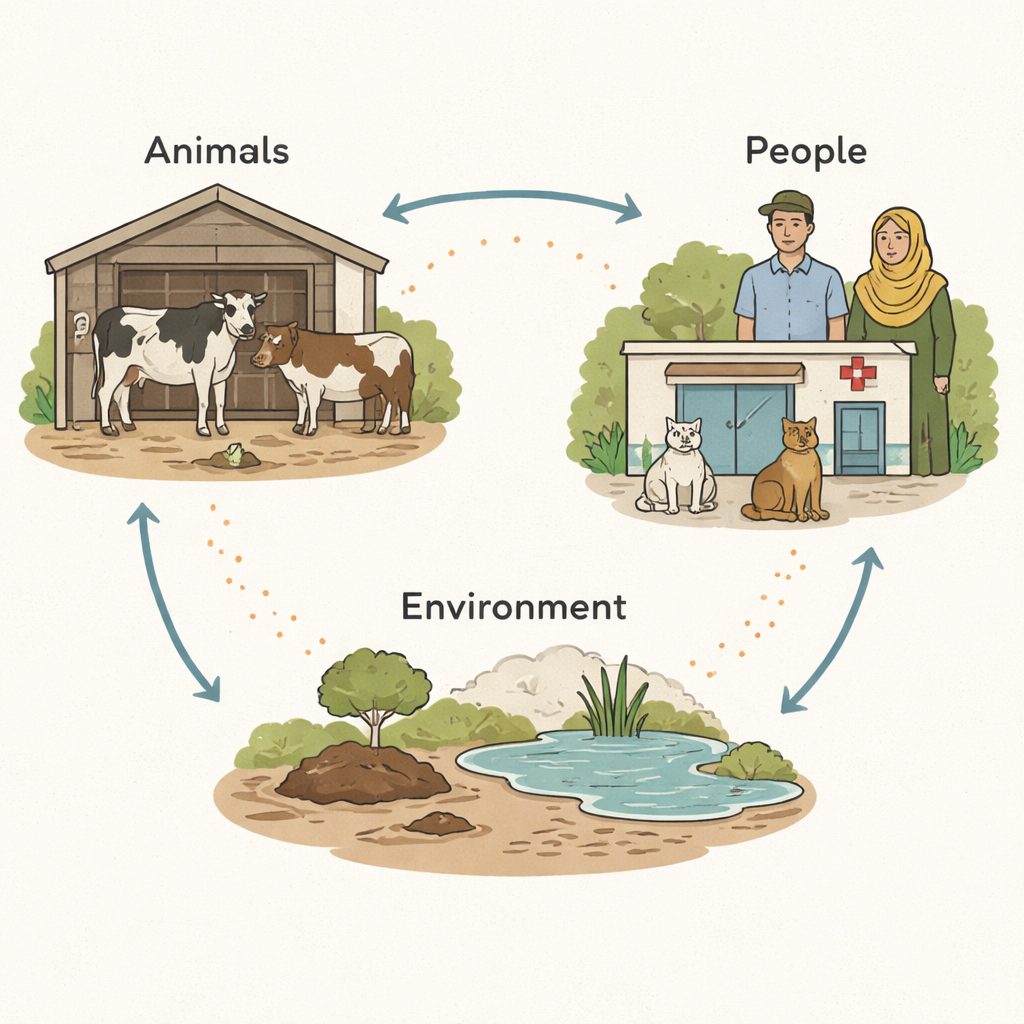
Six NAS species were identified, with Staphylococcus sciuri the most frequent, followed by S. chromogenes, S. lentus, and S. xylosus. These bacteria turned up in both farm and pet settings: for example, S. sciuri was found in cats and in cattle farm environments, while S. xylosus and S. lentus appeared in pet hospital surroundings. Urban farms generally showed slightly higher NAS levels than non-urban sites, suggesting that crowded housing, heavy antibiotic use, and waste handling practices in city areas may favor these microbes. Overall, the pattern points to a connected network where animals, their living spaces, and people share and exchange bacteria.
How strong their drug resistance really is
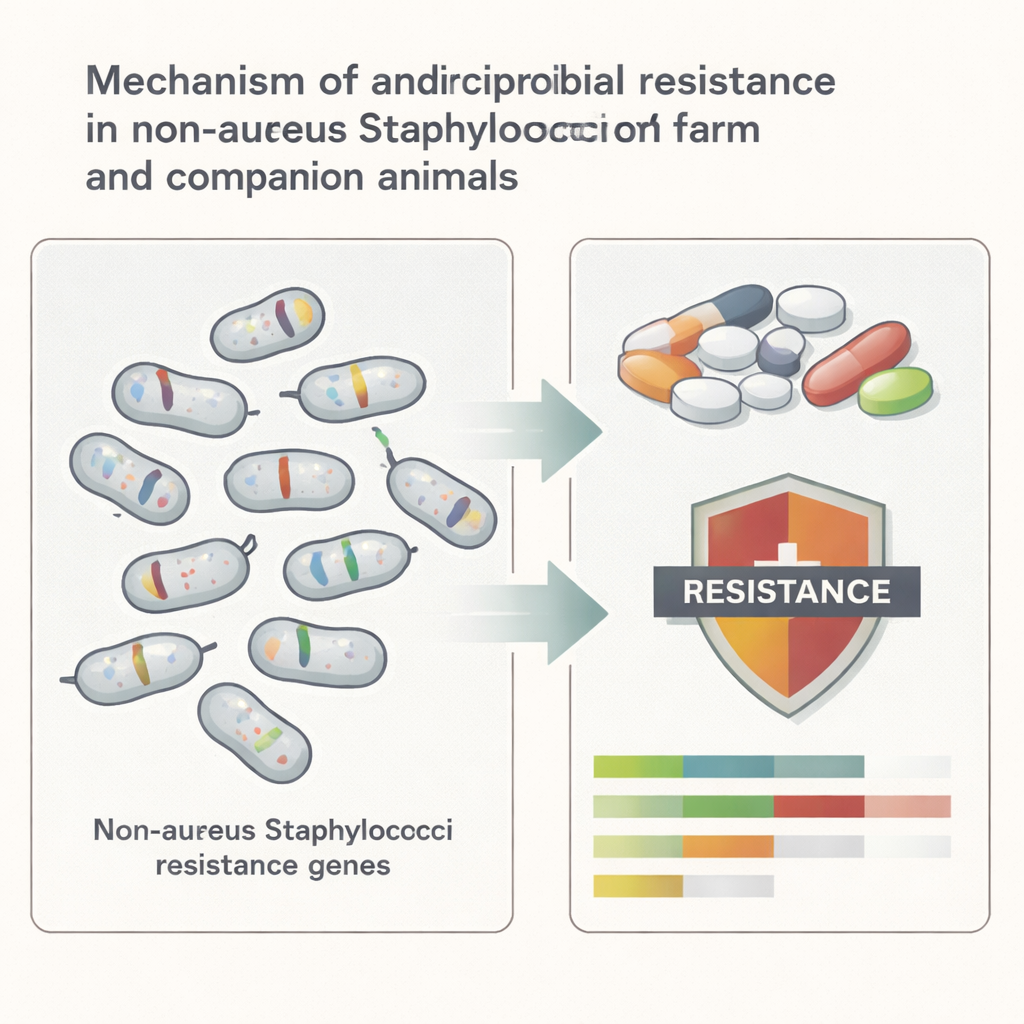
Although many isolates still responded to several antibiotics, more than half—about 52%—were resistant to multiple types of drugs at once, a pattern known as multidrug resistance. This problem was most pronounced in the capital, Dhaka, where nearly one in four isolates were multidrug resistant, reflecting intense animal production and easier access to medicines. The study also found that almost one in five NAS isolates carried the mecA gene, which makes bacteria resistant to a whole family of widely used drugs, including methicillin. Some strains combined multidrug resistance with mecA, marking them as particularly worrying reservoirs of resistance traits.
What this means for food, families, and the future
The findings show that ordinary farm and companion animals in Bangladesh harbor a mix of lesser-known staph bacteria that are often resistant to several antibiotics and sometimes to key drugs of last resort. Even when these microbes cause only mild or hidden infections, they can pass their resistance genes to more dangerous species and move between animals, the environment, and people. For a layperson, the takeaway is clear: how we use antibiotics in animals today will influence how well those medicines work for human patients tomorrow. The authors argue that these overlooked bacteria must be included in resistance monitoring, and they call for more careful antibiotic use, better hygiene, and stronger farm biosecurity to protect both animal health and public health.
Citation: Rahman, M.H., Shahadat, M.N., Siddique, A.B. et al. Antimicrobial resistance profiles of non-aureus Staphylococci isolated from farm animals, farm environments and companion animals. Sci Rep 16, 5564 (2026). https://doi.org/10.1038/s41598-026-36455-9
Keywords: antimicrobial resistance, farm animals, companion animals, staphylococci, Bangladesh