Clear Sky Science · en
Harnessing the potential of selected Himalayan species for phyto-cosmeceutical formulations guided through biochemometric analysis
Why Mountain Plants Matter for Your Skin
Many people are seeking skincare that is both effective and natural. This study explores nine wild plant species from the Indian Himalaya to see whether their fruits, stems, and roots can help protect our skin from sun damage and ageing. By testing how these plants block ultraviolet (UV) light, fight harmful molecules, and shield our genetic material, the researchers show how humble mountain plants could become the next generation of gentle, plant-based skincare ingredients.
How Sunlight and Stress Age the Skin
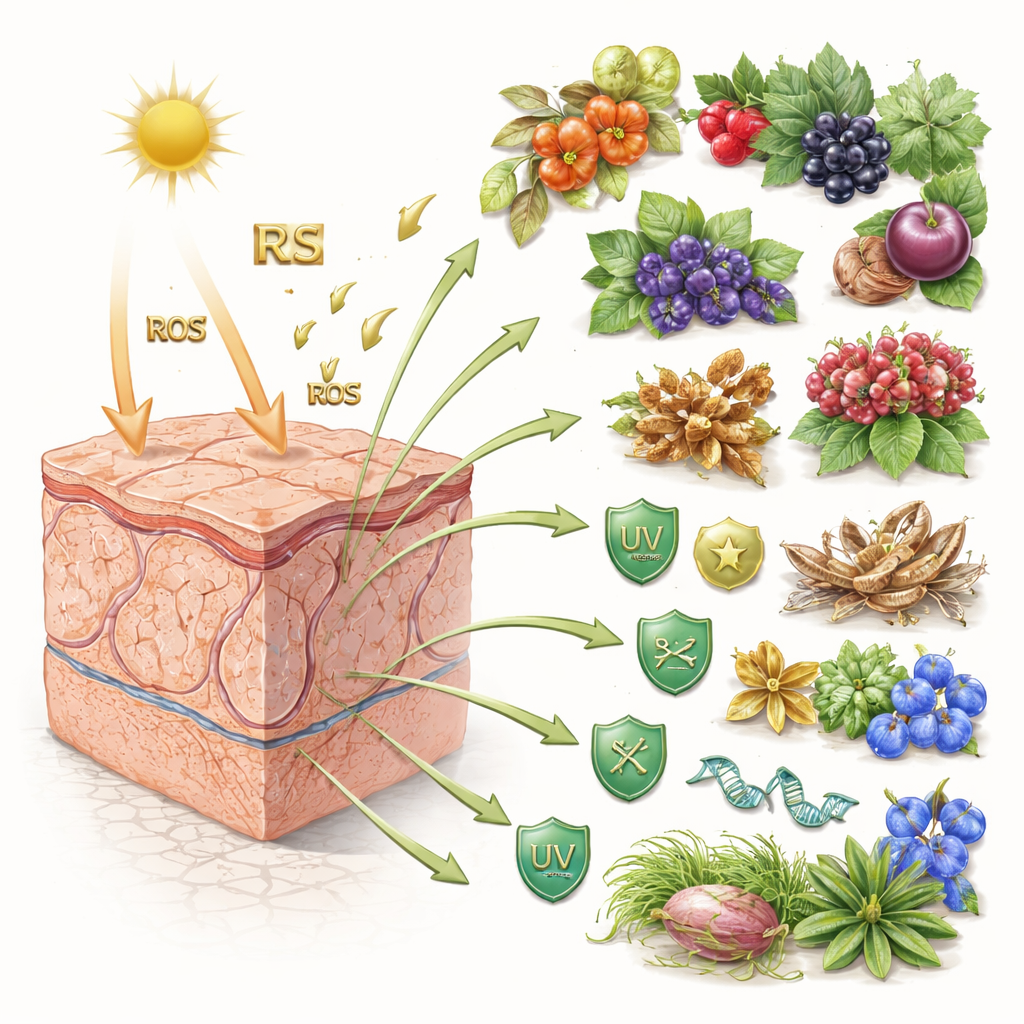
Our skin rests on a supporting framework called the extracellular matrix, made largely of collagen, elastin, and a water‑holding substance called hyaluronic acid. Together, these give skin its firmness, bounce, and smooth feel. When we spend time in the sun, strong UV rays penetrate the upper layers of skin and trigger reactive oxygen species—highly reactive forms of oxygen that attack fats, proteins, and even DNA. This chain reaction activates enzymes that slice up collagen, elastin, and hyaluronic acid, leading over time to wrinkles, sagging, dryness, dark spots, and in severe cases, skin cancer. Stopping these processes early is at the heart of modern anti‑ageing skincare.
What Makes Himalayan Plants Special
The Himalaya is a biodiversity hotspot rich in wild edible and medicinal plants long used by local communities to treat wounds, rashes, and other skin problems. The team focused on nine species, including barberry (Berberis aristata), mulberry (Morus alba), several wild figs (Ficus species), a climbing vine (Tinospora cordifolia), and others. Many of these plants are naturally packed with vitamins and polyphenols—plant chemicals known for strong antioxidant activity. Using a lab technique called high‑performance liquid chromatography, the researchers identified thirteen key compounds, such as vitamin C (ascorbic acid), gallic acid, catechin, chlorogenic acid, rutin, and related molecules that are already popular in high‑end skincare.
Testing Sun Protection and Anti‑Ageing Actions
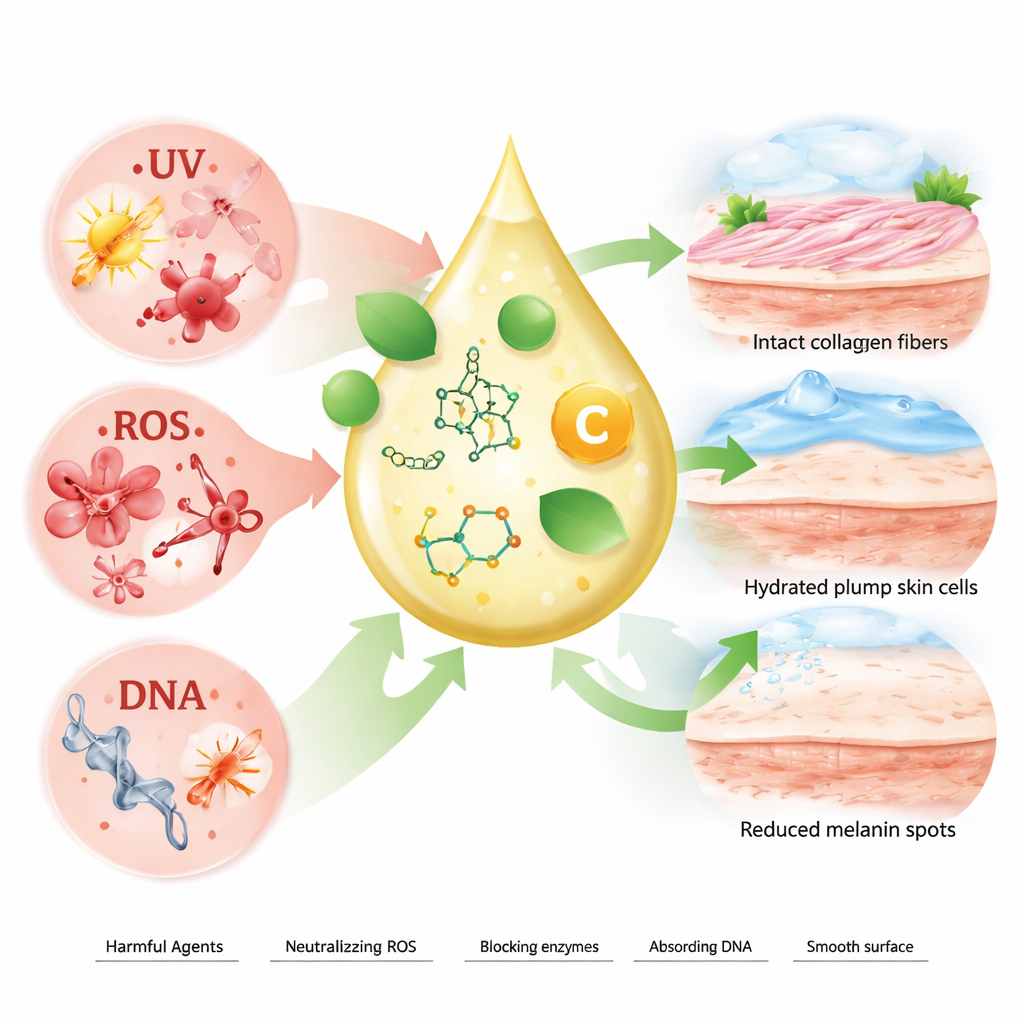
The scientists extracted plant compounds using a gentle, low‑heat method and then asked three main questions: do these extracts absorb UV light, do they block enzymes linked to dark spots and loss of skin moisture, and can they neutralize damaging molecules? Most extracts strongly absorbed UV‑C and UV‑B light, the most harmful parts of the spectrum, and some also absorbed in the UV‑A range. Two species, barberry and Thalictrum foliolosum, showed the highest in‑vitro sun protection factor (SPF) values among the plants, though still lower than a strong green‑tea‑like reference compound. In enzyme tests, barberry, mulberry, and a wild fig (Ficus palmata) reduced the activity of tyrosinase, an enzyme central to melanin formation and dark spots, performing as well as or better than some standard lab controls. Barberry, mulberry, and T. foliolosum also showed notable ability to slow hyaluronidase, the enzyme that breaks down hyaluronic acid, suggesting a role in maintaining skin moisture and plumpness.
Shielding Skin from Invisible Damage
Because UV light and everyday stress can damage DNA, the team also examined how well the plant extracts protect genetic material in a controlled lab setup. They exposed circular DNA to hydrogen peroxide and UV to mimic oxidative stress, then watched how much of the DNA stayed in its healthy, tightly coiled form. Almost all species preserved more than half of the DNA, with mulberry, Thalictrum foliolosum, and Tinospora cordifolia offering the strongest protection at higher test doses. A suite of antioxidant tests confirmed that barberry, Rubus ellipticus (a wild raspberry), and Ficus auriculata were especially powerful at soaking up free radicals, while other species contributed moderate but meaningful protection. Advanced statistical analyses showed that plants richest in polyphenols tended to show the best antioxidant, enzyme‑blocking, and DNA‑protective effects.
From Mountain Slopes to Bathroom Shelf
Overall, the study suggests that these nine Himalayan plants, particularly Berberis aristata and Ficus auriculata, are promising sources of natural ingredients for sunscreens, anti‑ageing creams, and beauty supplements. Their blends of vitamin C and diverse polyphenols help them act as mild UV filters, slow the breakdown of the skin’s support structure, and guard DNA against oxidative damage. While these results come from lab tests rather than human trials, they offer a scientific basis for developing safer, plant‑based alternatives to harsh synthetic chemicals commonly used in skincare. With further testing on skin cells, safety checks, and clinical studies, the fruits, roots, and stems of these traditional Himalayan plants may one day play a central role in keeping our skin healthier, smoother, and more resilient.
Citation: Singh, B., Singh, L., Kewlani, P. et al. Harnessing the potential of selected Himalayan species for phyto-cosmeceutical formulations guided through biochemometric analysis. Sci Rep 16, 5928 (2026). https://doi.org/10.1038/s41598-026-36454-w
Keywords: Himalayan medicinal plants, natural anti-aging skincare, UV protection, plant antioxidants, phyto-cosmeceuticals