Clear Sky Science · en
Adolescent pregnancy estimates, spatial distribution, and policy implications in the Volta Region, Ghana, 2019–2023
Why This Matters for Everyday Life
When a girl becomes pregnant in her teenage years, it can alter the course of her entire life—affecting her health, schooling, and future earnings. This study looks closely at teenage pregnancy in Ghana’s Volta Region between 2019 and 2023, asking how common it is, where it happens most, and what these patterns mean for health services and public policy. Understanding these trends can help communities, parents, and leaders better protect young people and support those who become young mothers.
Taking a Closer Look at One Region
The researchers focused on the Volta Region, home to about 1.7 million people and nearly 400,000 girls aged 10 to 19. They used routine records from local health facilities—specifically, the first antenatal (pregnancy) visits entered into Ghana’s national health information system. By counting how many pregnant girls came for care and comparing that number to the total number of girls living in the region, they could estimate how often adolescent pregnancy occurs. They only included records that clearly showed the girl’s age, the facility that reported the case, and the year, and they checked the electronic data against paper registers to improve accuracy. 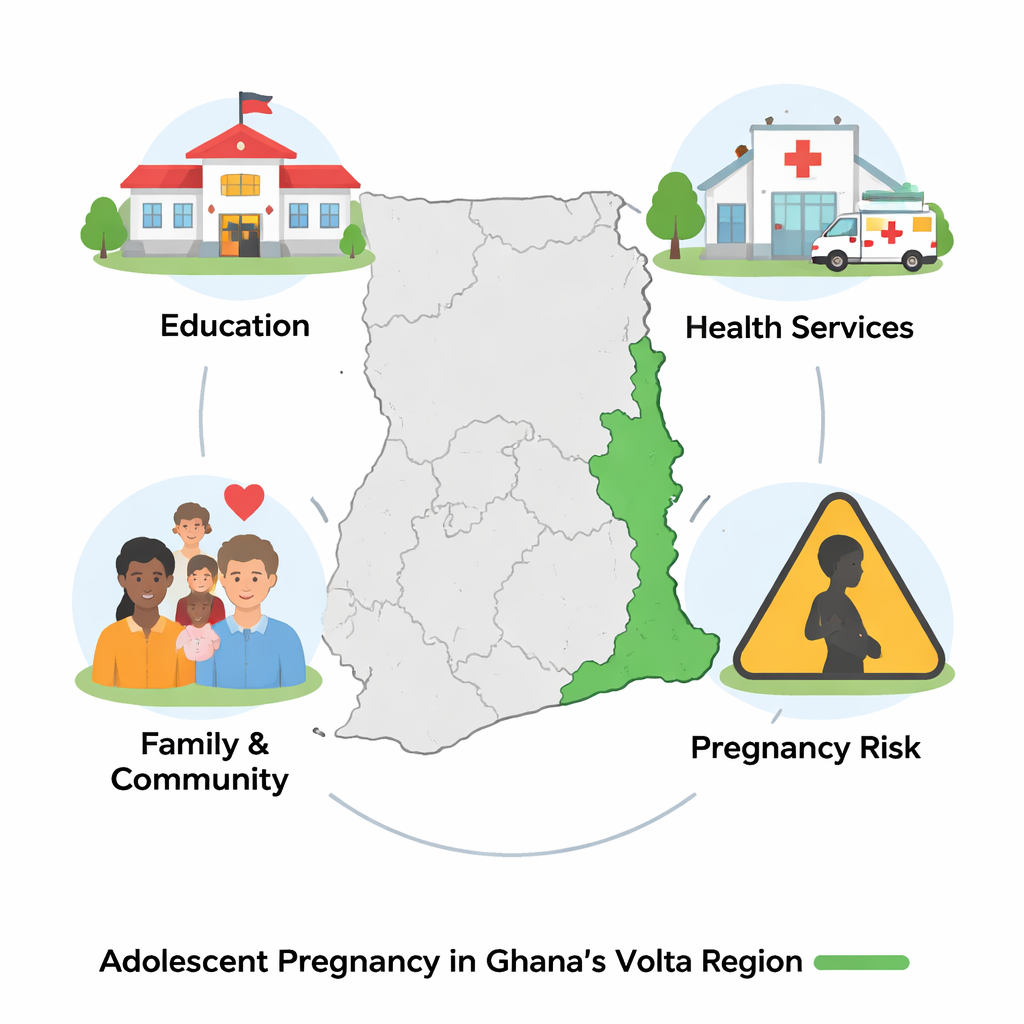
How Common Are These Pregnancies?
Over five years, health facilities in the Volta Region recorded 217,813 pregnancies. More than one in eight—13.5%, or 29,487 cases—were among adolescents. On average, there were about 15 pregnancies per 1,000 girls each year. Almost all of these involved older teenagers aged 15 to 19; they accounted for nearly 97% of adolescent pregnancies and had an incidence of about 142 pregnancies per 1,000 girls in that age group. The year 2021 stood out as the peak, with nearly 17 pregnancies per 1,000 girls overall, followed by a gradual decline through 2023. These numbers underline that teenage pregnancy is not rare or exceptional in the region; it is a common experience for many older adolescents.
Where the Burden Falls the Hardest
The study also revealed that adolescent pregnancy is not evenly spread across the Volta Region. Using digital maps, the team showed that some districts have far higher rates than others. Central Tongu District, for example, recorded an extremely high level—175 adolescent pregnancies per 1,000 girls—which means that close to one in five girls there experienced a pregnancy during the study period. These differences likely reflect a mix of factors, including poverty, early marriage, unequal access to schools and health services, and local cultural norms around sexuality and marriage. The authors argue that such sharp contrasts between districts call for tailored, district-specific responses rather than one-size-fits-all solutions. 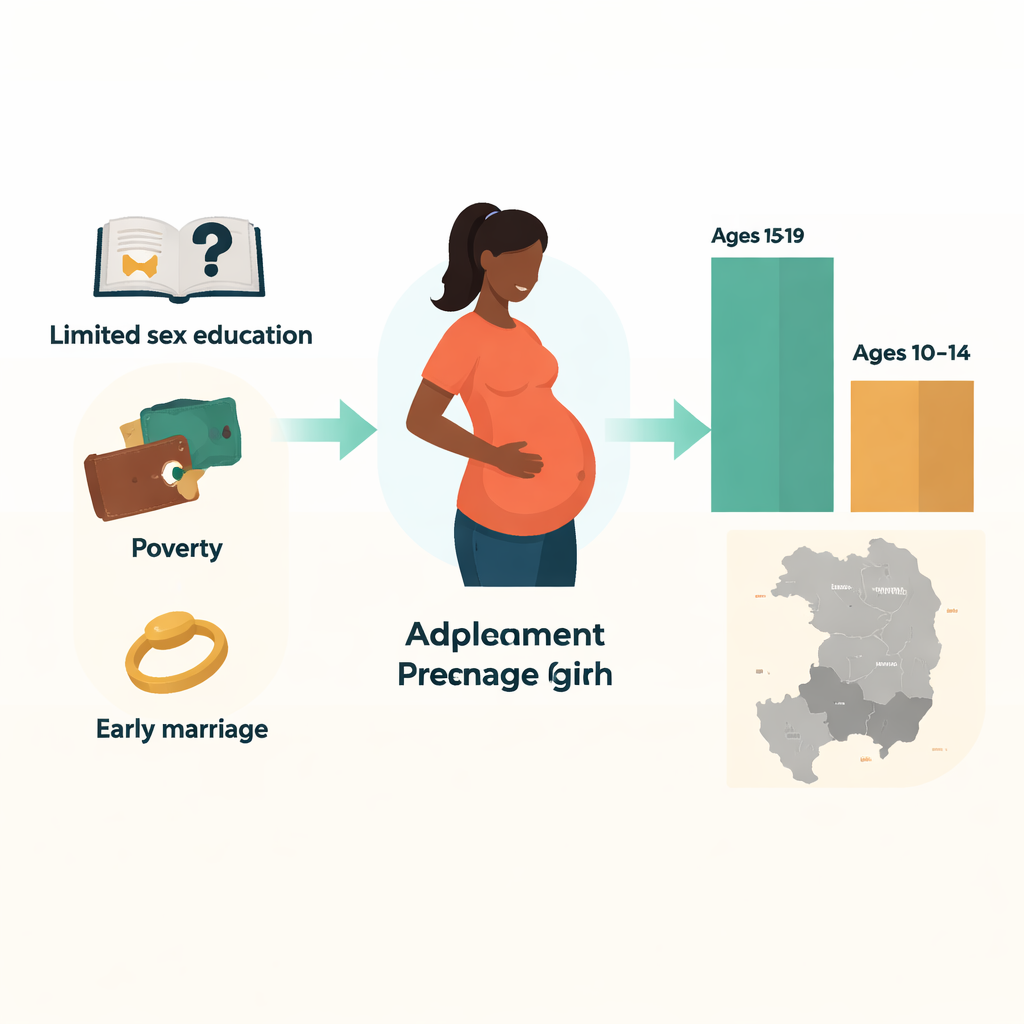
Why the Numbers May Be Changing
Although levels remain high, the data showed a welcome downward trend after 2021. The researchers suggest that several efforts may be paying off: national guidelines for youth-friendly health services, wider access to contraception through community health posts, school initiatives that keep girls in class longer, and a rise in the age at first marriage. At the same time, they stress that their study cannot prove exactly which policies caused the decline. They also warn that many girls—especially the youngest, ages 10 to 14—are at particular risk of serious health problems when they become pregnant, and may not fully understand or be able to control the situations that lead to pregnancy.
What Needs to Happen Next
The authors conclude that teenage pregnancy in the Volta Region remains a serious public health and social issue, particularly among older girls. They recommend strengthening adolescent-friendly services in clinics, ensuring confidential counseling and contraceptive options, and running community programs that speak directly to parents, traditional leaders, and boys and men as well as girls. They also call for stronger enforcement of laws against child marriage and sexual exploitation, and for better use of routine health data to track progress. For a layperson, the message is clear: reducing teenage pregnancy is not just about individual choices—it requires coordinated action in schools, families, health services, and local government to give adolescents a safer and more hopeful path into adulthood.
Citation: Kubio, C., Abanga, W.A., Zeng, V. et al. Adolescent pregnancy estimates, spatial distribution, and policy implications in the Volta Region, Ghana, 2019–2023. Sci Rep 16, 5689 (2026). https://doi.org/10.1038/s41598-026-36450-0
Keywords: adolescent pregnancy, Ghana Volta Region, teen reproductive health, public health policy, spatial health patterns