Clear Sky Science · en
Exploratory pilot trial of astaxanthin supplementation in PCOS patients at risk of OHSS with focus on RAGE–NFκB pathway
Why this matters for fertility treatments
Many women with polycystic ovary syndrome (PCOS) turn to fertility treatments to help them conceive, but these treatments can sometimes overstimulate the ovaries and lead to a dangerous complication called ovarian hyperstimulation syndrome (OHSS). This study tests whether a natural antioxidant called astaxanthin, best known for giving salmon its pink color, might gently calm this overreaction without sacrificing the number or quality of eggs produced.
A common condition with risky side effects
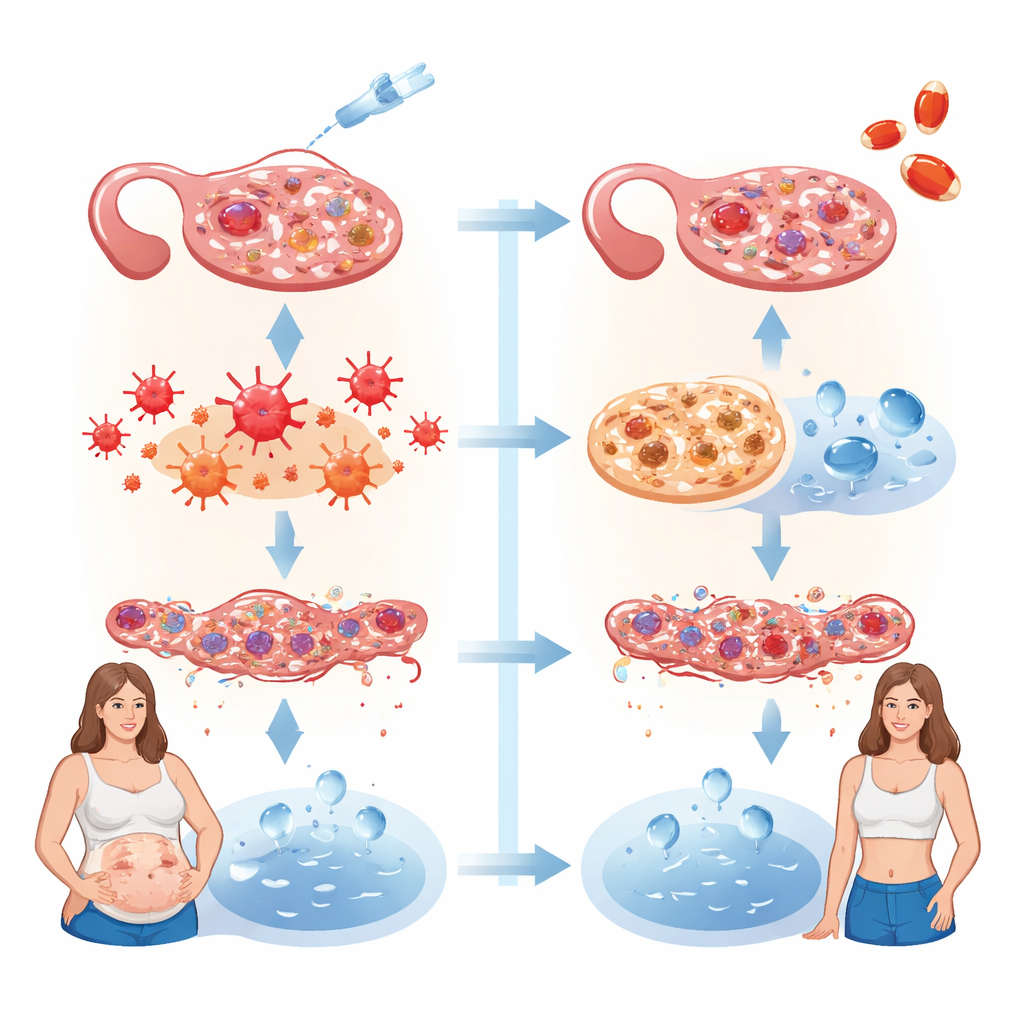
PCOS is one of the leading causes of infertility linked to irregular or absent ovulation. When women with PCOS undergo controlled ovarian stimulation to produce multiple eggs for in vitro fertilization, their ovaries often respond very strongly. Instead of being purely beneficial, this intense response can cause the ovaries to swell, leak fluid into the abdomen, and disturb blood chemistry—hallmarks of OHSS. Paradoxically, even with many follicles, egg quality may be poor, and a large share of eggs can be immature. Years of research have pointed toward oxidative stress and low-grade inflammation inside the ovary as key drivers of both OHSS and weak egg performance.
A natural compound with calming potential
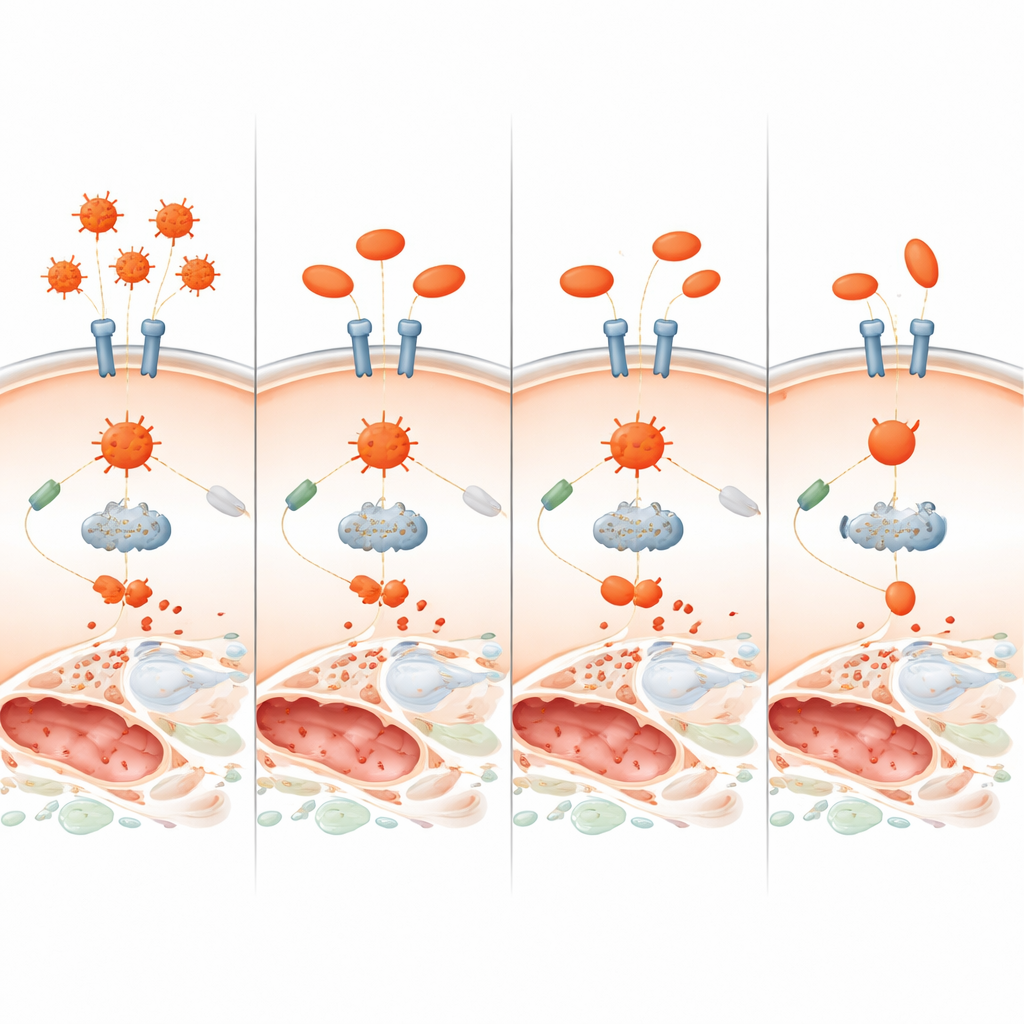
The researchers focused on a biochemical route in the ovary in which sugar-modified molecules (advanced glycation end products) interact with a receptor called RAGE and in turn switch on an inflammatory control hub inside cells. This chain reaction boosts inflammatory messengers and factors that make blood vessels leaky. Astaxanthin, a potent antioxidant found in certain microalgae and seafood, has been shown in earlier work to dampen inflammation and reduce the formation or impact of such sugar-modified molecules. The team asked whether adding astaxanthin to standard stimulation protocols in high‑risk PCOS patients could temper this inflammatory circuit while preserving a strong, but safer, ovarian response.
How the trial was set up
In a triple‑blind, randomized, placebo‑controlled pilot trial, 44 women with PCOS and very high markers of ovarian reserve—known to be at elevated risk for OHSS—were assigned to take either astaxanthin capsules or identical placebo pills. They started with a moderate dose of fertility hormone under a gonadotropin‑releasing hormone antagonist protocol, a modern approach designed to limit OHSS risk. After some early dropouts unrelated to side effects, 37 women proceeded through stimulation and egg retrieval. Both groups received similar drug doses and had comparable ultrasound findings, so any differences were unlikely to stem from how aggressively their ovaries were stimulated.
What the researchers found inside the follicles
Clinically, the number of eggs collected was slightly higher in the astaxanthin group, and—more importantly—the proportion of mature eggs was significantly better. Hormone levels linked to overstimulation, such as estradiol and progesterone on the trigger day, tended to be lower with astaxanthin, though this trend did not reach statistical certainty in this small sample. The overall rate and severity of OHSS were modestly lower with astaxanthin but, again, not conclusively different. The clearer signals appeared at the molecular level: cells surrounding the eggs from women taking astaxanthin showed lower RAGE gene activity and a reduced activation index for the inflammation‑controlling complex that RAGE feeds into. Fluid from the follicles also contained significantly less of the inflammatory messenger interleukin‑6, and a key vessel‑leakage factor showed a downward, though not statistically firm, trend.
What this could mean for future care
Taken together, these findings suggest that astaxanthin may nudge the ovarian environment in a calmer direction—dialing down a specific inflammatory pathway while actually supporting egg maturation. Because this was a small exploratory trial, it was not powerful enough to prove that astaxanthin definitively prevents OHSS or improves pregnancy chances. Still, the combination of better‑quality eggs and quieter inflammatory signals points to a promising, low‑toxicity add‑on to existing strategies for protecting high‑risk PCOS patients during fertility treatment. Larger, carefully designed trials will be needed to confirm whether this natural compound can reliably make ovarian stimulation both safer and more effective.
Citation: Maleki-Hajiagha, A., Aleyasin, A. & Amidi, F. Exploratory pilot trial of astaxanthin supplementation in PCOS patients at risk of OHSS with focus on RAGE–NFκB pathway. Sci Rep 16, 8416 (2026). https://doi.org/10.1038/s41598-026-36449-7
Keywords: polycystic ovary syndrome, ovarian hyperstimulation, astaxanthin, oxidative stress, fertility treatment