Clear Sky Science · en
Sugar-sweetened beverage consumption, waist-to-height ratio and psychological symptoms among Chinese adolescents
Why sodas and body shape matter for teen minds
Many parents worry about their children drinking too many sugary beverages, mostly because of cavities and weight gain. This study suggests there is another reason to pay attention: how often teens drink sugar-sweetened beverages and how much fat they carry around their waist may be closely tied to their emotional well-being. Understanding this link could help families, schools, and policymakers take simple steps that protect both the bodies and minds of young people.
Looking at everyday habits and hidden distress
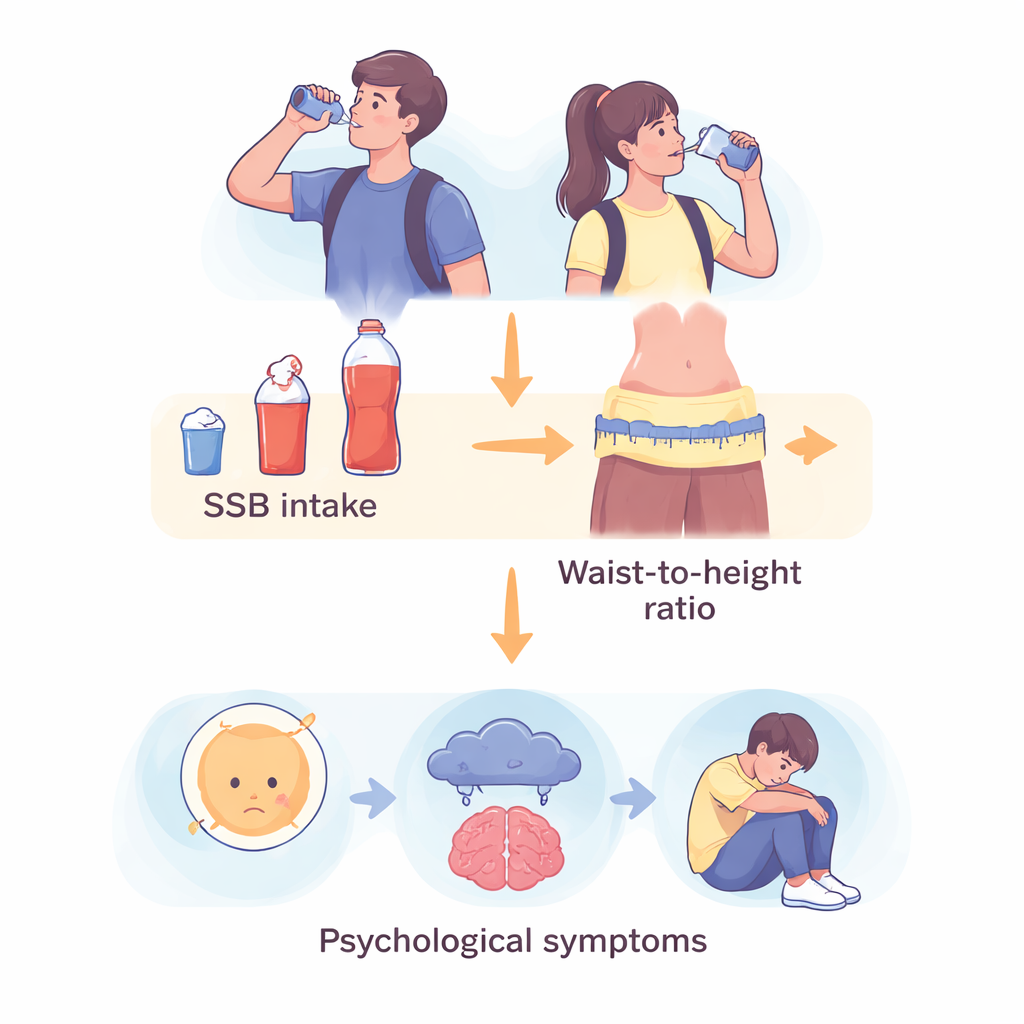
The researchers surveyed more than 51,000 students aged 13 to 18 from cities and towns across mainland China. Using detailed questionnaires, they asked how often each teen consumed sugar-sweetened beverages such as sodas, sweetened teas, and sports or energy drinks. They also measured height and waist size to calculate the waist-to-height ratio, a simple way to estimate how much fat is stored around the abdomen. Finally, they assessed psychological symptoms using a tool designed specifically for Chinese adolescents, which captures signs like persistent sadness, anxiety, behavior problems, and difficulty getting along with others.
How common are emotional struggles in teens?
The survey revealed that about one in five Chinese adolescents showed meaningful psychological symptoms. Boys were slightly more affected than girls. At the same time, boys tended to have a higher waist-to-height ratio, suggesting more abdominal fat. While most teens drank sugary beverages less than once per week, a noticeable minority consumed them several times a week or more. These basic patterns already hinted that everyday lifestyle differences might be linked to how young people feel and function emotionally.
Sugary drinks and bigger waists, together and apart
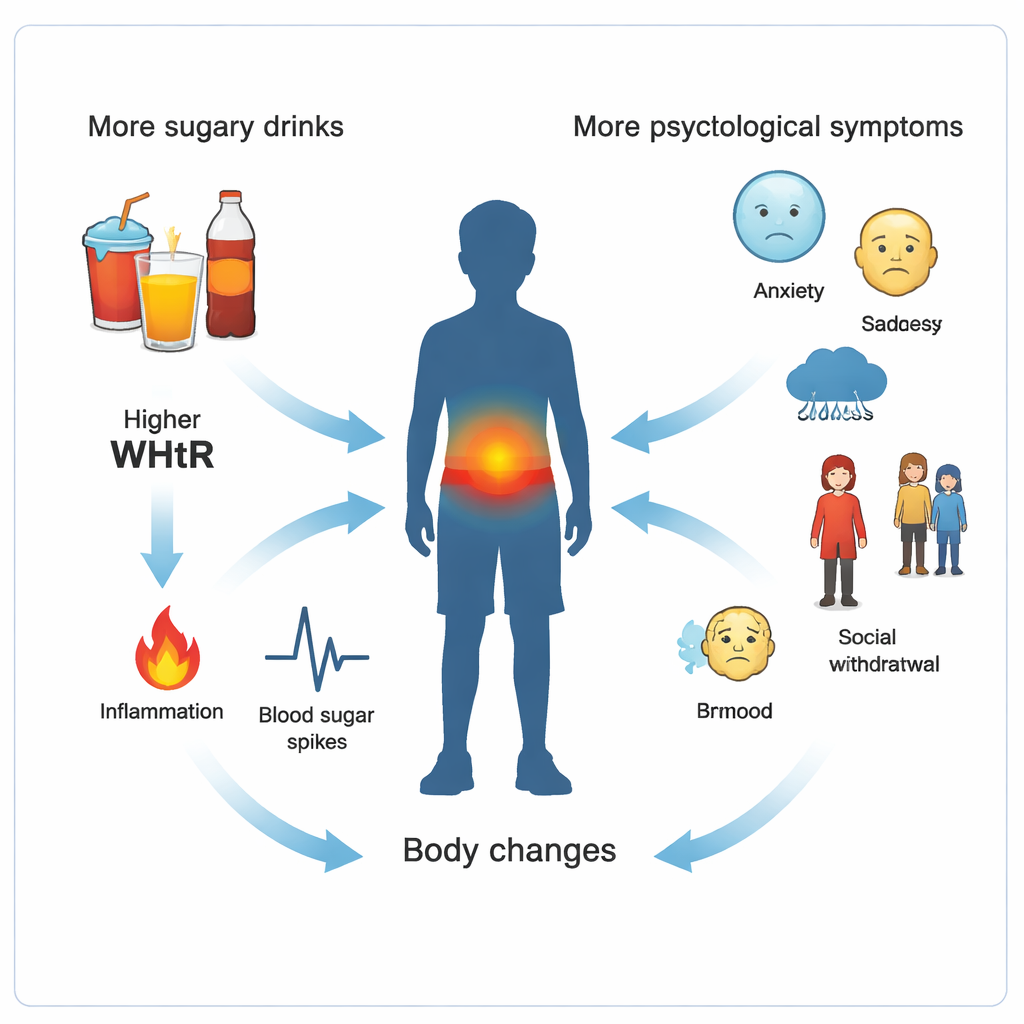
When the team analyzed the data, a clear pattern emerged. Teens who drank sugary beverages two to four times a week had a higher chance of reporting psychological symptoms than those who drank them less than once a week. For those consuming these drinks more than four times a week, the risk was roughly twice as high, even after taking into account age, family income, and picky eating. A similar stepwise pattern appeared for waist-to-height ratio: adolescents in higher waist-to-height groups were more likely to have psychological symptoms than those with the slimmest waists for their height. The study also tested a commonly suggested cut-off point—when the waist is at least half of one’s height—and found that teens above this threshold were more likely to report emotional and social difficulties.
When habits combine, risks add up
The most striking finding came when the researchers looked at sugary drinks and waist-to-height ratio together. Teens who both drank sugary beverages more than four times per week and belonged to the highest waist-to-height group had more than three times the odds of psychological symptoms compared with peers who rarely drank these beverages and had the slimmest waists. In other words, frequent sugary drink intake and extra abdominal fat do not just pose separate risks—they appear to work together, amplifying the chances that a teenager will struggle with mood, behavior, or social adjustment. These patterns were seen in both boys and girls.
What this means for families and schools
To a layperson, the message is straightforward: what teens drink and how their body fat is distributed may influence not only their physical health but also their emotional resilience. This cross-sectional study cannot prove cause and effect, but it strongly suggests that cutting back on sugary beverages and keeping waistlines in check through healthier eating and more physical activity could help reduce the burden of psychological symptoms in adolescence. Simple changes in school canteens, family shopping habits, and public health campaigns may therefore contribute to healthier bodies and calmer, more balanced minds among young people.
Citation: Li, L., Wei, T., Zhang, F. et al. Sugar-sweetened beverage consumption, waist-to-height ratio and psychological symptoms among Chinese adolescents. Sci Rep 16, 7087 (2026). https://doi.org/10.1038/s41598-026-36447-9
Keywords: adolescent mental health, sugary drinks, waist-to-height ratio, obesity and mood, Chinese teenagers