Clear Sky Science · en
Climate change impacts on the global potential distribution of the human flea, Pulex irritans, and the global health risks
Why tiny fleas matter in a warming world
When we think about climate change and health, mosquitoes and heat waves usually steal the spotlight. But another, often overlooked, blood‑sucking culprit is also poised to benefit from a warming planet: the human flea, Pulex irritans. This small insect can carry the bacteria that cause plague and other serious infections. The study described here explores how climate change could reshape where this flea can live around the globe, and what that means for future outbreaks of flea‑borne diseases. 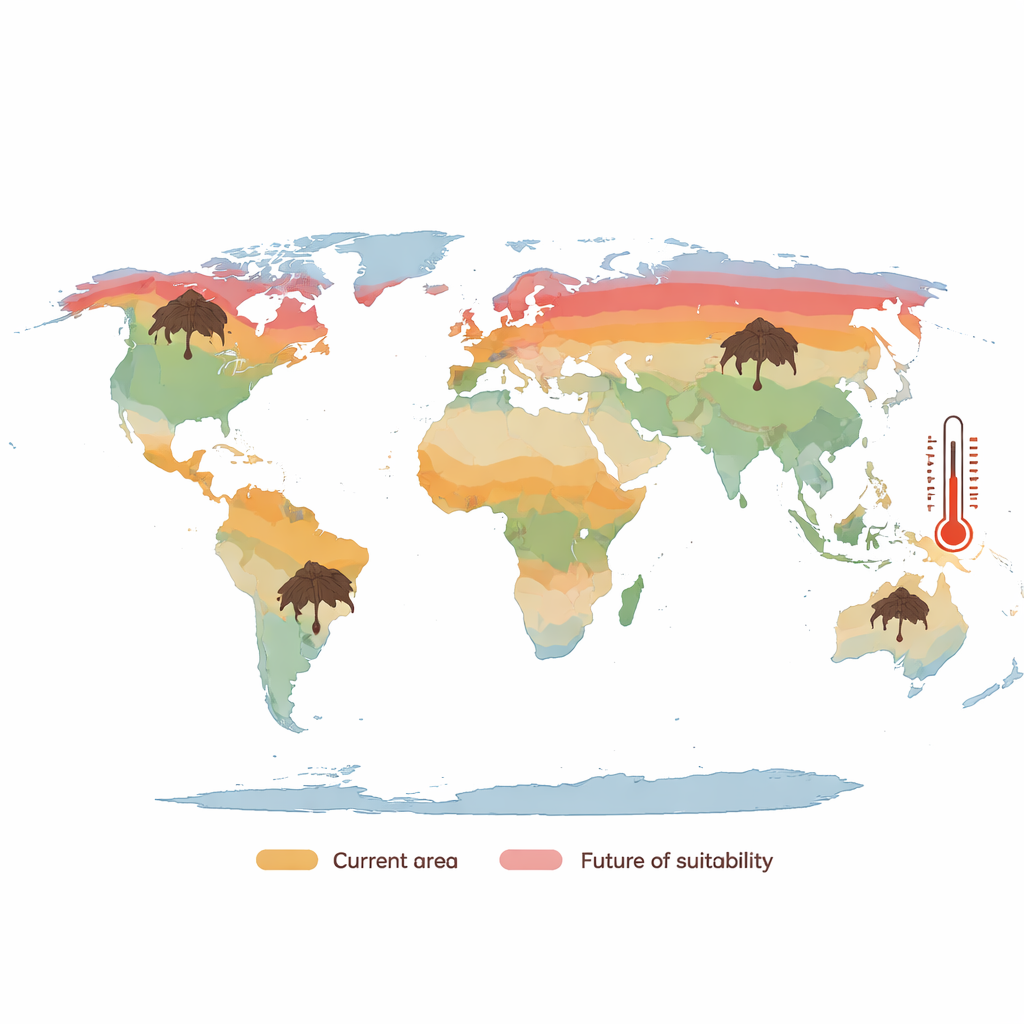
A global map of a human parasite
The researchers began by assembling 564 well‑documented records of where human fleas have been found worldwide, drawing mainly from museum and monitoring databases. They combined these locations with 15 measurements of temperature and rainfall to build a computer model of the flea’s preferred environmental “comfort zone.” Using specialized mapping software, they translated those preferences into global maps showing which regions are currently unsuitable, marginal, or highly welcoming for the human flea. These maps line up closely with where the flea is already known to occur, suggesting that the model captures its climate needs accurately.
Temperature as the main driver
The analysis showed that temperature is the single most important factor determining where the human flea can thrive. In particular, the average yearly temperature explains more than half of the model’s predictive power. The flea does best where the annual mean temperature falls roughly between 10 and 20 °C (50–68 °F), and it can tolerate a fairly wide range from about 2 to 25 °C (36–77 °F). It is also flexible with respect to rainfall, surviving in areas from very dry to quite wet, which makes it an ecologically adaptable and potentially invasive species. This broad tolerance means that as climates shift, the flea can readily track new suitable conditions rather than being locked into a narrow band of environments.
Future spread toward higher latitudes
To peer into the future, the team combined their flea model with climate projections from three major climate models under two high‑emission scenarios for mid‑century (around 2050) and later in the century (around 2070). Across all 12 combinations they tested, a consistent pattern emerged: suitable habitat for the human flea shifts northward in the Northern Hemisphere. Regions that are currently too cold—such as northern Europe, large parts of Canada, and much of Russia—are projected to become increasingly friendly to the flea. At the same time, some areas in Africa and Australia, which are already warm, may become too hot or otherwise unfavorable, leading to a loss of habitat there. 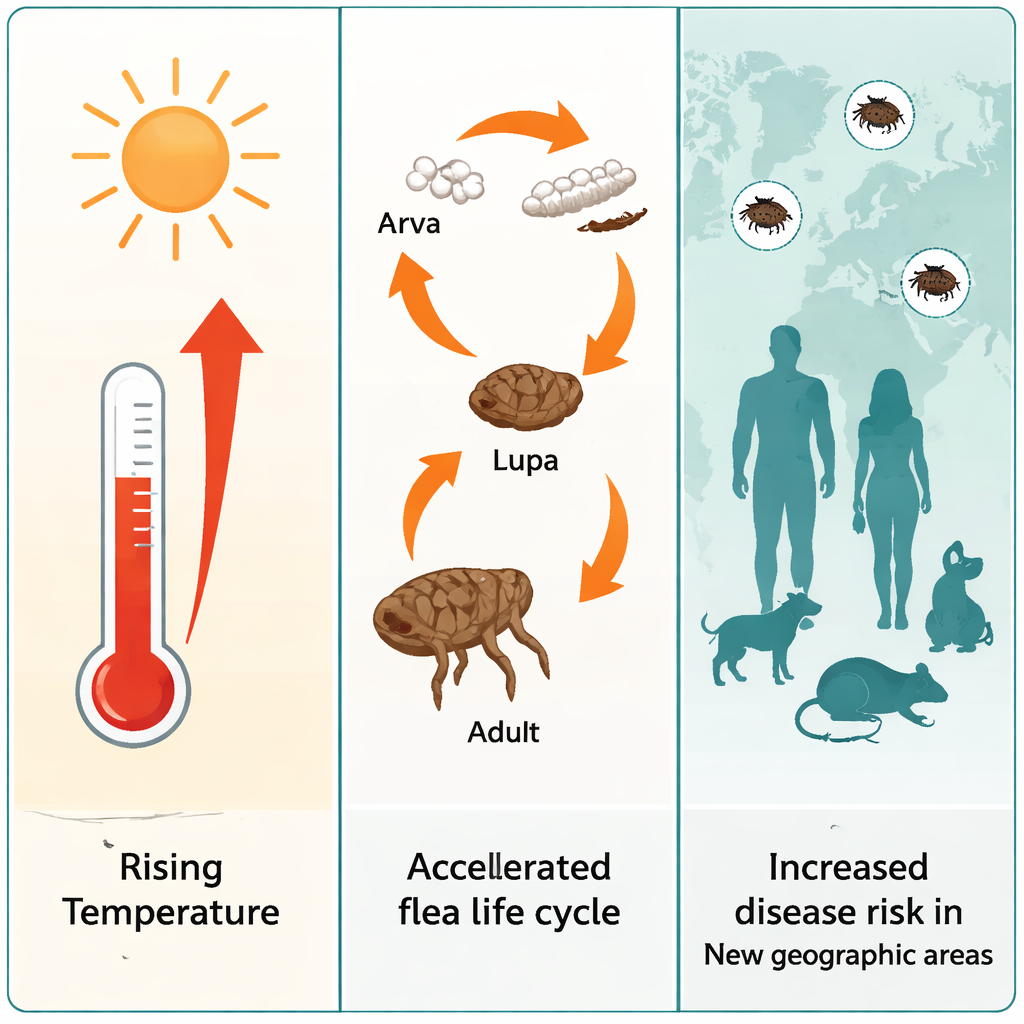
Implications for disease risk and public health
Because the human flea can spread plague, murine typhus, and other infections, its changing range has direct consequences for human and animal health. Warmer conditions can speed up the flea’s life cycle and enhance how efficiently it transmits pathogens. The model suggests that many temperate regions, especially those without a recent history of flea‑borne epidemics, could face new or increased risks as the flea establishes itself. In contrast, some tropical and subtropical regions may see declines in suitable habitat, potentially altering existing patterns of disease rather than simply reducing risk. The authors stress that many newly threatened areas may not have strong surveillance systems in place to detect these shifts early.
What this means for everyday life
In plain terms, this study shows that climate change is likely to move the human flea’s “sweet spot” for survival toward cooler parts of the world, expanding its reach into countries that have not traditionally worried about flea‑borne diseases. While it does not guarantee future outbreaks, it raises a warning flag: health authorities in these regions may need to begin monitoring fleas and the diseases they can carry, even if such threats seem distant today. By mapping where the flea is most likely to thrive now and in the future, the work provides an early‑warning tool to help guide surveillance, veterinary care, and prevention efforts before problems escalate.
Citation: Magdy, H., Shehata, M.G., Shaalan, M.G. et al. Climate change impacts on the global potential distribution of the human flea, Pulex irritans, and the global health risks. Sci Rep 16, 5944 (2026). https://doi.org/10.1038/s41598-026-36420-6
Keywords: climate change, vector-borne disease, human flea, plague risk, species distribution modeling