Clear Sky Science · en
A multicenter evaluation of patients’ knowledge of adverse drug reactions
Why medicine side effects matter to everyone
Most people will take prescription or over-the-counter medicines at some point in their lives, but not everyone knows what to do when a drug causes an unexpected and possibly dangerous reaction. This study from Nigeria looks at how well ordinary patients understand adverse drug reactions—harmful or unwanted effects of medicines—and what influences that knowledge. The answers help show how better information could prevent avoidable illness and even save lives.
Asking patients, not just professionals
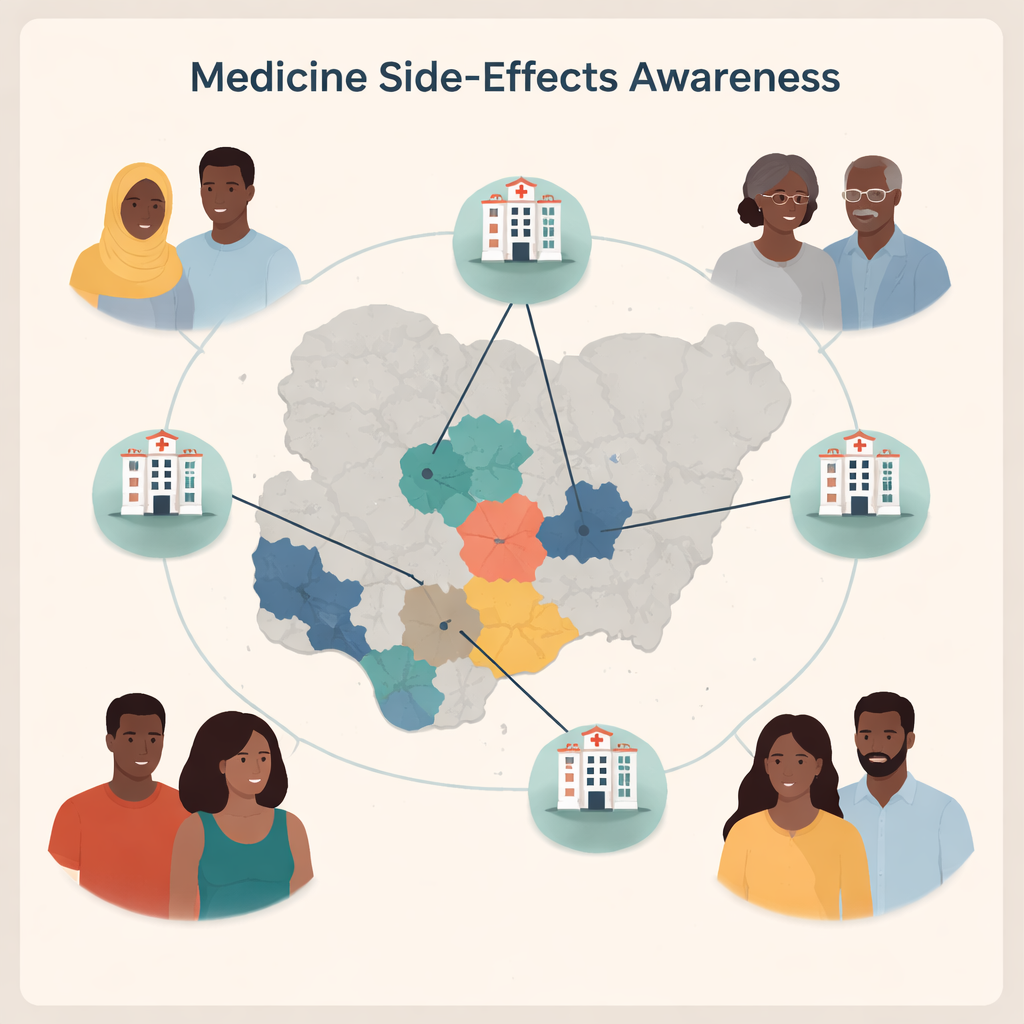
Traditionally, doctors, nurses and pharmacists are expected to spot and report harmful drug effects. Yet their answers in surveys can be shaped by professional pride and the desire to “look good,” which may hide real gaps in practice. The researchers behind this study instead turned directly to patients. They surveyed 1,075 adults attending outpatient clinics in five major public hospitals across Nigeria’s regions, including general and specialist clinics such as HIV, cancer and mental health services. By focusing on patients’ own understanding, the study aimed to capture what people actually know about medicine side effects and how that might affect whether problems are reported and treated in time.
How the study was carried out
The team used a structured questionnaire that first collected basic information such as age, gender, education level, place of residence and whether medicines were prescribed by a professional or bought without a prescription. A second section tested knowledge of adverse drug reactions with nine questions, some framed positively and others negatively (for example, whether side effects can be serious, or whether only life-threatening reactions should be reported). Each correct answer earned a point, and scores were grouped into good, fair or poor knowledge. Trained assistants interviewed patients face-to-face in English or local languages, ensuring that people with limited reading ability could still participate.
What Nigerian patients know about side effects
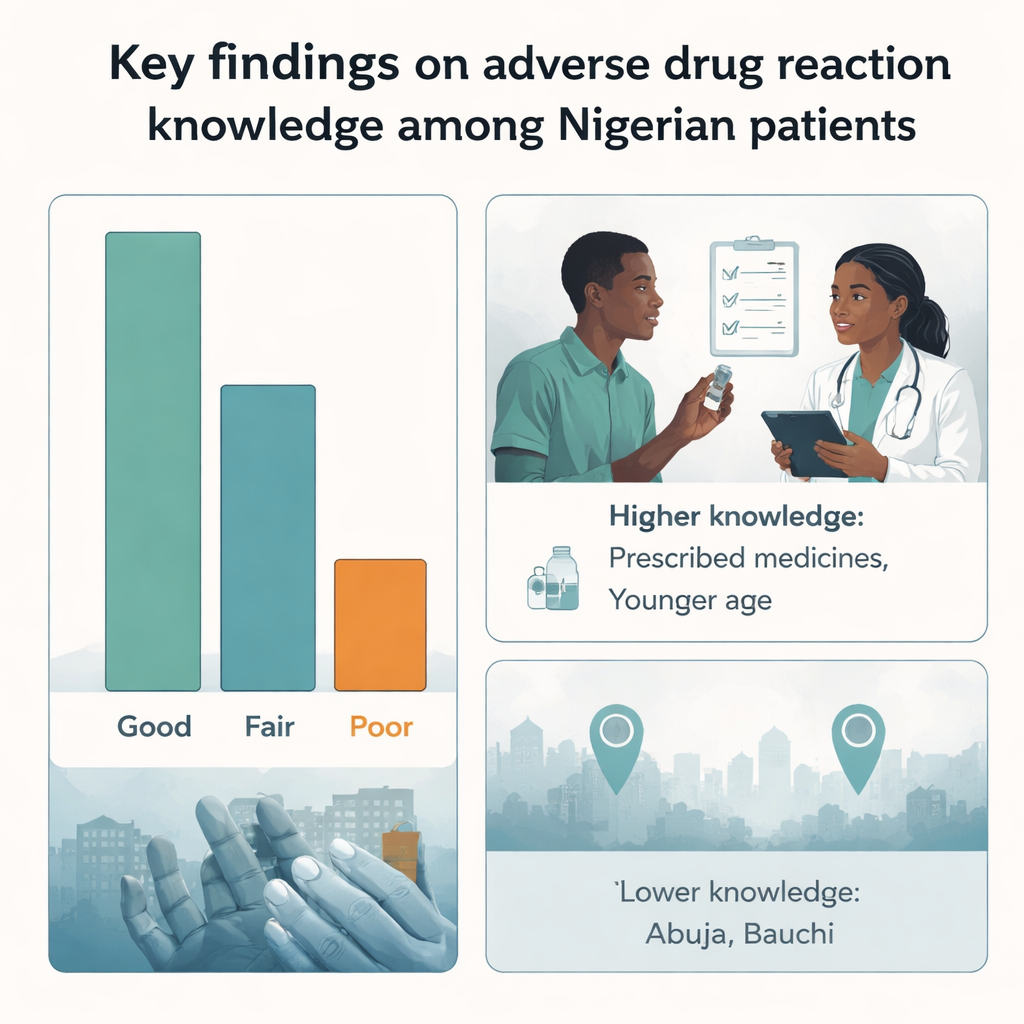
Overall, the results were encouraging but left room for improvement. More than half of the patients—about 56%—had “good” knowledge of adverse drug reactions, while 42% had “fair” knowledge and only a small fraction fell into the “poor” category. Most respondents recognized that side effects are unexpected reactions that can be serious and even life-threatening, and many said they knew who to report such problems to. Still, sizeable groups of patients were unsure about key ideas, such as whether only very serious reactions should be reported or whether a serious reaction might require extra treatment. These uncertainties could translate into delays in seeking help or failures to report troubling symptoms.
Who tends to know more—and who is left behind
The study found that knowledge was not evenly spread. Younger patients, particularly those 20 years old and under, were more than twice as likely to have good knowledge compared with older age groups, suggesting that health information may be reaching youth more effectively. Patients who took medicines prescribed by health professionals also showed better understanding than those relying on over-the-counter purchases, hinting that conversations at the clinic or pharmacy do make a difference. Geography mattered too. Patients in Abia State were significantly more likely to have strong knowledge, while those in Abuja, the nation’s capital, and Bauchi State were less likely—reminding us that better-resourced or more urban areas do not automatically guarantee better patient awareness.
What this means for safer medicine use
For the general public, the study’s main message is straightforward: knowing about medicine side effects is a form of protection. When patients understand that side effects can be serious, know what warning signs to look for, and know where to report them, dangerous reactions can be spotted and managed earlier. The findings suggest that tailored education—especially for older adults, people using non-prescribed medicines and residents of certain regions—could raise knowledge further. In turn, this would strengthen “pharmacovigilance,” the system that keeps watch over the safety of medicines, and help ensure that lifesaving drugs do not become a hidden source of harm.
Citation: Edi, E.E., Iheanacho, C.O., Eche, R.C. et al. A multicenter evaluation of patients’ knowledge of adverse drug reactions. Sci Rep 16, 5316 (2026). https://doi.org/10.1038/s41598-026-36419-z
Keywords: adverse drug reactions, patient knowledge, pharmacovigilance, Nigeria, medicine safety