Clear Sky Science · en
Sedentary behavior and physical activity in survivors of childhood hodgkin lymphoma: a cross-cectional study
Why this research matters to everyday life
More children and teenagers than ever are surviving Hodgkin lymphoma, a cancer of the lymph system. But life after cancer can bring hidden health risks that show up years later, especially for the heart and metabolism. This study looks at a simple question with big consequences: how much time do these young adults spend sitting still versus moving their bodies in daily life—and is it enough movement to help protect their long-term health?
Life after cancer: long shadows from early treatment
Thanks to modern treatment, more than nine out of ten young people diagnosed with Hodgkin lymphoma now survive. Yet chemotherapy and radiotherapy can leave lasting marks on the heart, blood vessels, and metabolism. Survivors often report fatigue, emotional strain, and thinking problems, all of which can make it harder to stay active. Too much sitting and too little movement raise the chances of heart disease, diabetes, and other chronic problems—exactly the conditions these survivors are already more likely to face. Understanding how they actually move in everyday life is therefore crucial for planning better follow-up care.
Measuring movement with devices, not memories
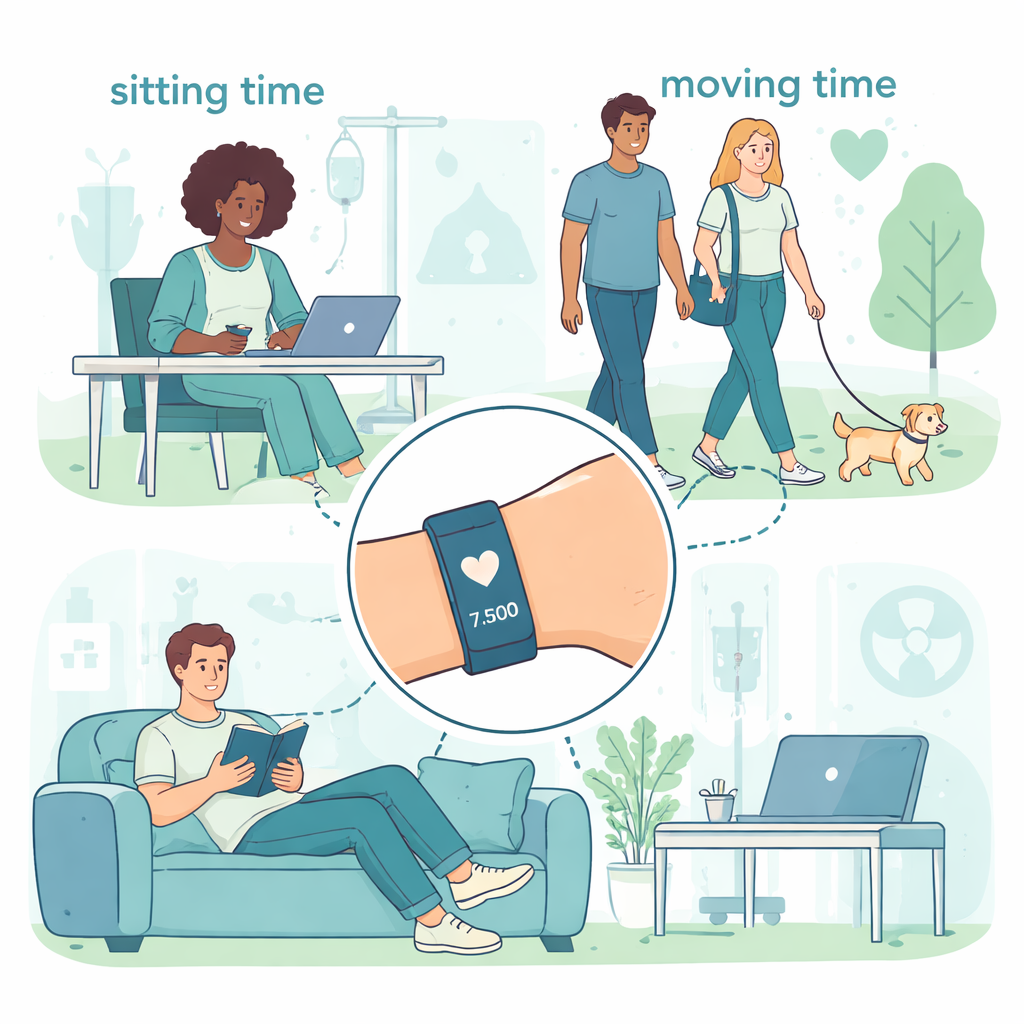
Most past research on exercise and sitting time in cancer survivors has relied on questionnaires, which are easy to use but often inaccurate. People tend to underestimate how long they sit and overestimate how active they are. In this cross-sectional study from the Czech Republic, 51 survivors who had been treated for Hodgkin lymphoma in childhood or adolescence wore a wrist accelerometer—a small device that tracks movement—around the clock for seven days. The researchers then divided their time into four categories: sedentary behavior (sitting or lying while awake), light activity (such as slow walking or household tasks), moderate activity (like brisk walking), and vigorous activity (such as running or intense sport).
How much do survivors actually sit and move?
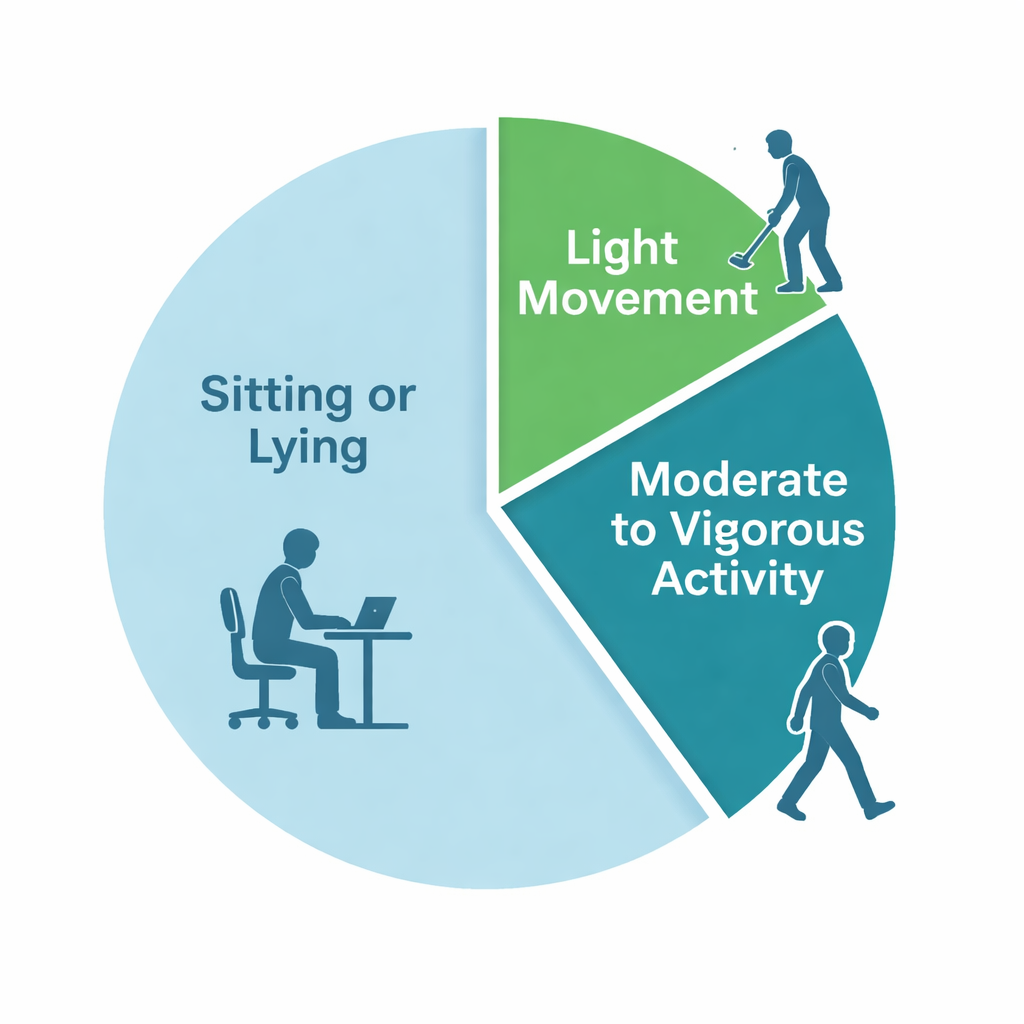
The results paint a mixed picture. On a typical day, participants spent close to 12 hours in sedentary behavior, a level linked in other studies to higher risk of heart and blood vessel disease. They averaged about three hours of light movement and just under two hours of moderate activity, but only a few minutes of vigorous exercise. When moderate and vigorous activity were combined, survivors reached a median of about 115 minutes per day. This meant that, according to current World Health Organization targets, every single participant met the recommendation of at least 150 minutes of moderate activity per week, but only 14% met the tougher target of 75 minutes of vigorous exercise weekly.
Differences by age and gender—and what they might mean
When the researchers looked more closely, they found important differences in low-level movement. Women and older participants (25 years and above) spent significantly more time in light activity than men and younger survivors. Sedentary time and higher-intensity activity did not differ much between groups. The authors suggest that light activity may be especially important for this population, because it is easier to add into daily routines than structured workouts. Small choices—standing up more often, walking short distances, doing light chores—could help chip away at long sitting periods and support heart and metabolic health, even among people who already reach formal exercise targets.
What this means for survivors and their care teams
This study shows that young adults who survived Hodgkin lymphoma in childhood can, despite intensive treatment, reach or exceed standard exercise guidelines when activity is measured objectively. At the same time, they spend many hours each day sitting, which may increase their risk of long-term complications. The authors argue that tracking sitting time and movement with simple devices should become a routine part of follow-up care. Doing so would help doctors and patients spot those who are not moving enough, tailor advice and programs to their needs, and ultimately reduce the odds that past cancer treatment leads to future heart and metabolic disease.
Citation: Vyhlídal, T., Dygrýn, J., Kepák, T. et al. Sedentary behavior and physical activity in survivors of childhood hodgkin lymphoma: a cross-cectional study. Sci Rep 16, 5568 (2026). https://doi.org/10.1038/s41598-026-36408-2
Keywords: Hodgkin lymphoma survivors, sedentary behavior, physical activity, accelerometer study, cardiovascular risk