Clear Sky Science · en
Comprehensive energy audit and conservation strategy for public buildings: enhancing energy efficiency and grid sustainability
Why Hospital Energy Use Matters to Everyone
Keeping a modern hospital running around the clock takes enormous amounts of electricity and fuel—far more than most other buildings. In countries that already struggle with power shortages, this can mean blackouts, higher costs, and reduced quality of care. This study looks at a large public teaching hospital in Pakistan and shows, in detail, how a careful "energy health check" can cut waste, save money, and free up power for millions of people, all while supporting global sustainability goals.
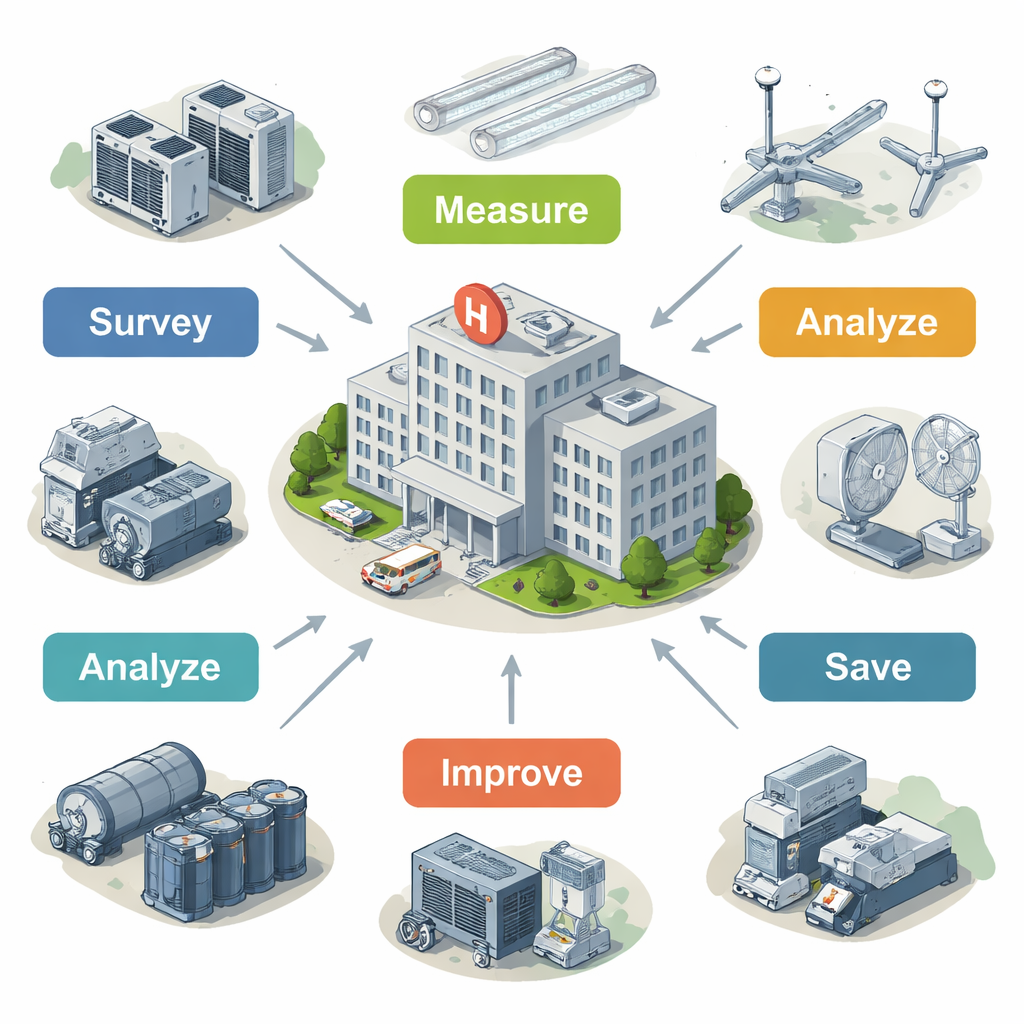
Taking the Pulse of a Busy Hospital
The researchers treated the hospital like a patient in need of a full check-up. Spread over 105 acres and serving more than half a million people a year, the building complex runs everything from operating rooms and intensive care units to laboratories, laundries, hostels, and offices. Using site visits, measurements, and utility records from a full year, the team mapped where electricity and gas were being used. They found that air conditioning, chillers, and cooling towers dominated demand, accounting for about 64% of the hospital’s electricity use. Lighting and fans used another 23%, while pumps, lifts, and medical and laundry equipment made up the rest.
Seasons, Bills, and Strain on the Grid
By tracking monthly consumption from August 2022 to August 2023, the study showed how strongly hospital energy use follows the weather. Electricity use peaked in the hot month of July at more than 1.3 million kilowatt-hours and dropped to less than a tenth of that in the milder month of March. Most power came from the national grid, but diesel generators had to cover frequent outages, especially in winter. The way the equipment drew power also mattered: the hospital’s electrical system often operated with a poor "power factor," a technical issue that led the utility to add penalties to the bills. Over one year, these penalties alone cost the hospital about 2.7 million Pakistani rupees—money that could have been saved with better electrical correction gear.
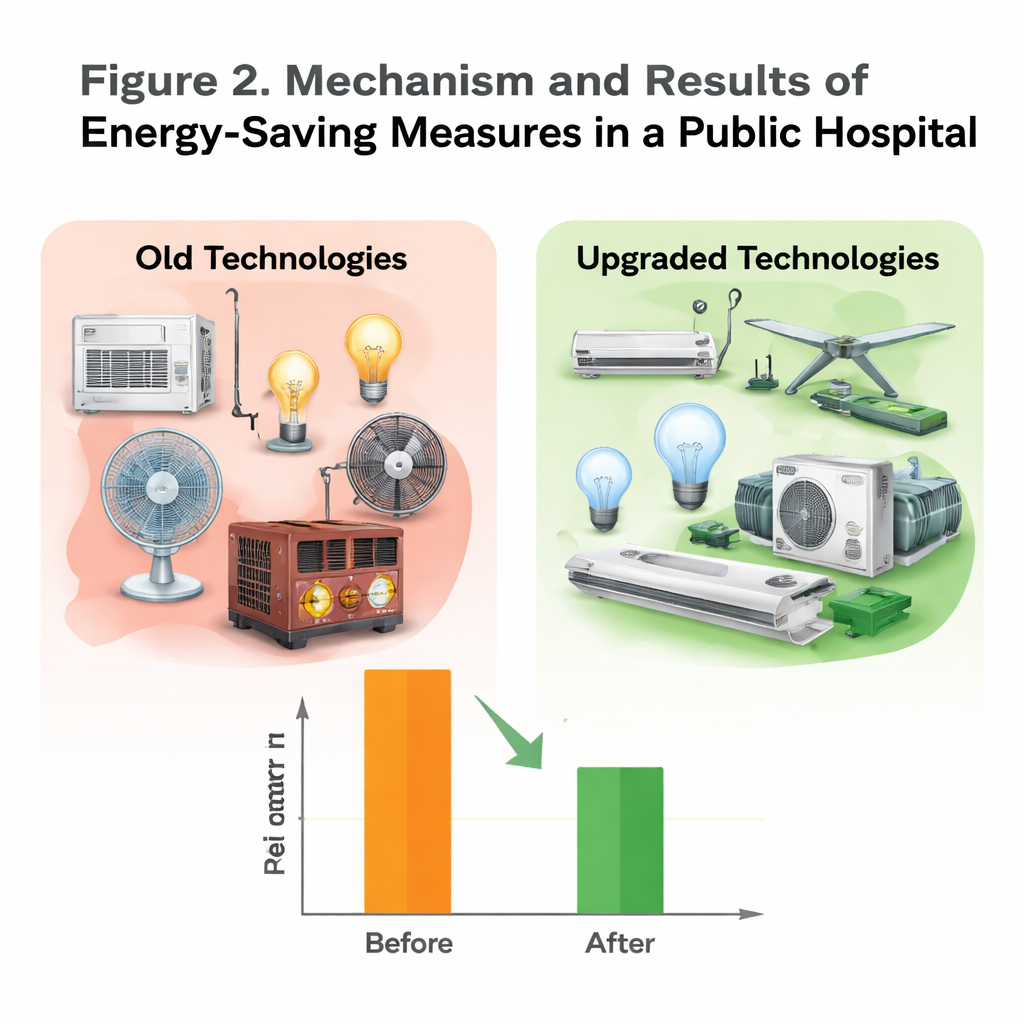
Finding Waste in Everyday Systems
Digging deeper, the team inspected transformers, generators, pumps, boilers, air conditioners, and even ceiling fans. Many transformers had aging oil and moisture problems that not only threatened reliability but also increased losses. Generators were often run at low load, which wastes fuel and increases pollution. Water pumps and turbines feeding the hospital’s tanks were poorly matched to their tasks, vibrating and running inefficiently. In the laundry, hot steam and water were literally going down the drain instead of being captured and reused. Air conditioners had dirty filters, uninsulated pipes, and damaged doors and windows around them, all of which forced the cooling systems to work much harder than necessary.
Simple Upgrades, Big Savings
From this forensic look at equipment and bills, the authors built a package of practical fixes. Some measures involved maintenance and better controls, such as cleaning filters, fixing leaks, tuning boilers, and adjusting compressor pressures. Others required new equipment: installing panels to correct the power factor, replacing old ceiling fans with efficient models, swapping out incandescent bulbs and fluorescent tubes for efficient lamps, and upgrading from older, "non-inverter" air conditioners to modern inverter units. They also proposed insulating air-conditioning pipes, recovering hot condensate and wastewater from the boilers and laundry, and redesigning cooling towers and pumps to use less energy. For many of these steps, the payback time—the period before the savings exceed the initial cost—was short, often under two years and sometimes just a few months.
What This Means for Patients and the Planet
Put together, the recommended changes could sharply lower the hospital’s electricity and fuel use, cut operating costs by many millions of rupees per year, and reduce greenhouse gas emissions. For patients and staff, this means a more reliable power supply, fewer generator fumes, and better comfort, especially during heat waves. For Pakistan’s overstressed grid, it means freeing up capacity that can help bring electricity to more homes and businesses. The authors argue that this hospital can serve as a model: if similar public hospitals adopt the same kind of detailed energy audit and follow-through, the combined effect could be a major step toward cleaner, more sustainable healthcare and progress on global energy and climate goals.
Citation: Habib, S., Tamoor, M., Gulzar, M.M. et al. Comprehensive energy audit and conservation strategy for public buildings: enhancing energy efficiency and grid sustainability. Sci Rep 16, 3889 (2026). https://doi.org/10.1038/s41598-026-36396-3
Keywords: hospital energy efficiency, energy audit, HVAC systems, public buildings, Pakistan electricity