Clear Sky Science · en
3’-phosphoadenosine 5’-phosphosulfate synthetase 2 (PAPSS2) is a potential diagnostic and prognostic biomarker in colon adenocarcinoma
Why this matters for people at risk of colon cancer
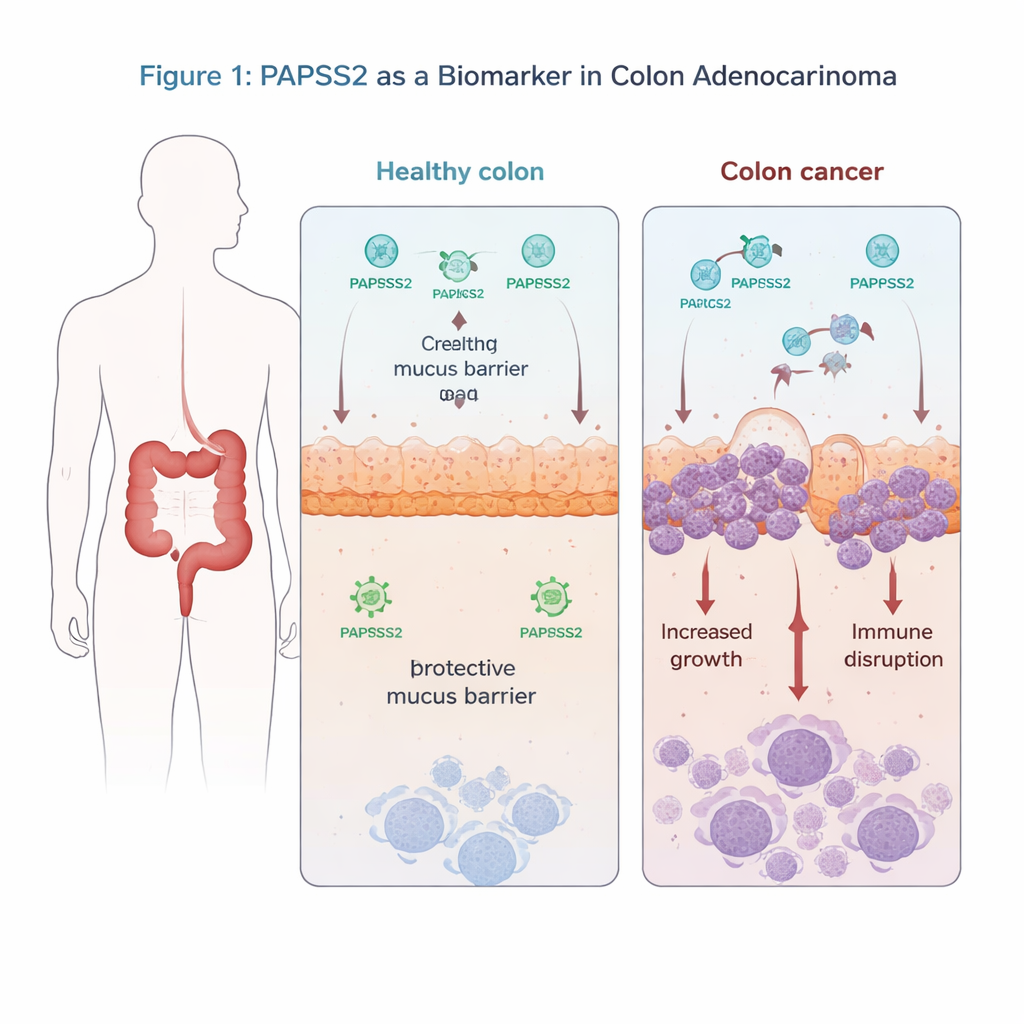
Colon cancer is one of the most common cancers worldwide, and many cases are found only after the disease has already advanced. This study explores a little-known enzyme called PAPSS2 that may help doctors detect colon cancer earlier, predict how it will behave, and better understand how tumors interact with the body’s defenses. If confirmed, PAPSS2 could become part of future blood or tissue tests that guide screening, treatment, and follow-up care for patients.
A quiet enzyme with an important housekeeping job
PAPSS2 is a molecule-making enzyme that helps attach small sulfate groups to many substances in the body, including hormones, fats, and proteins. This “sulfation” process fine-tunes how these molecules behave, affecting growth, development, and the integrity of tissues such as cartilage and the intestinal lining. Until now, PAPSS2 was mainly known for roles in bone growth disorders and hormone balance. The authors wondered whether changes in this enzyme might also influence how colon tumors arise, grow, and communicate with their surroundings.
Finding a consistent signal in big cancer datasets
Using large public databases of tumor samples, including The Cancer Genome Atlas and Gene Expression Omnibus, the researchers compared PAPSS2 levels in hundreds of colon adenocarcinoma samples and normal colon tissue. They found that PAPSS2 was consistently lower in cancer tissue, both at the RNA level (the message that makes the protein) and the protein level itself. This pattern held true not only in colon cancer but also across many other solid tumors. Within colon cancer patients, those with more advanced stage disease or with spread to lymph nodes or distant organs were especially likely to have low PAPSS2. Statistical tests showed that PAPSS2 levels could distinguish tumor from normal tissue with high accuracy and that patients with low PAPSS2 tended to live for a shorter time.
Zooming in on cells and cancer behavior
To see which cells actually produce PAPSS2, the team analyzed single-cell sequencing data that profiles thousands of individual cells from colon tumors and nearby tissue. PAPSS2 was mainly found in the surface cells that line the colon, as well as in supporting stromal and immune cells. During the transition from normal colon lining to cancerous tissue, PAPSS2 levels dropped steadily in the epithelial cells that become tumor cells. The researchers then turned to lab experiments with colon cancer cell lines. When they used small genetic tools to switch off PAPSS2, the cancer cells grew faster, moved more readily, and invaded through artificial membranes more aggressively—hallmarks of a more dangerous tumor.
Links to the immune system and a key tumor safeguard
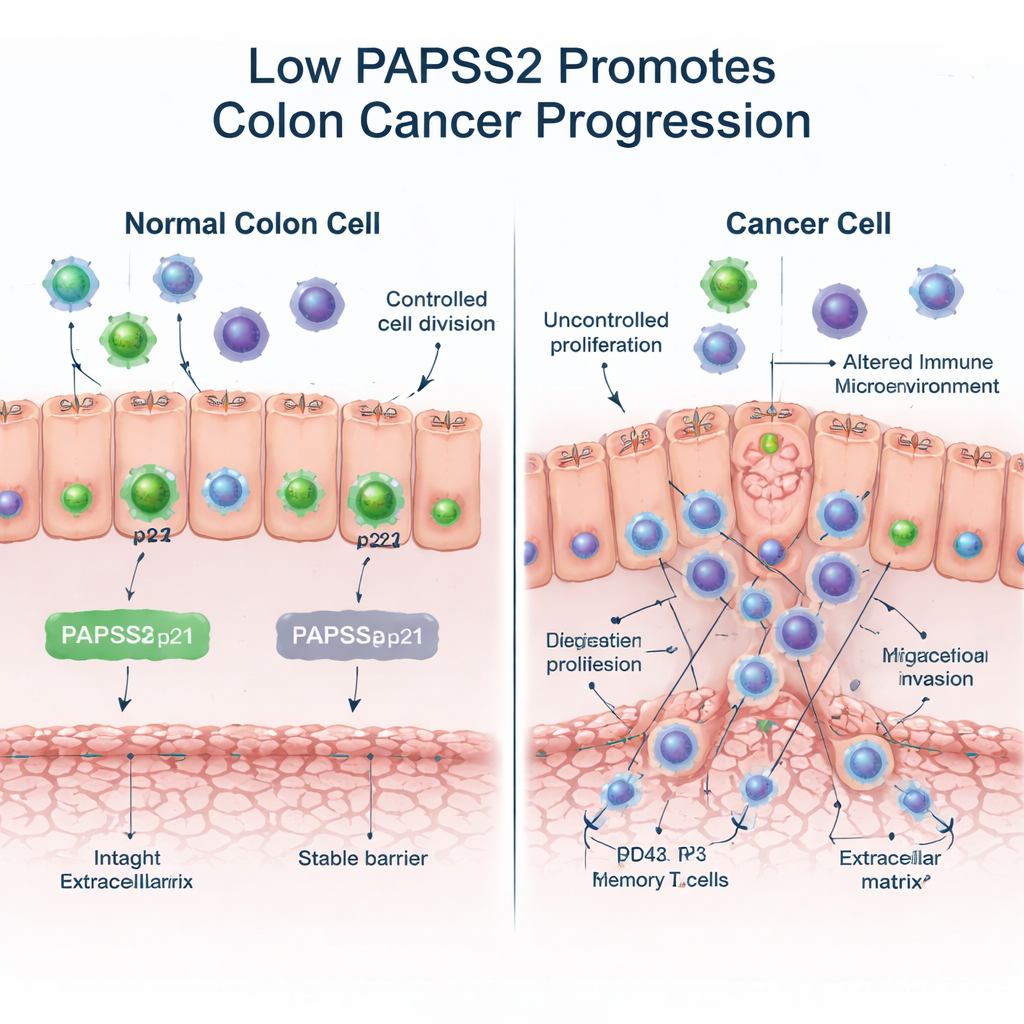
The study also probed how PAPSS2 might reshape the tumor’s neighborhood, known as the tumor microenvironment. Using computational methods, the authors estimated types of immune cells present in tumors with high or low PAPSS2. Tumors with more PAPSS2 tended to have greater infiltration of helper and memory T cells, which are important for long-term immune surveillance against cancer, and distinct patterns of immune signaling molecules and their receptors. At the molecular level, genes that changed alongside PAPSS2 were enriched in pathways tied to the p53 system—a central cellular “guardian” that halts damaged cells or triggers their death—and in the production of complex sugars that help maintain the intestinal mucus barrier. In lab-grown cells, reducing PAPSS2 lowered levels of p53 and its partner p21, supporting the idea that this enzyme somehow helps sustain anti-tumor safeguards.
What this could mean for patients
Taken together, the findings suggest that PAPSS2 acts more like a brake than a gas pedal in colon cancer. When PAPSS2 is high, the colon lining and its mucus barrier may be better maintained, protective p53 pathways are more active, and helpful immune cells are more abundant. When PAPSS2 is low, tumors appear more aggressive, and patients fare worse. While more work is needed before PAPSS2 can be used in the clinic, this study points to a promising new biomarker that may help doctors detect colon cancer earlier, estimate a patient’s outlook, and eventually refine who is most likely to benefit from certain treatments, including immunotherapy.
Citation: Jin, A., Yang, F., Li, H. et al. 3’-phosphoadenosine 5’-phosphosulfate synthetase 2 (PAPSS2) is a potential diagnostic and prognostic biomarker in colon adenocarcinoma. Sci Rep 16, 5655 (2026). https://doi.org/10.1038/s41598-026-36388-3
Keywords: colon cancer, biomarkers, PAPSS2, tumor immune microenvironment, p53 pathway