Clear Sky Science · en
Comparative pharmacoinformatic and quantum descriptor insights from BFM/GBTLI guidelines to phase I/II compounds for acute lymphoblastic leukemia (ALL)
Why this matters for children with leukemia
For families facing childhood leukemia, every new drug offers hope—but also questions about safety, side effects, and long‑term impact. This study uses advanced computer modeling to compare long‑standing chemotherapy medicines with newer, more targeted drugs now being tested in early clinical trials for a common childhood blood cancer called acute lymphoblastic leukemia (ALL). By looking under the hood of these molecules without giving them to patients, the researchers aim to foresee which medicines are more likely to work well and which may carry hidden risks.
Old and new medicines under the same lens
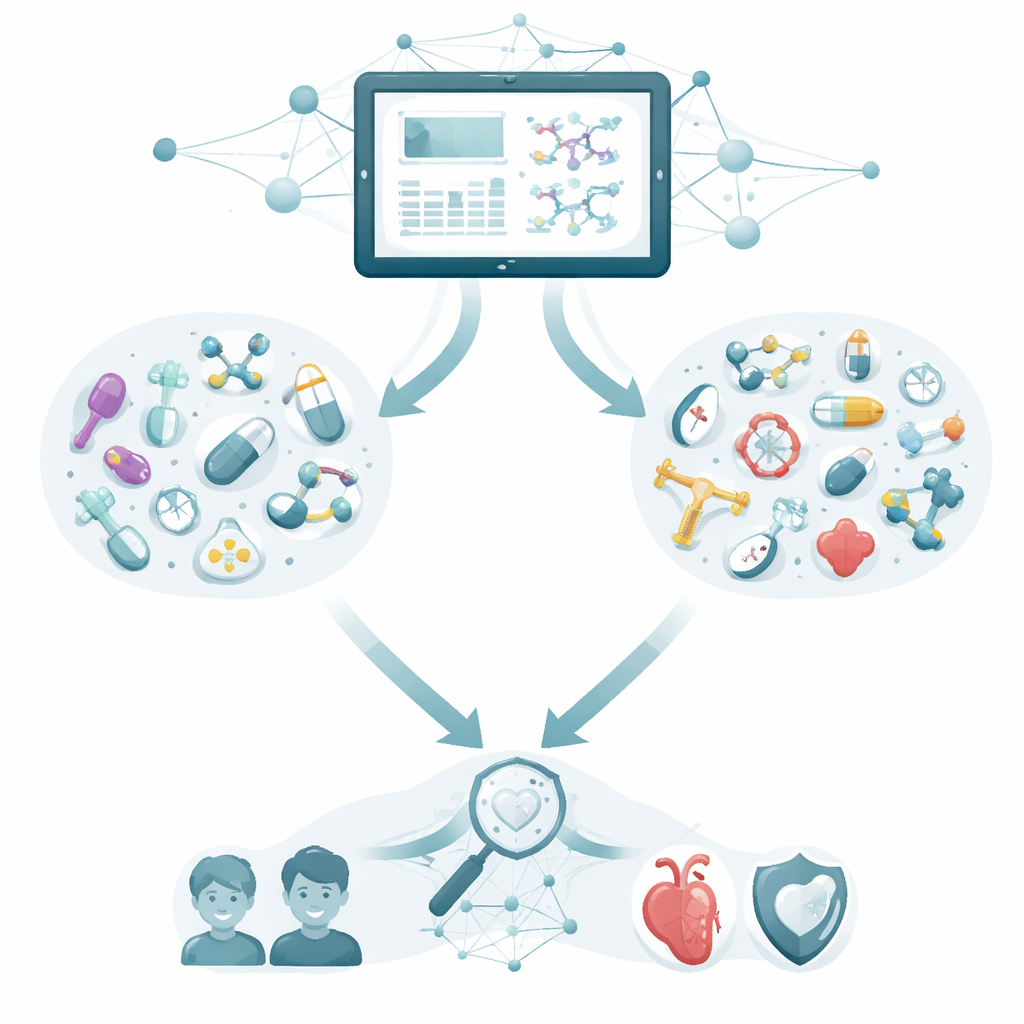
The team assembled two main groups of drugs. One group contained ten well‑known chemotherapy agents used in the Berlin–Frankfurt–Münster (BFM) and Brazilian GBTLI treatment guidelines, which together have helped push cure rates for childhood ALL above 90% in high‑income countries. The other group contained sixteen experimental small‑molecule drugs now in phase I or II clinical trials for blood cancers, many of them designed to hit specific molecular targets inside leukemia cells. Instead of testing them in animals or children, the authors fed their chemical structures into several large online databases and prediction tools that estimate how a drug is absorbed, distributed, broken down, cleared from the body, and how likely it is to cause harm.
Reading a drug’s behavior from its shape
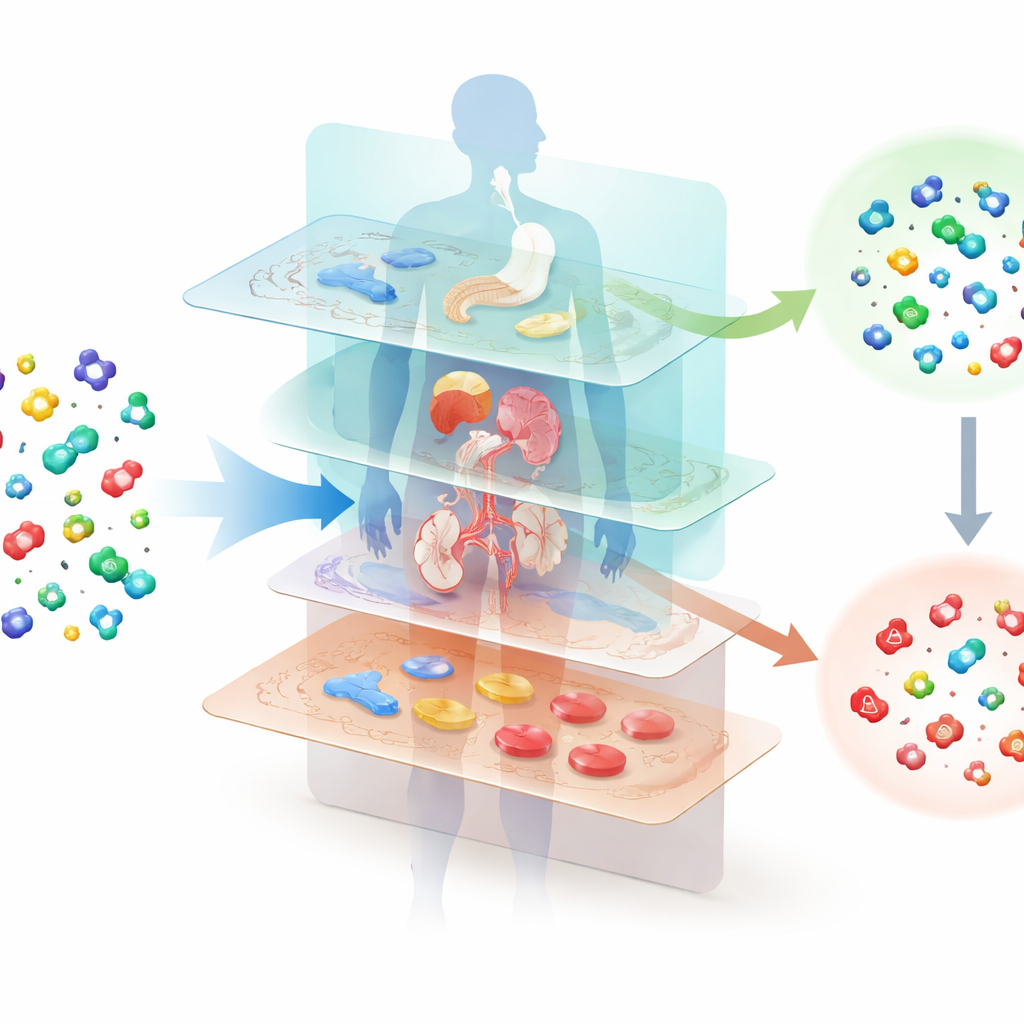
These tools calculate basic traits such as size, fat‑loving versus water‑loving balance, flexibility, and ability to form hydrogen bonds—features that strongly influence whether a pill dissolves, crosses the gut wall, or reaches its target tissue. The researchers then layered on a second level of analysis using quantum chemistry. Here, they modeled how electrons are arranged in each molecule and measured properties such as how easily a molecule can react, how stable it is, and how strongly it tends to attract electrons. These abstract‑sounding numbers turn out to be clues about how aggressively a drug might interact with its intended target—or with unintended parts of the body.
Key differences between standard drugs and trial drugs
The comparison revealed that the new trial drugs tend to be larger and more fat‑soluble than the guideline drugs. This combination often helps drugs slip through cell membranes but can make them harder to dissolve in water, raising formulation challenges for oral use. Many of the newer compounds showed patterns suggesting that low solubility, rather than poor ability to cross membranes, may limit how much medicine actually reaches the bloodstream. Several trial drugs were also predicted to interact strongly with a cellular pump called P‑glycoprotein, which can eject drugs from cancer cells and contribute to treatment resistance, and with a heart ion channel (hERG) whose blockage is linked to dangerous heart rhythm problems. In contrast, established drugs such as vincristine and methotrexate displayed more stable electronic profiles and generally more familiar safety patterns, though they are far from risk‑free.
What quantum chemistry adds to the picture
By examining the electronic “frontier” of each molecule, the team found that several experimental agents—particularly Pelabresib and Molibresib—have smaller gaps between key energy levels and higher “electrophilicity,” signs of heightened theoretical reactivity. In plain terms, these molecules may bind their targets more strongly and act more powerfully, but they also have a greater chance of interacting where they should not. Standard chemotherapy agents such as cyclophosphamide showed larger gaps and greater electronic stability, aligning with their long clinical track records and more predictable, if still serious, side‑effect profiles. This trade‑off between power and control is at the heart of modern cancer drug design.
How this helps guide future therapies
By placing established and emerging drugs on the same computational map, the study highlights where new candidates deviate from the “sweet spot” occupied by successful standard therapies. The findings suggest that some trial drugs may need improved formulations to overcome poor solubility, while others warrant closer heart and liver safety monitoring or careful attention to drug–drug interactions. Notably, Pelabresib and Molibresib emerged as particularly promising, combining favorable predicted absorption and distribution with strong but not extreme reactivity. Although these results come entirely from computer models and must be confirmed in laboratory and clinical studies, they provide a practical early‑warning and prioritization system. For children with ALL, that means a better chance that the next generation of medicines will reach the clinic with a clearer understanding of both their promise and their risks.
Citation: Bahia, I.A.F., da Silva, M.K., Sindi, E.R. et al. Comparative pharmacoinformatic and quantum descriptor insights from BFM/GBTLI guidelines to phase I/II compounds for acute lymphoblastic leukemia (ALL). Sci Rep 16, 7813 (2026). https://doi.org/10.1038/s41598-026-36374-9
Keywords: pediatric leukemia, drug design, ADMET, computational toxicology, targeted chemotherapy