Clear Sky Science · en
Modulatory effects of 6-Gingerol on erythrocyte deformability and morphology following lower extremity skeletal muscle ischemia-reperfusion injury in rats
Why a kitchen spice matters to your blood
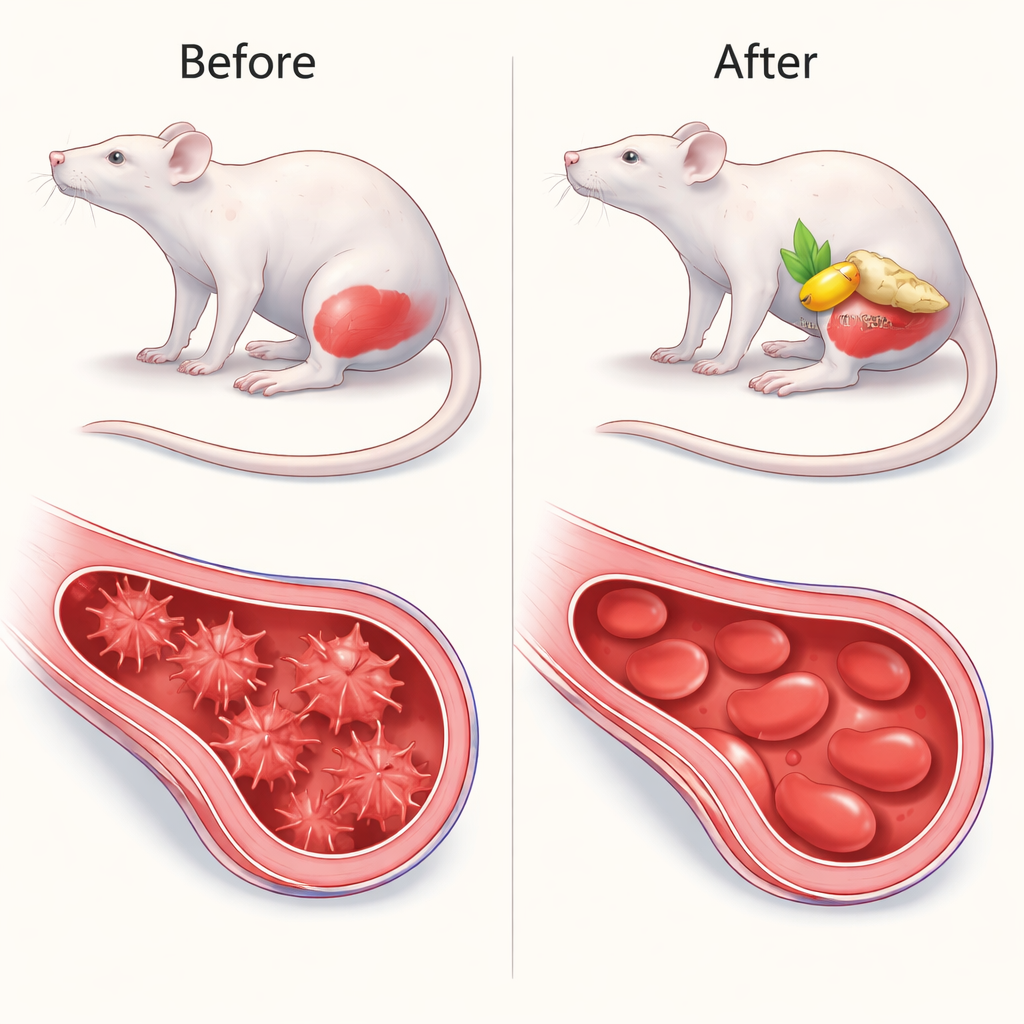
Most of us know ginger as a zesty addition to tea or stir-fries. But inside the body, compounds from this familiar root may act as tiny guardians of our blood cells. This study asks a surprisingly down-to-earth question with high-stakes implications: can 6‑gingerol—the main active ingredient in ginger—help red blood cells keep their shape and flexibility when tissues are starved of blood and then suddenly flooded again, a damaging event known as ischemia‑reperfusion injury?
When blood flow hurts instead of heals
Ischemia‑reperfusion injury happens when blood supply to a part of the body is cut off—by a blocked artery, tight tourniquet, or trauma—and then restored. While restoring blood is essential, the sudden rush of oxygen sparks a burst of aggressive molecules called free radicals. These molecules attack cell membranes rich in delicate fats, making tissues rigid and leaky. Red blood cells are especially vulnerable. To squeeze through hair‑thin capillaries, they must bend, twist, and snap back into shape. If they stiffen, they clog tiny vessels, cutting off the very microcirculation that tissues need to recover.
Ginger’s active ingredient under the microscope
The researchers focused on 6‑gingerol, a well‑studied component of ginger known for its antioxidant and anti‑inflammatory effects. They used 24 male rats and divided them into four groups: a sham group that underwent only a skin incision; a solvent group given dimethyl sulfoxide (DMSO) to match the ginger preparation; an ischemia‑reperfusion group with no protection; and a 6‑gingerol plus ischemia‑reperfusion group. In the injury groups, the main artery in the hind leg was briefly clamped for 90 minutes to cut off blood flow, then released for another 90 minutes of restored circulation. One hour before ischemia, rats in the treatment group received 6‑gingerol into the abdominal cavity at a dose that earlier trials had shown to be safe.
How the team tested blood cell health
After the procedure, blood was drawn directly from the heart. The scientists measured how easily red blood cells filtered through a fine membrane: higher resistance meant stiffer, less deformable cells. They also prepared stained blood smears to visually grade cell shape damage—looking for spiky cells, teardrop cells, and stacks of cells that signal trouble. In parallel, they measured biochemical markers of stress. One marker, malondialdehyde, reflects how badly fats in membranes have been peroxidized, or chemically burned. Another, the enzyme superoxide dismutase, is part of the body’s own defense system, disarming a particularly harmful free radical called superoxide. Finally, they examined levels of an enzyme called endothelial nitric oxide synthase in red blood cells, which is linked to blood vessel signaling but behaves in complex ways during oxidative stress.
What happened to the rats’ red blood cells
Rats that experienced ischemia‑reperfusion without protection showed badly impaired red blood cell flexibility and clear shape damage under the microscope. Their blood had higher levels of malondialdehyde and lower levels of the protective superoxide dismutase, indicating intense oxidative attack on cell membranes. In contrast, rats pre‑treated with 6‑gingerol had significantly more flexible red blood cells, fewer abnormal shapes, less membrane damage, and a marked rebound in antioxidant enzyme activity. The ginger compound also toned down the boosted nitric‑oxide‑related signal seen after injury, which the authors interpret as a sign that the cells were under less stress and generating fewer highly reactive by‑products like peroxynitrite that can further stiffen membranes.
What this could mean for future treatments
Taken together, the findings suggest that 6‑gingerol helps red blood cells stay supple during and after a period of blocked blood flow, mainly by strengthening the cells’ own antioxidant defenses and limiting chain reactions that harden their membranes. For a layperson, the bottom line is that a molecule from everyday ginger may one day help keep blood flowing smoothly through the tiniest vessels when the body faces the shock of restoring blood after a heart attack, stroke, surgery, or severe limb injury. This work was done in a small group of rats, so it is a first step rather than a clinic‑ready remedy, but it points to an intriguing possibility: common plant compounds could be refined into future drugs that quietly protect our circulation at its most fragile points.
Citation: Özdem, T., Kartal, H., Çomu, F.M. et al. Modulatory effects of 6-Gingerol on erythrocyte deformability and morphology following lower extremity skeletal muscle ischemia-reperfusion injury in rats. Sci Rep 16, 5675 (2026). https://doi.org/10.1038/s41598-026-36365-w
Keywords: ginger, ischemia reperfusion, red blood cells, oxidative stress, antioxidants