Clear Sky Science · en
Challenges in strengthening sentinel surveillance network during COVID-19 pandemic in Africa
Why Watching Out for New Viruses Matters
The COVID-19 pandemic showed how quickly a virus can spread worldwide and how important it is to spot new dangerous variants early. This study looks at how 11 African countries tried to do exactly that: build a shared warning system to detect changes in the coronavirus and track serious respiratory infections. Their experience offers a glimpse of how low‑resource health systems can prepare for the next big outbreak, not just COVID-19.
Building an Early Warning Network
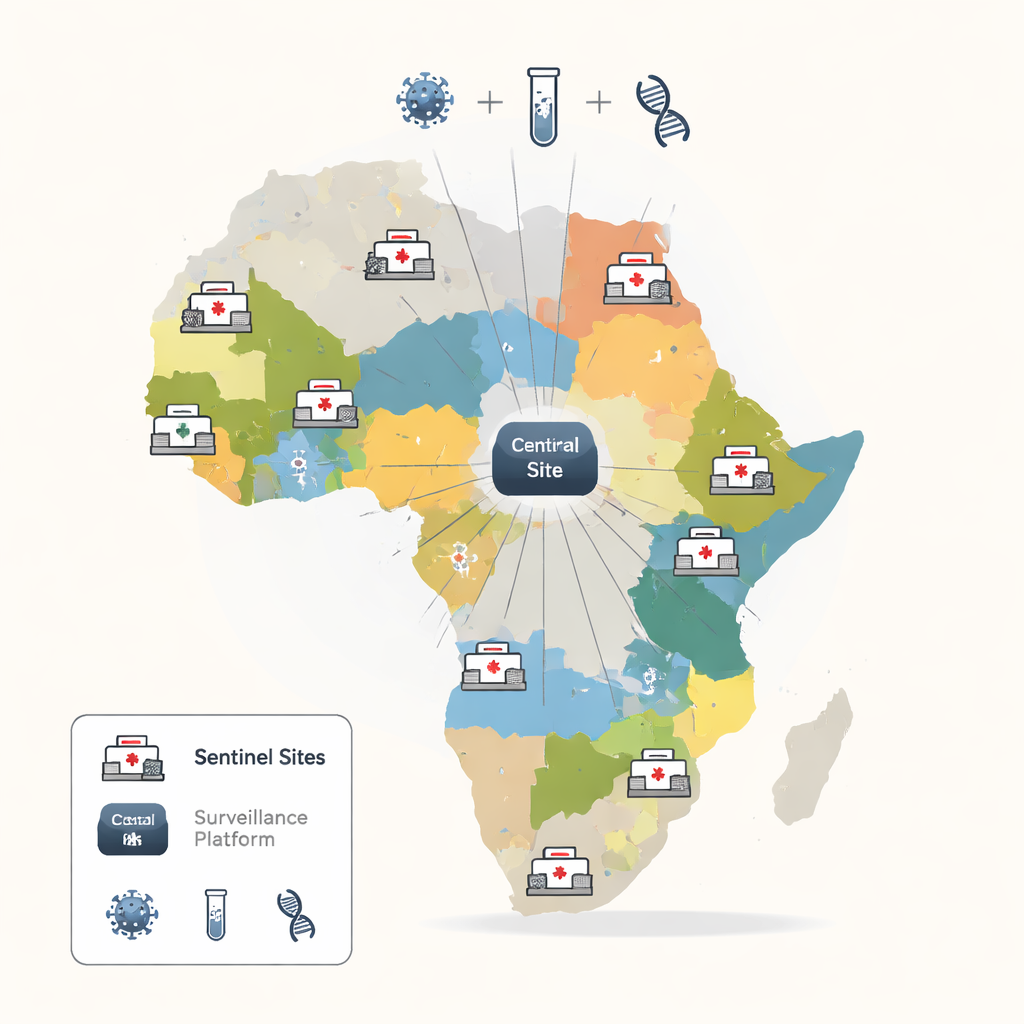
In 2022, after the fourth major COVID-19 wave, the AFROSCREEN project helped set up or strengthen special “sentinel” health sites in Senegal, Guinea, Côte d’Ivoire, Togo, Benin, Niger, Cameroon, the Central African Republic, Burkina Faso, Madagascar and the Democratic Republic of the Congo. Instead of trying to test everyone, these countries focused on selected clinics and hospitals that would carefully track patients with signs of respiratory illness and test a sample of them for SARS‑CoV‑2. The idea was to create a practical, affordable network that could quickly spot worrying trends or new variants and alert national health authorities.
Who Was Counted and How
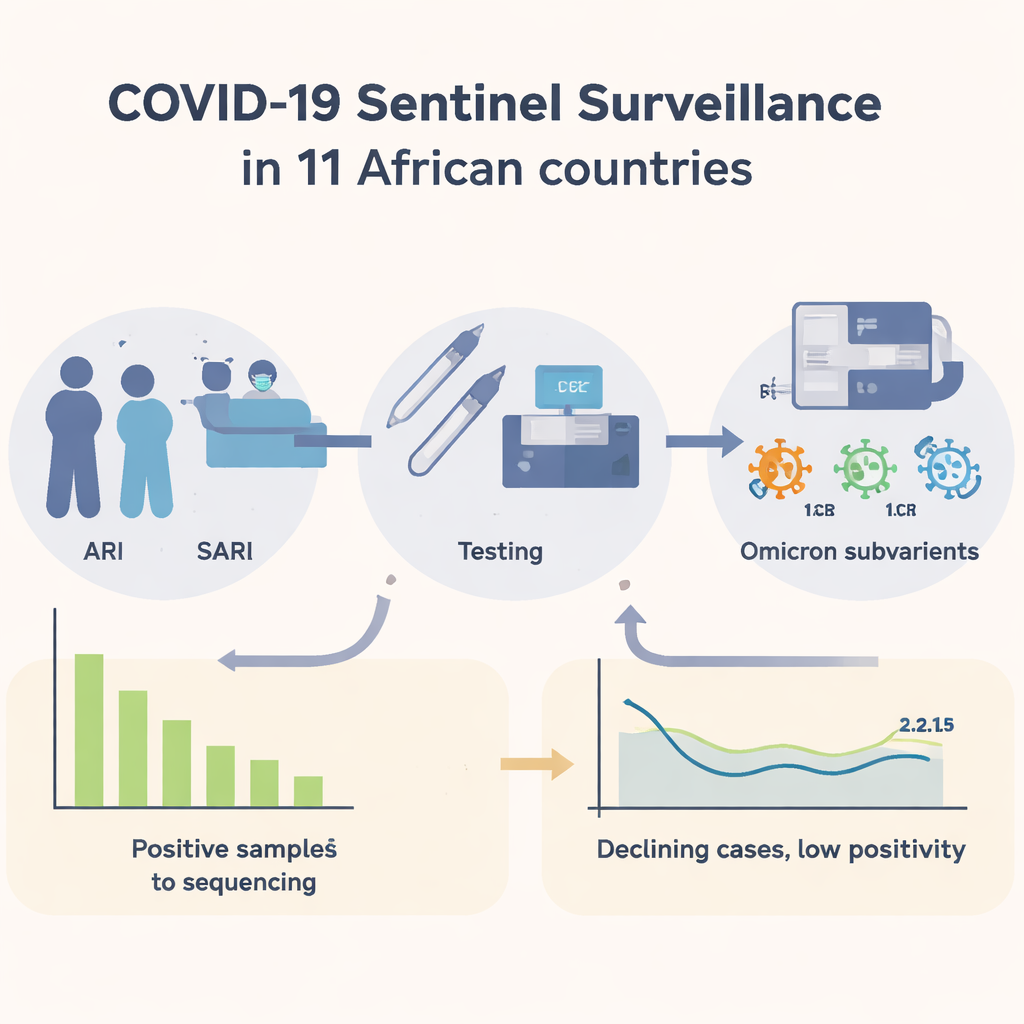
The team used simple, shared definitions so results could be compared across countries. People with sudden fever and symptoms such as cough or sore throat were counted as having an acute respiratory infection; those sick enough to be hospitalized were classed as severe acute respiratory infections. At each sentinel site, health workers regularly collected nose or throat swabs from these patients—up to 10 a week for milder cases, and from every severe case—and sent them to national laboratories for PCR testing. Positive samples with enough virus were then sequenced to see exactly which version of the coronavirus was present and whether anything new and potentially dangerous was emerging.
What the Network Found
Between July 2022 and June 2024, the 80 accredited sentinel sites reported more than 91,000 suspected cases, of which about 19,500 patients were actually sampled and tested. Only 1,505 of these were positive for SARS‑CoV‑2, a positivity rate of 7.7 percent, and just 12 deaths were recorded among those who tested positive. Most infections occurred in adults aged 15 to 50 years, and there were differences between countries in who was most affected and how many sites were involved. Overall, the network saw a clear decline in COVID‑19 circulation after mid‑2022, with higher positivity in the second half of 2022 and very low levels thereafter. When laboratories sequenced the virus from positive samples, they found only Omicron and its subvariants, such as XBB and JN.1, matching patterns seen elsewhere in the world and no brand‑new variant arising in these countries.
Obstacles Behind the Scenes
Creating and coordinating this kind of surveillance across 11 countries proved difficult, especially while the pandemic was still unfolding. Nations had different starting points: some already had systems for tracking influenza and other respiratory viruses, while others were building from scratch. That meant differences in where sentinel sites were located, how often data were reported and how consistently patients were tested. Technical challenges also surfaced, from uneven access to laboratory supplies and sequencing equipment to delays in launching a shared, secure database for real‑time analysis. These issues made it hard to harmonize practices and fully exploit the network’s potential during the study period.
Preparing for the Next Health Crisis
Although AFROSCREEN did not discover a new variant or large hidden COVID‑19 wave, it achieved something more lasting: it helped countries develop the skills, tools and partnerships needed to watch for future threats. The authors argue that such surveillance systems cannot be improvised once a crisis is underway; they must be designed, funded and tested during calmer “inter‑pandemic” times so that they are ready to scale up quickly when needed. For people living in low‑income countries, this kind of early warning network could spell the difference between a small, manageable outbreak and a devastating epidemic, by allowing health services to detect danger sooner and respond faster.
Citation: Poublan, J., Kadio, K.JJ.O., Konu, R. et al. Challenges in strengthening sentinel surveillance network during COVID-19 pandemic in Africa. Sci Rep 16, 7255 (2026). https://doi.org/10.1038/s41598-026-36363-y
Keywords: COVID-19 surveillance, sentinel sites, Africa public health, virus variants, pandemic preparedness