Clear Sky Science · en
Exercise training mitigates age-related cognitive decline by attenuating TMAO-induced inflammation
Why this research matters for healthy aging
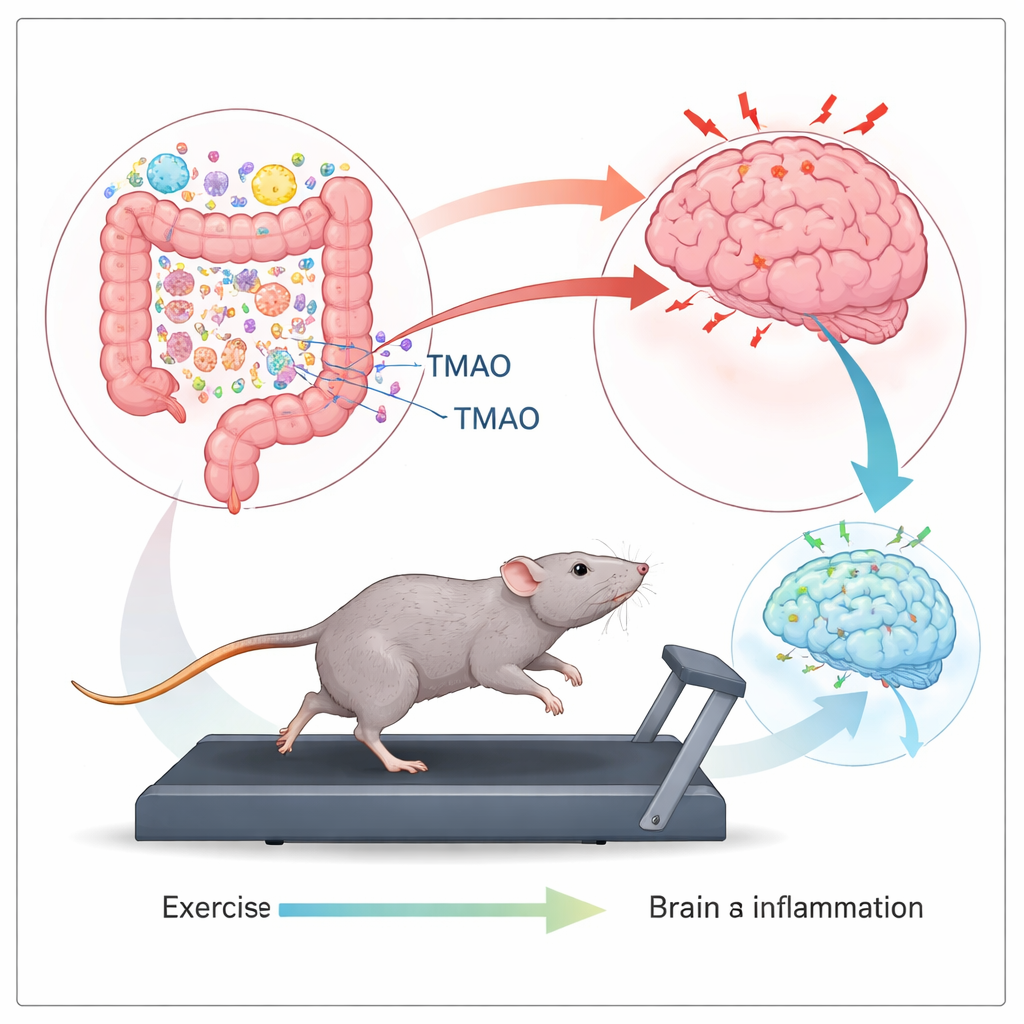
As people get older, many notice that names, appointments, or recent events are harder to recall. This study explores an unexpected link between our gut, our daily exercise habits, and how clearly our brains can think with age. The researchers show in rats that a chemical made by gut bacteria, called TMAO, can fan the flames of brain inflammation and speed memory loss—and that regular exercise can turn this fire down.
A chemical bridge from gut to brain
Our intestines are home to trillions of microbes that help digest food and produce a variety of chemicals. One of these, TMAO, is formed when certain gut bacteria break down nutrients found in foods like red meat and eggs, and the liver then converts them into TMAO. Earlier work showed that TMAO rises with age and is linked to heart disease and dementia. Because TMAO can cross from the bloodstream into the brain, scientists suspect it may harm brain cells by increasing inflammation—a chronic, low-level irritation that slowly damages tissue.
Testing exercise as brain protection
To probe this idea, the team used middle-aged rats and triggered early aging with a sugar called D-galactose, which is widely used to mimic age-related changes. Some rats simply received this aging treatment. Others also performed 12 weeks of treadmill running, while additional groups were given extra TMAO, with or without exercise. The animals then completed a battery of memory and learning tests—the rat equivalents of remembering new objects, finding a hidden platform in a water tank, and learning the layout of a maze. Rats that both aged and exercised showed far better performance: they were quicker to find the platform, remembered object locations more accurately, and made fewer mistakes in the radial maze compared with sedentary aging rats.
Lower TMAO, calmer brain inflammation
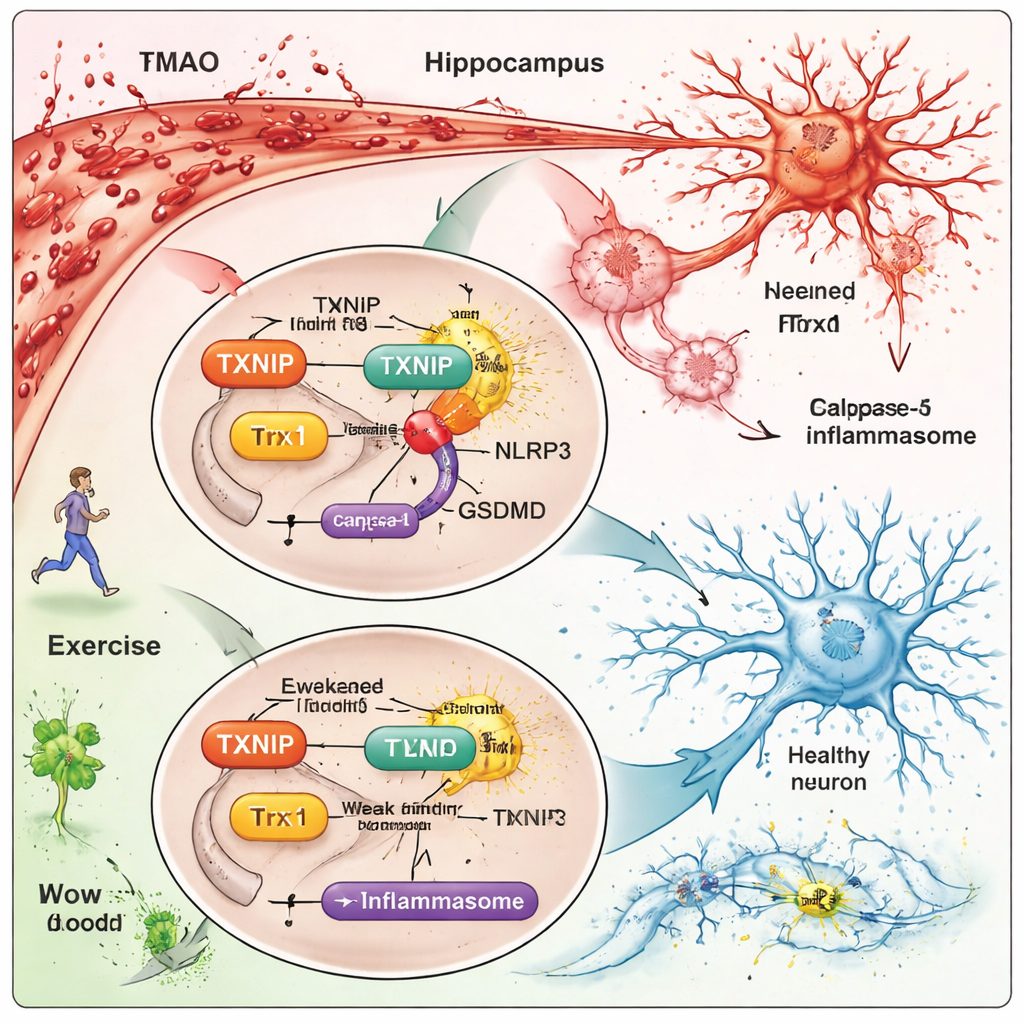
The researchers next measured TMAO levels in the rats’ blood and examined their brain tissue, focusing on the hippocampus, a region critical for memory. Aging greatly increased TMAO in the circulation and switched on a chain of inflammatory events inside brain cells, involving molecules with technical names like TXNIP, NLRP3, caspase-1, and GSDMD that together drive a fiery form of cell death. When TMAO was added on top of aging, this inflammatory machinery became even more active. Exercise reversed much of this: training cut blood TMAO levels by about 40% and substantially reduced the activation of these inflammatory switches in the hippocampus, even when the animals were given extra TMAO.
Zooming into the aging brain cell
To understand what happens at the level of individual cells, the team used cultured mouse nerve cells and induced an aging-like state. They then added TMAO or a TMAO-blocking compound. TMAO made the cells look older under the microscope and boosted signs of inflammation, while the inhibitor had the opposite effect. The key player turned out to be TXNIP, a protein that normally helps control the cell’s redox balance—its ability to manage reactive oxygen species. In aged cells, TMAO strengthened the binding between TXNIP and another protein, Trx1, disrupting this balance and triggering the NLRP3 “alarm system.” This, in turn, activated caspase-1 and GSDMD, releasing powerful inflammatory messengers that can injure or kill brain cells.
What this means for everyday life
This work paints a picture in which certain gut-derived chemicals, especially TMAO, act as messengers that can either accelerate or slow age-related memory loss, depending on how much is circulating in the body. In rats, regular, moderate-intensity exercise lowered TMAO, kept the TXNIP–NLRP3 inflammatory system in check, and preserved learning and memory. While people are more complex than lab animals, the study adds weight to the idea that moving more and caring for gut health could be powerful tools for protecting the aging brain. In simple terms, staying active may help keep a harmful gut-made chemical in balance, quiet brain inflammation, and support clearer thinking later in life.
Citation: Zhang, R., Li, L., Xi, X. et al. Exercise training mitigates age-related cognitive decline by attenuating TMAO-induced inflammation. Sci Rep 16, 5838 (2026). https://doi.org/10.1038/s41598-026-36354-z
Keywords: exercise and brain health, gut brain axis, aging and memory, TMAO, neuroinflammation