Clear Sky Science · en
Self-efficacy and quality of life mediate self-reported mental health outcomes in visual snow syndrome
When Everyday Vision Turns into Static
Imagine seeing a layer of TV-like static over everything you look at—every day, all the time. For people with visual snow syndrome (VSS), this is daily reality, often accompanied by light sensitivity and odd afterimages. This study asks a vital question: beyond the eyes and brain, how does living with this constant visual disturbance affect people’s mood, sense of control, and even thoughts about life and death?
Living with a Screen of Snow
Visual snow syndrome is a long-lasting neurological condition in which people see tiny flickering dots across their whole field of vision, as if they were looking through a badly tuned television. Many also struggle with harsh glare, lingering afterimages, and strange visual effects. Although VSS is not rare—it may affect about 2 in every 100 people—it is still poorly understood, and there is no standard treatment. Earlier research showed that people with VSS are more likely to experience depression, anxiety, and sleep problems than those without the condition. But scientists have not clearly mapped out how these visual problems translate into emotional suffering.
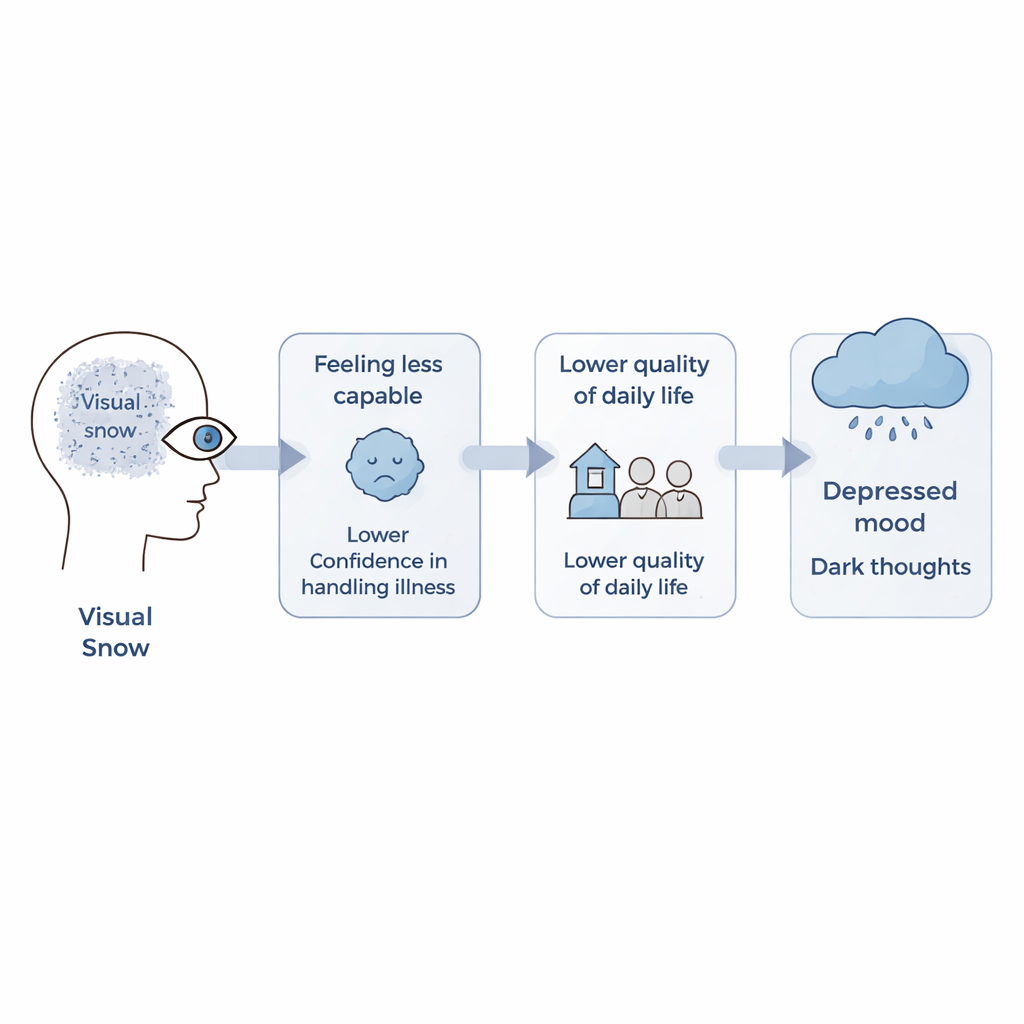
Confidence, Daily Life, and Mental Health
This study focused on two psychological ingredients that might explain why VSS is so emotionally draining: self-efficacy and quality of life. Self-efficacy is a person’s belief that they can handle difficulties and manage their health. Quality of life captures how people feel about their physical health, mood, relationships, and environment. Researchers in China recruited 64 adults with VSS and 67 healthy adults of similar age, sex, and education. Everyone filled out standard questionnaires that measured confidence in managing challenges, overall quality of life, symptoms of depression, and the intensity of suicidal thoughts.
What the Numbers Revealed
Compared with healthy volunteers, people with VSS felt much less capable of handling problems and reported a poorer quality of life. Their scores for depression were in the moderate-to-severe range on average, while the control group’s scores stayed below the usual threshold for clinical concern. Suicidal thoughts were also more frequent in the VSS group, although the average difference here was smaller. Statistical tests showed strong links: having VSS was tied to lower confidence and lower quality of life, and both of these were in turn tied to more depression and more suicidal thinking.
The Chain Reaction Behind Darker Thoughts
The researchers then asked whether VSS affects mental health directly, or mainly by setting off a chain reaction. Their models suggested a stepwise pathway: first, having VSS is linked to feeling less able to cope; this loss of confidence then feeds into a poorer quality of life; finally, this reduced quality of life is closely connected to depression and suicidal thoughts. For depression, VSS had both a direct effect and this indirect, chain-like effect—and almost half of the total impact of VSS on depression could be explained by the pathway through confidence and quality of life. For suicidal thoughts, the pattern was even more striking: VSS did not show a strong direct link, but its influence flowed almost entirely through reduced self-belief and worsening day-to-day life.
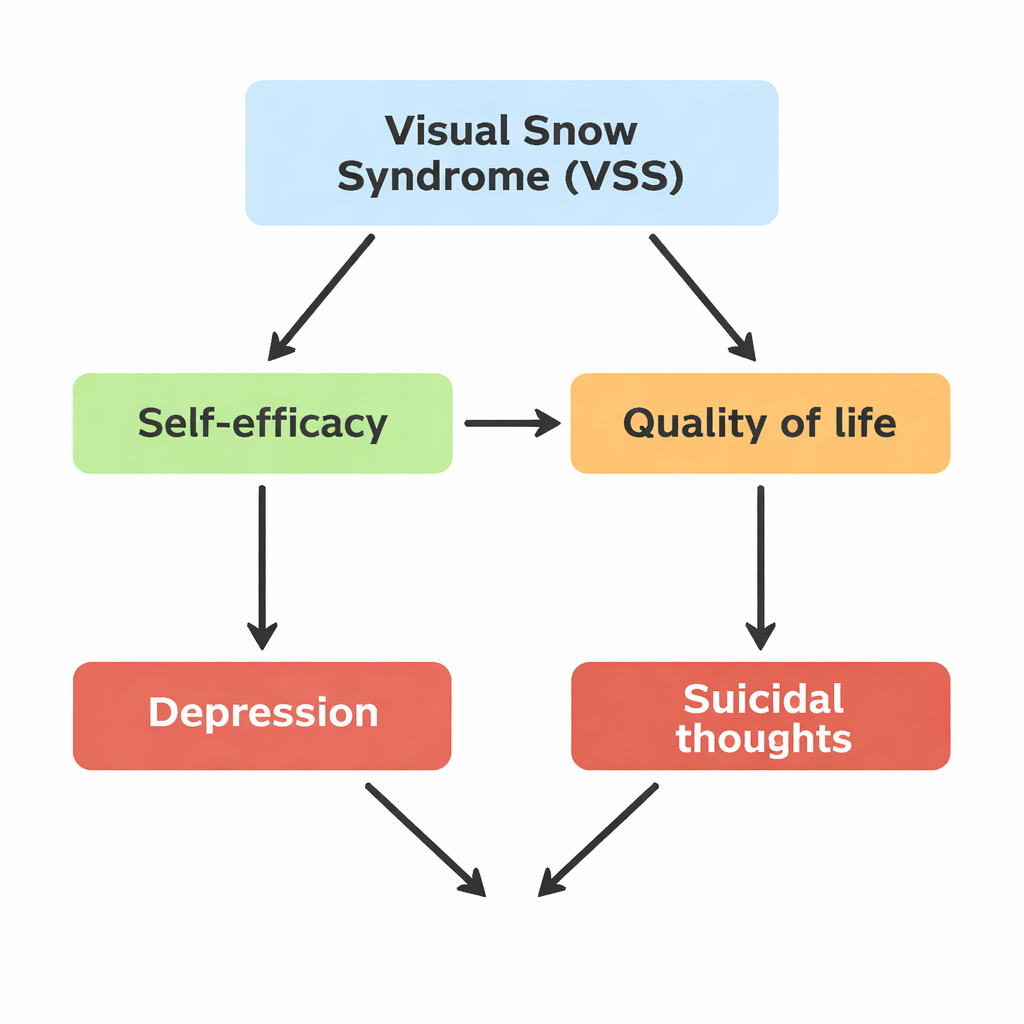
What This Means for Help and Hope
These findings suggest that while we still need better medical treatments for the visual symptoms of VSS, there are important psychological levers we can act on right now. Helping people rebuild their confidence in managing a chronic condition, and improving the practical and emotional aspects of daily life, could ease depression and reduce suicidal thoughts even if the visual static remains. Because this was a snapshot in time rather than a long-term follow-up, the study cannot prove cause and effect. Still, it points clinicians toward routine checks on mood, sense of control, and quality of life in patients with VSS—and toward counseling, skills training, and support programs that may brighten life behind the visual snow.
Citation: Huang, Q., Yu, X., Gao, H. et al. Self-efficacy and quality of life mediate self-reported mental health outcomes in visual snow syndrome. Sci Rep 16, 7107 (2026). https://doi.org/10.1038/s41598-026-36347-y
Keywords: visual snow syndrome, depression, suicidal ideation, quality of life, self-efficacy