Clear Sky Science · en
Psychological and religious predictors of help seeking attitudes among university students under perceived stress
Why stress, faith, and asking for help matter
University can be an exciting time, but for many students it is also a period of intense pressure, self-doubt, and quiet suffering. In Vietnam, where family expectations and cultural traditions strongly shape how young people handle emotional problems, students often struggle alone or turn to religion rather than to therapists. This study explores how stress, religious coping, and inner strength influence Vietnamese students’ willingness to seek professional psychological help, offering insights that resonate with anyone interested in youth mental health in rapidly changing societies.
Stress on campus in a changing society
Vietnamese university students face familiar academic burdens—exams, competition, and worries about the future—on top of social and family pressures. Although many experience symptoms like anxiety, depression, and poor sleep, few actually visit counselors. In a collectivist culture, emotional difficulties are often treated as private or family matters, not reasons to see a mental health professional. This gap between need and service use has been seen across multiple Vietnamese campuses, where many students report high stress yet rarely step into a counseling room. The present study set out to understand why, focusing on three psychological ingredients: perceived stress, religious coping, and resilience.
How the study was carried out
The researchers surveyed 416 undergraduates from several universities across Vietnam, including Ho Chi Minh City, Hanoi, Quang Ninh, and Da Nang. Students aged 18 to 25, from a range of majors and with varied religious backgrounds and sexual orientations, completed online questionnaires. These asked how stressed they felt, how they used religious or spiritual beliefs when facing problems, how easily they “bounced back” from setbacks, and how open they were to seeing a psychologist or counselor. The team then used a statistical approach called structural equation modeling to map how these pieces fit together in a single picture of help-seeking.
Faith as comfort and conflict
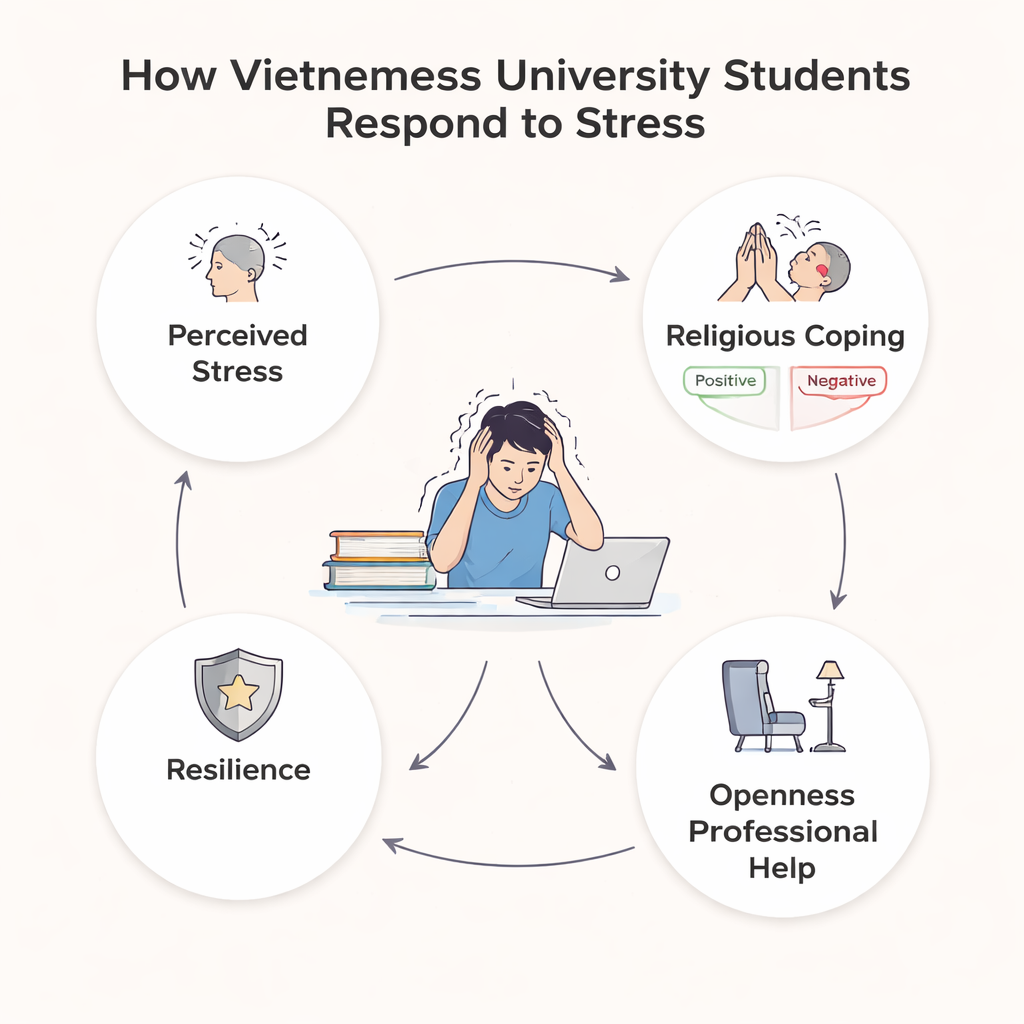
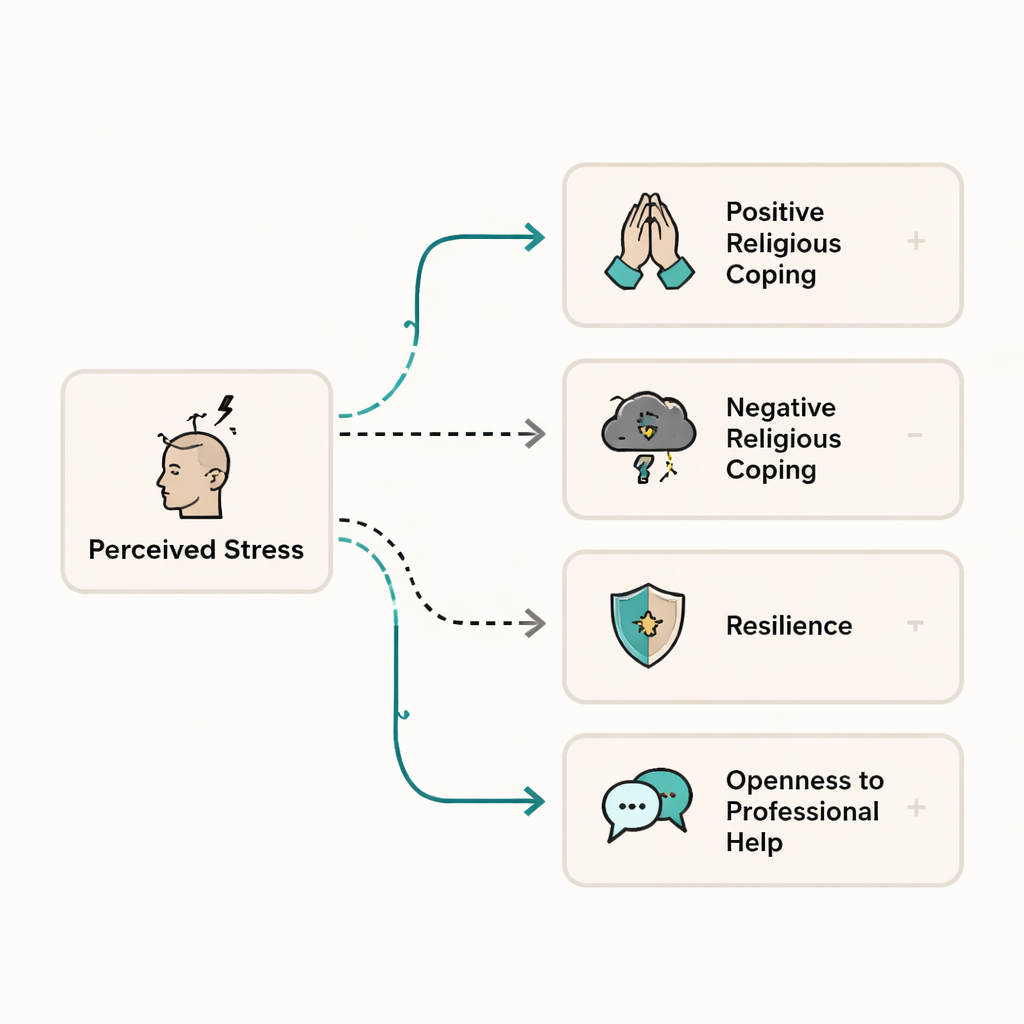
Stress turned out to be a central driver of students’ responses. Those who felt more stressed were more likely to use both positive and negative forms of religious coping. Positive coping included turning to prayer, meditation, or spiritual meaning to find comfort and hope. Negative coping involved feelings such as being punished or abandoned by a higher power. Importantly, positive religious coping was linked to more favorable attitudes toward professional psychological help and partly explained why stressed students were more open to seeking support. In other words, for some students, faith did not replace professional help—it helped legitimize it. Negative religious coping, by contrast, was associated with distress but did not reliably predict whether students would seek help.
Inner strength versus reaching out
The study also examined resilience, or the ability to bounce back from hardship. Students with higher stress reported lower resilience, suggesting that prolonged pressure wears down inner resources. However, resilience itself was not clearly linked to more openness to professional help. If anything, students who felt emotionally strong seemed slightly less inclined to turn to therapists, echoing the idea that self-reliance can reduce the perceived need for outside support. Subgroup analyses highlighted vulnerable populations: LGBTQ+ students showed higher stress and greater use of both positive and negative religious coping, while students with a history of self-harm reported higher stress, lower resilience, and less openness to professional help—even though they also leaned more on positive religious coping.
What this means for students and universities
These findings suggest that stress can push students toward both inner, faith-based strategies and outward help-seeking, but that resilience often functions as a private shield rather than a bridge to professional care. In Vietnam’s cultural context, where saving face, protecting family reputation, and emotional restraint are highly valued, students may rely heavily on religion and personal strength while hesitating to approach counselors. The authors argue that universities need not only more counseling services, but also programs that respect spiritual practices, reduce stigma, and actively involve trusted community and religious figures. For the lay reader, the takeaway is clear: when stress rises, supportive faith and open conversations with professionals can work together, and building a campus culture that normalizes both may be key to protecting students’ mental health.
Citation: Pham-Ngoc, DN., Nguyen, PT., Nguyen-Thi, NQ. et al. Psychological and religious predictors of help seeking attitudes among university students under perceived stress. Sci Rep 16, 6398 (2026). https://doi.org/10.1038/s41598-026-36332-5
Keywords: university student mental health, religious coping, help seeking attitudes, stress and resilience, Vietnam higher education