Clear Sky Science · en
Service satisfaction and perceived social support mediate the effect of internalised stigma on quality of life of people with mental illness: mediation analysis
Why feeling judged can hurt everyday life
Many people living with mental illness do not struggle only with their symptoms. They also face hurtful attitudes from others and from within themselves, which can quietly erode their day‑to‑day wellbeing. This study from Ethiopia explores how “self‑stigma” – when people absorb negative views about mental illness – is linked to their quality of life, and how good support from services, family, and friends might soften this blow.
What the researchers wanted to understand
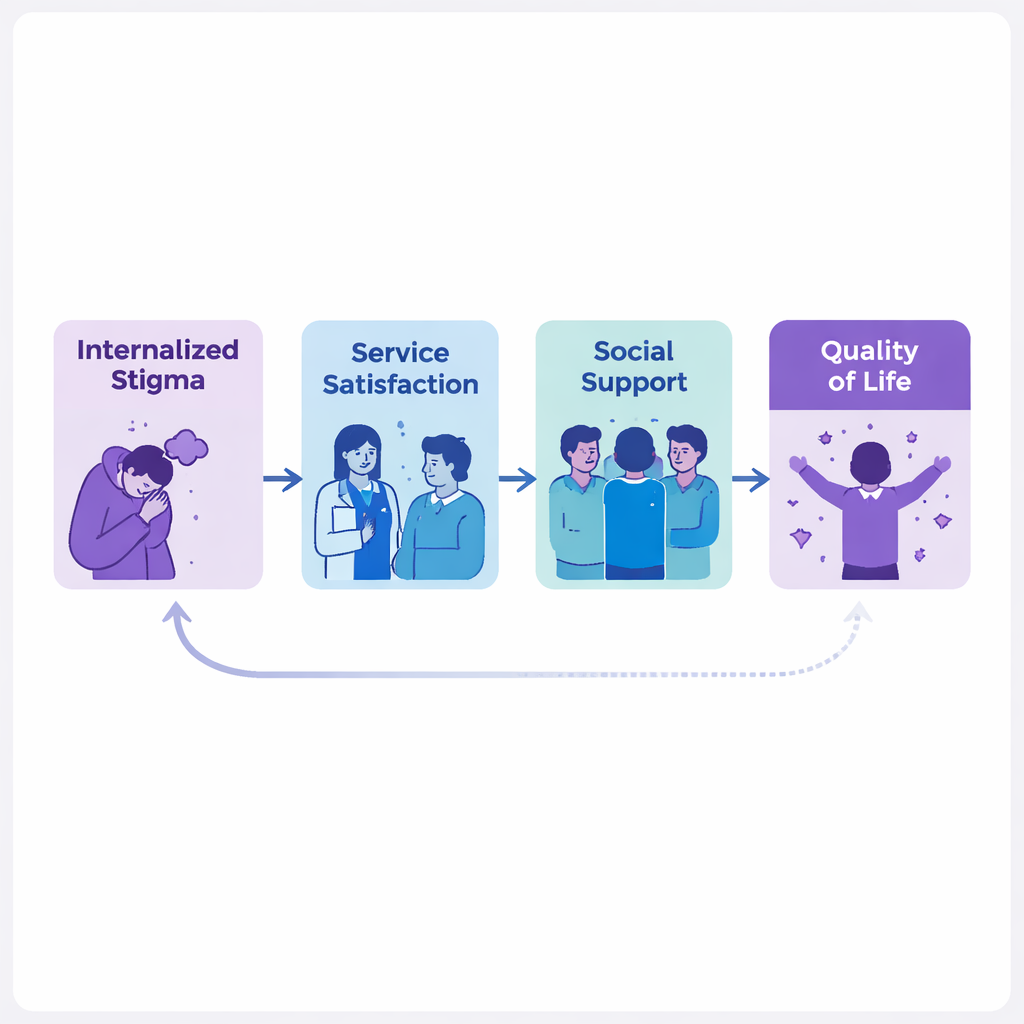
The team focused on people receiving care at a psychiatric outpatient clinic in Gondar, a city in northwest Ethiopia. Earlier work had shown that many patients there lived with low quality of life, felt unsupported, and were dissatisfied with services, but it was unclear how these pieces fit together. The researchers asked: does internalising stigma directly harm quality of life, or does it work partly by lowering satisfaction with care and shrinking social support? Understanding these pathways could point to new ways to improve everyday life for people with mental illness, beyond simply prescribing medication.
Who took part and how the study worked
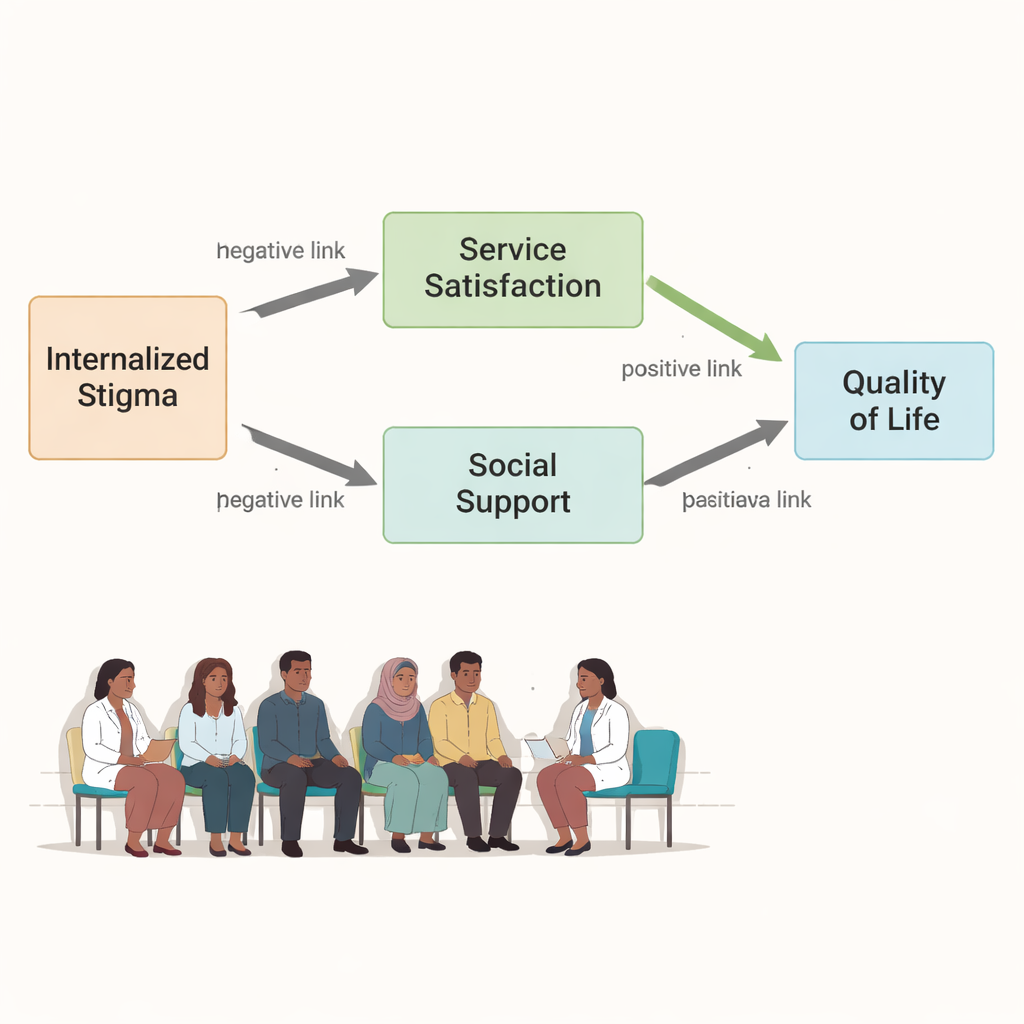
Six hundred thirty‑six adults who had been in treatment for at least three months for conditions such as schizophrenia, depression, bipolar disorder, anxiety, and other psychotic or stress‑related disorders were interviewed face‑to‑face. Trained psychiatric nurses used standard questionnaires to measure four main areas: overall quality of life (covering physical health, mood, social relationships, and environment), internalised stigma, satisfaction with mental health services, and perceived social support from family, friends, and important others. The researchers then used a statistical approach called structural equation modelling to see how these factors were connected and whether service satisfaction and social support acted as “middle links” between stigma and quality of life.
How stigma, support, and services fit together
The analysis showed a clear pattern. People who felt more internalised stigma tended to report poorer quality of life in every area: physical health, psychological wellbeing, social life, and their daily environment. Stigma was also tied to lower satisfaction with services and to weaker social support. In turn, people who were more satisfied with their care and who felt well supported socially tended to have better quality of life. When the researchers looked at all these pieces together, they found that internalised stigma harmed quality of life both directly and indirectly – that is, partly by undermining satisfaction with services and reducing perceived social support. Social support had a particularly helpful role for most quality‑of‑life domains, while low service satisfaction consistently went hand‑in‑hand with poorer outcomes.
Why this matters for care and community
These findings highlight that tackling stigma is not only about changing minds in the wider public; it is also about shaping the experience of care and strengthening relationships around the person. In a low‑resource setting like Ethiopia, where mental health services are limited, making sure that people feel respected, listened to, and helped by their care, and that they have dependable support from family and friends, may be just as important as any medication. Programs that reduce self‑stigma, train providers to offer more person‑centred, non‑judgmental care, and build social networks could all contribute to better daily lives for people with mental illness.
What the study means in everyday terms
Put simply, the study suggests that when people with mental illness feel ashamed of their condition, believe negative labels about themselves, and sense that services and those around them are not truly there for them, their quality of life suffers on many fronts. But when care feels supportive and respectful, and when family and friends stand by them, these positive forces can offset some of the damage caused by stigma. Improving quality of life, the authors argue, means working on all these fronts at once: reducing self‑blame, improving the experience of mental health care, and strengthening the social ties that help people feel valued and included.
Citation: Alemu, W.G., Mwanri, L., Due, C. et al. Service satisfaction and perceived social support mediate the effect of internalised stigma on quality of life of people with mental illness: mediation analysis. Sci Rep 16, 7238 (2026). https://doi.org/10.1038/s41598-026-36320-9
Keywords: mental illness stigma, quality of life, social support, patient satisfaction, Ethiopia