Clear Sky Science · en
Marginal effect of clean energy, nuclear energy-related R&D investment, energy security risk, and policy uncertainty on the environment in the USA
Why America’s Energy Choices Matter for Everyone
Climate change can feel abstract, but it ultimately comes down to real-world choices about how we power our homes, cars, and factories. This study looks closely at the United States—one of the world’s largest economies and energy users—to ask a simple but crucial question: which kinds of energy and policies actually help the environment, and which do not? By unpacking the roles of nuclear power, renewable energy, economic growth, and policy uncertainty, the authors offer a data-driven look at where clean-energy hopes are justified and where they may be overstated.
Looking at Decades of Change
The researchers examined U.S. data from 1974 to 2022, tracking carbon dioxide emissions and a broader measure called the ecological footprint, which reflects how heavily people and the economy draw on nature’s resources. They focused on several forces that could shape environmental pressure: overall economic activity, renewable energy use, nuclear power use, investments in nuclear-focused research and development, energy security risks, and uncertainty around economic and trade policy. Instead of assuming simple straight-line relationships, they used an advanced statistical method that can capture complex, shifting connections over time and across different levels of pollution.
Renewables Help, Nuclear Alone Does Not
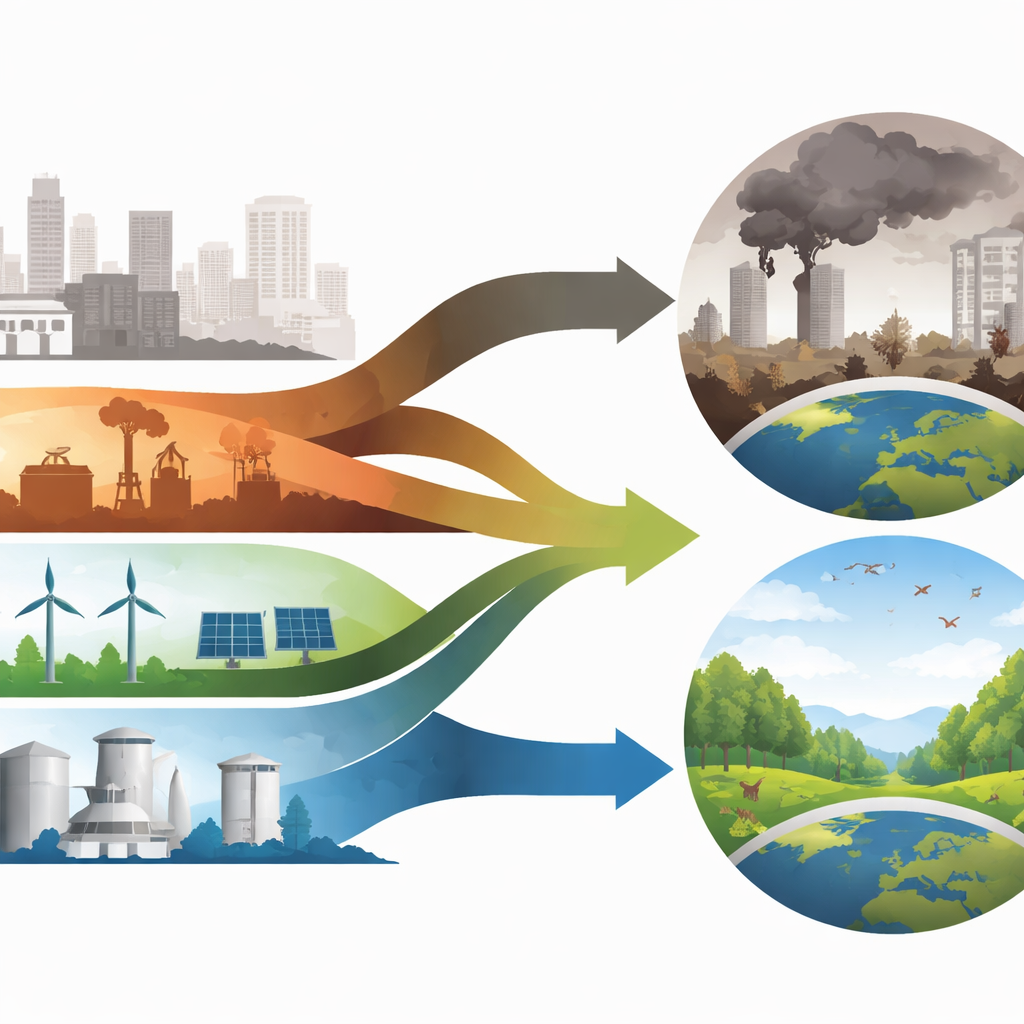
One clear message is that renewable energy—such as wind, solar, and other low-carbon sources—consistently helps to lower emissions in the United States. Across the entire period, increases in renewable energy use are linked to steady declines in carbon dioxide output, suggesting that expanding these sources has genuinely reduced the country’s environmental burden. Nuclear power, however, tells a more complicated story. On its own, higher nuclear energy use in the U.S. does not reliably cut carbon emissions and is often associated with higher emissions. The authors suggest that nuclear plants may not be replacing fossil fuels as much as competing with renewables, leading to only limited climate benefits when considered in isolation.
When Innovation and Policies Support Nuclear
The picture changes when nuclear power is combined with strong investment in nuclear-related research and more stable policy conditions. The study finds that when nuclear energy grows together with dedicated research and development funding, overall emissions tend to fall. In this scenario, innovation appears to make nuclear plants more efficient and better integrated into a cleaner energy mix. Likewise, periods of higher economic policy uncertainty—times when businesses are cautious and activity slows—are linked to lower emissions, and this effect is stronger when nuclear energy is part of the mix. The authors interpret this as evidence that, in unsettled times, energy demand and fossil fuel use may ease, and that well-directed nuclear investment can magnify the environmental gains.
Growth, Security Fears, and Trade Tensions
Economic growth itself remains a double-edged sword. In a wealthy country like the United States, further increases in national income are generally tied to higher emissions, reflecting a growth model still heavily dependent on fossil fuels. Energy security worries—such as fears of supply disruptions or price spikes—also tend to push emissions higher, likely because they prompt greater short-term reliance on coal, oil, and gas. Trade policy uncertainty, by contrast, shows little consistent effect; changes in global trade rules and tariffs do not appear to reliably help or harm the environment in this analysis, either on their own or when combined with nuclear power.
What This Means for the Clean Energy Transition
For a layperson, the takeaway is straightforward: in the United States, renewable energy is already working as advertised, clearly helping to shrink the country’s environmental footprint. Nuclear power is not a climate savior by itself, but it can become part of the solution when paired with targeted research investments and supportive, predictable policy frameworks. Meanwhile, simply growing the economy or chasing energy security without reshaping the energy mix keeps emissions high. To move toward a truly cleaner future, the study suggests, U.S. decision-makers will need to expand renewables, invest smartly in nuclear innovation, and redesign growth and security strategies so they rely less on fossil fuels and more on a coordinated clean-energy system.
Citation: Kartal, M.T., Taşkın, D., Mele, M. et al. Marginal effect of clean energy, nuclear energy-related R&D investment, energy security risk, and policy uncertainty on the environment in the USA. Sci Rep 16, 9379 (2026). https://doi.org/10.1038/s41598-026-36312-9
Keywords: nuclear energy, renewable energy, carbon emissions, energy policy, United States