Clear Sky Science · en
Hematological ratios in pediatric patients with alopecia areata based on a nationwide retrospective cohort study
Why this matters for families
Alopecia areata is a condition that causes sudden, patchy hair loss, often on the scalp, and it can be especially upsetting when it affects children. Beyond appearance, it can harm self-esteem and emotional well‑being. This study asks a practical question that parents and doctors care about: can a simple, routine blood test help detect which children have this disease, how severe it is, and who might be headed toward more serious hair loss in the future? 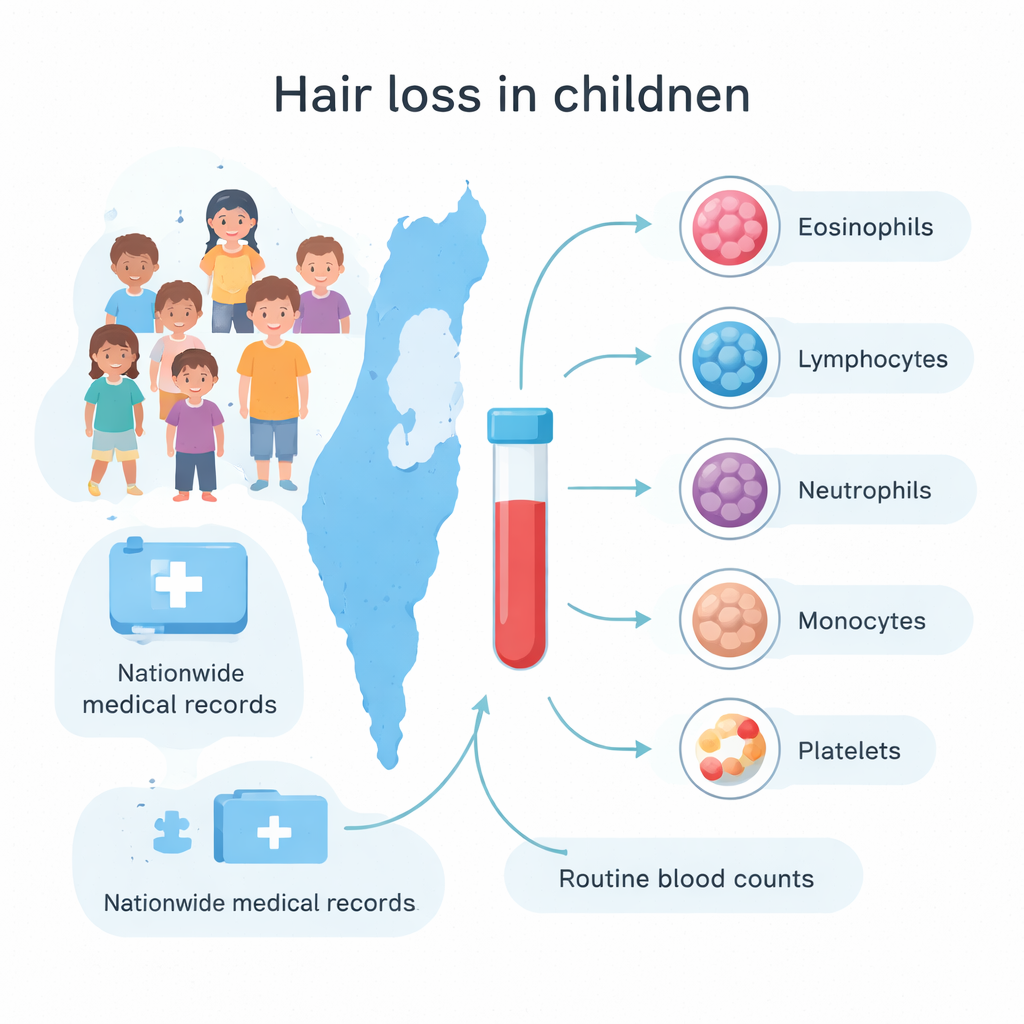
Looking at blood for hidden clues
The researchers examined medical records from across Israel, drawing on data from the country’s largest health organization and a major hospital. They focused on 31,869 children and teens diagnosed with alopecia areata and compared them with thousands of healthy children. Instead of searching for rare or exotic markers, they used ordinary complete blood counts—the same inexpensive tests many children get for checkups or infections—and calculated simple ratios between different types of blood cells, such as eosinophils, lymphocytes, neutrophils, monocytes, and platelets.
Special white blood cells stand out
One group of white blood cells, called eosinophils, emerged as especially important. Children with alopecia areata tended to have higher ratios that involved eosinophils: eosinophils compared to lymphocytes, to neutrophils, and to monocytes. In everyday terms, eosinophils were taking up a larger share of the white blood cell “pie” in children with hair loss than in those without it. When the team used statistical models that adjusted for age, sex, and other allergy‑related conditions such as asthma and eczema, these eosinophil‑based ratios still clearly separated children with alopecia areata from healthy controls. An increase in one of these ratios more than tripled the odds that a child had the disease. 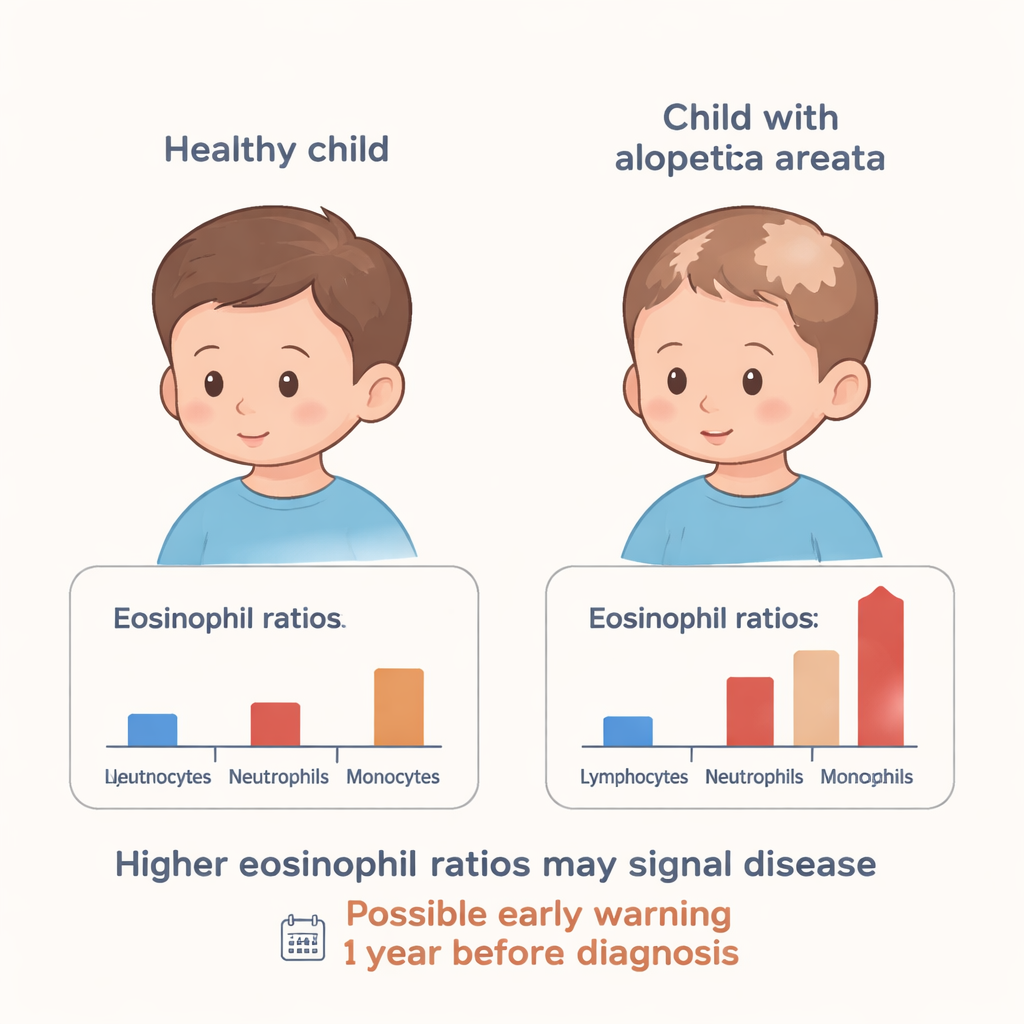
Clues to how severe the disease might become
The investigators also looked within the alopecia group to see which children had severe disease—those who required strong treatments such as steroid pills, immune‑suppressing drugs, or newer targeted medicines. These children were, on average, younger and had slightly different blood patterns than those with milder hair loss. Their eosinophil‑based ratios were again higher, and one ratio in particular, eosinophils compared to neutrophils, was already elevated 12 to 18 months before the official diagnosis. That means these routine blood results may carry early warning signs that a child is on track for more extensive or stubborn hair loss long before it fully appears.
What this says about the nature of the disease
The pattern of blood changes supports the idea that alopecia areata in children is not just a local problem of hair follicles but part of a broader immune imbalance throughout the body. The rise in eosinophil‑related ratios, along with shifts in other blood markers, fits with growing evidence that the immune system is overactive and misdirected, rather than simply causing isolated patches of baldness. Importantly, these findings held even after accounting for common allergic conditions that can also raise eosinophil counts, suggesting that the changes seen here are closely tied to alopecia itself.
Take‑home message for parents and clinicians
For families facing a child’s sudden hair loss, this work offers a hopeful message: widely available, low‑cost blood tests may help doctors better understand how active the disease is and which children are most at risk for severe, long‑lasting hair loss. While these ratios are not yet a stand‑alone diagnostic test and more research is needed before they guide everyday decisions, they hint at a future in which a simple blood draw could help predict flares, support earlier use of stronger treatments when needed, and deepen our understanding of how the immune system drives alopecia areata in children.
Citation: Gordon, C.B., Weissmann, S., Andre, N. et al. Hematological ratios in pediatric patients with alopecia areata based on a nationwide retrospective cohort study. Sci Rep 16, 5739 (2026). https://doi.org/10.1038/s41598-026-36308-5
Keywords: alopecia areata in children, hair loss and blood tests, eosinophil ratios, pediatric autoimmune disease, immune system and hair