Clear Sky Science · en
Health tourism model in the digital age: emotional healing effects of disembodied landscape perception through social media
Escaping Through Screens
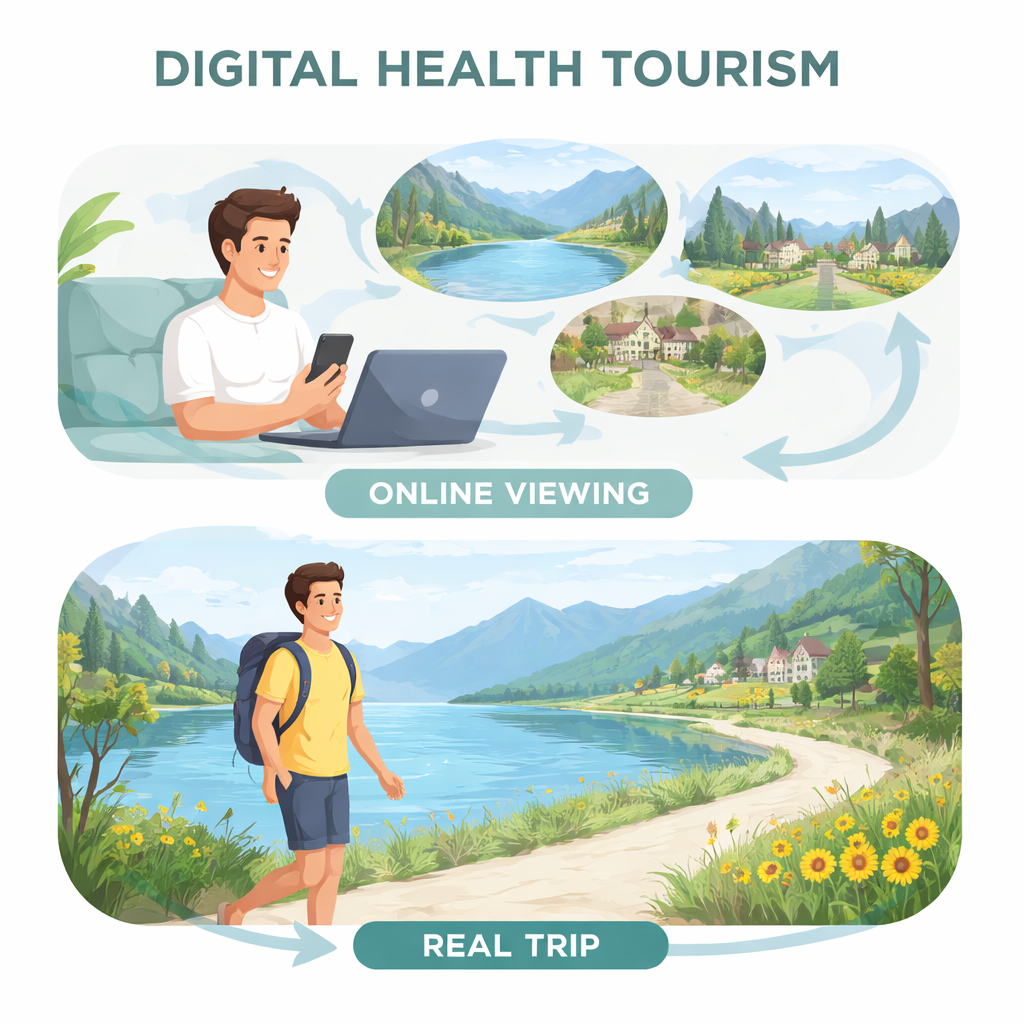
Many of us turn to travel videos and scenic photos online when we feel stressed, hoping for a moment of escape. This study asks a simple but important question: can such “armchair travel” genuinely help us feel better—and even nudge us to take a real trip that supports our health? Focusing on Erhai Lake in southwest China, the researchers explore how different kinds of landscapes seen on social media soothe our emotions and inspire actual visits.
From Online Sights to Real Feelings
The authors distinguish between two ways of experiencing places. “Embodied” experience means being physically present: feeling the wind, hearing the water, walking the streets. “Disembodied” experience happens through screens and speakers—photos, short videos, films, or games. Using ideas from psychology, the team proposes that what we see online can still activate memories, body sensations, and emotions, even when we stay on the sofa. In their model, viewing travel landscapes online first shapes our emotional state, which then influences whether we want to visit the place in person.
Reading Travelers’ Words
In the first part of the study, the researchers collected more than 9,000 online reviews of Erhai Lake from major Chinese travel websites and analyzed 8,072 usable comments. With text-mining and careful manual coding, they sorted what visitors talked about into four broad landscape types: ecological–natural (the lake and surrounding nature), commercial–leisure (shops, cafés, and vacation areas), historical–cultural (old towns, temples, and heritage sites), and rural–pastoral (villages, fields, and farm life). They then examined the emotional tone of reviews in each category. All four types mostly sparked positive feelings, but historical–cultural and rural–pastoral scenes generated the warmest responses. Commercial–leisure settings, while often enjoyed, produced the highest share of negative comments, hinting at crowding, noise, or over-commercialization.
Testing Healing Power Through Video
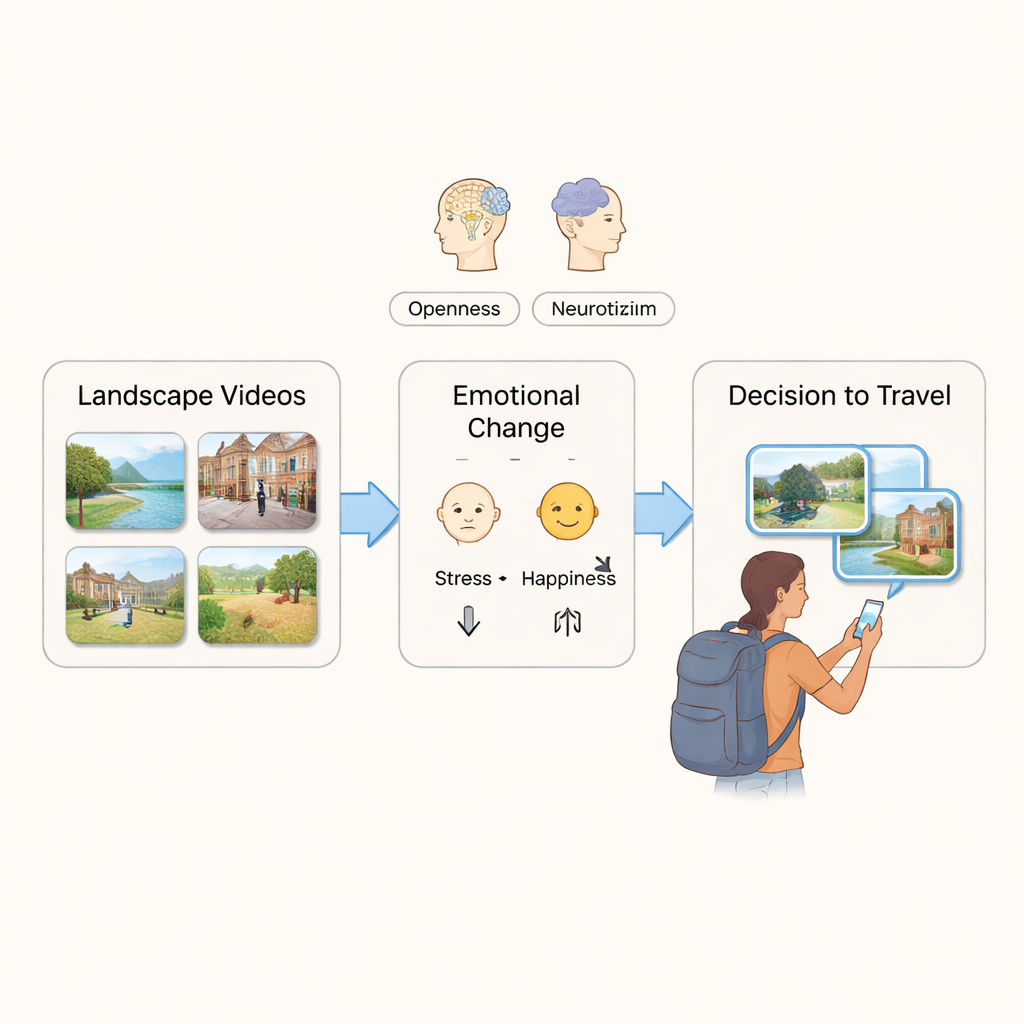
In the second part, more than 400 participants watched a carefully edited 3‑minute video of Erhai’s four landscape types, each shown for 45 seconds. Beforehand, a short clip prompted them to recall everyday work and life, raising typical stress and mood levels. After viewing the scenic video, participants rated how their emotions had changed, how strongly they felt they had “experienced” each landscape type, and how much they wanted to travel there. Overall, the video reduced negative feelings like nervousness and irritation and boosted excitement and happiness. Stronger landscape perception was linked to larger emotional improvements and a higher intention to travel, confirming that digital viewing can act as a gentle form of emotional healing and as a spark for real-world tourism.
Not All Landscapes Work the Same
The four landscape types did not have identical effects. Natural lakes and historical–cultural scenes were especially good at both lifting mood and encouraging future visits. Rural–pastoral views were vivid in people’s minds but, in this younger and middle‑aged sample, did not significantly improve emotions—perhaps reflecting mixed feelings about country life. Commercial–leisure scenes could brighten mood but did not strongly translate into a desire to travel, suggesting that standardized shopping streets and busy entertainment zones may feel less special as health‑oriented destinations. Personality also mattered: people high in openness to new experiences and those with higher levels of neuroticism (more prone to worry) were more strongly affected by the videos, showing that the same clip can land very differently depending on who is watching.
Toward Healthier Travel in a Digital World
For a general reader, the core message is this: watching travel videos is not just idle scrolling. Well‑designed clips of natural and cultural landscapes can ease stress, improve mood, and gently encourage us to seek real‑world restorative trips. However, online “healing” should be seen as a doorway, not a substitute, for embodied experience. The authors argue for a new model of health tourism in which social media previews help people discover places that genuinely support mental and physical well‑being, while on‑site travel completes the process. Matching landscape types and digital content to different personalities could make this virtual‑to‑real journey even more effective and personally meaningful.
Citation: Guo, R., Qi, Y., Xie, X. et al. Health tourism model in the digital age: emotional healing effects of disembodied landscape perception through social media. Sci Rep 16, 6785 (2026). https://doi.org/10.1038/s41598-026-36305-8
Keywords: digital healing, health tourism, virtual travel, landscape perception, social media videos